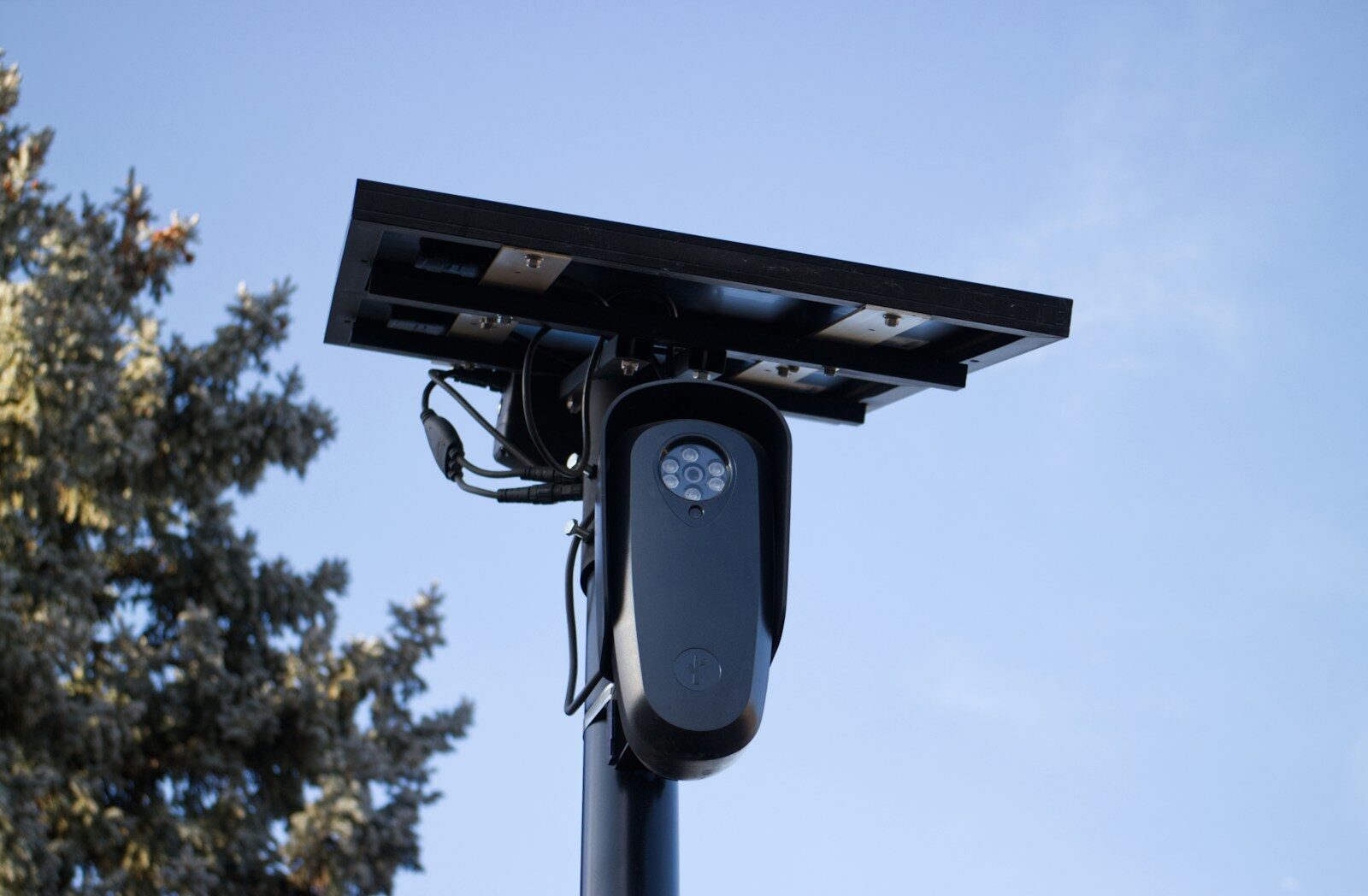
Denver spent over a year fighting with Flock Safety about what the company was doing with footage of every car crossing city limits. When that contract finally lapsed on March 31, the city didn’t shut its camera network down, it called a different vendor. Two hundred miles south, Douglas County watched the same fight play out, then signed off on nearly $22.8 million to make sure it never happened to them. Same replacement company both times: Axon, the Scottsdale outfit better known for tasers and body cameras than for running a rolling license-plate database out of streetlight fixtures.
If you drive through the Denver metro regularly, or you’re just trying to understand how the automated license plate reader business actually works, the last few months in Colorado are as good a case study as you’ll find, and the fine print matters more than the headlines suggest.
How Denver’s Swap Actually Went Down
Flock’s contract with Denver expired March 31 following months of controversy over the company’s data-sharing practices, including arrangements that let Border Patrol and ICE search Denver’s plate-reader data through other agencies’ accounts without the city’s direct sign-off. That tends to end a vendor relationship fast, and it did.
What replaced it wasn’t a return to unwatched streets. That same evening, Denver City Council split 6-6 before Council President Amanda Sandoval cast the deciding vote, approving a one-year, $150,000 contract with Axon for 50 fixed automated license plate reader cameras, down from the 110 cameras Flock had been running. The ACLU of Colorado called the move exactly what it looked like: a swap from one “dragnet surveillance corporation” to another, with no new regulations attached and no time for Denver’s own Surveillance Task Force to weigh in before the vote. The replacement cameras weren’t even active yet when council approved them; Axon needed several more weeks just to get the network installed.
Douglas County Didn’t Downsize. It Expanded—A Lot.
Sixty miles south, county commissioners had the opposite reaction to the same controversy, at least initially. As recently as May 2025, Douglas County was still growing its Flock footprint, approving $91,000 for additional cameras at public trailheads even as neighboring jurisdictions raised alarms. Sheriff Darren Weekly publicly defended Flock that same month, arguing that Denver’s decision to drop the company would make the region less safe.
Then two things changed the calculus. First, a Douglas County trailhead camera was hacked and found livestreaming to the open internet, alongside dozens of other exposed, Colorado-linked units running the same setup. Second, county leadership took a harder look at who actually controlled the data those cameras collected, and didn’t like the answer. Sheriff’s officials told commissioners that under Flock, the county didn’t own its own camera data outright; ownership and retention were effectively the vendor’s call, not the county’s.
On July 15, the Board of County Commissioners approved a contract with Axon worth nearly $22.8 million over ten years. The package swaps the county’s 50 Flock cameras for 100 Axon Outpost units and adds something Flock never offered locally: a countywide drone network that launches automatically after 911 calls involving crashes, fires, or active threats, with officials saying drones can reach a scene in as little as one or two minutes. Under the new agreement, plate-reader data is purged after 30 days unless it’s tied to an open case, the sheriff’s office runs quarterly audits, while the 23rd Judicial District Attorney’s office adds a second layer of oversight. Commissioners acknowledged the tradeoff directly, framing the deal as an attempt to balance residents’ privacy rights against the department’s argument that the technology helps close cases and recover stolen vehicles.
Not everyone was satisfied. State Rep. Bob Marshall urged commissioners to slow down, pointing out that the policies governing the system today could change under a future Board of County Commissioners, or under Axon itself, with no guarantee the current safeguards survive a change in leadership on either side.
The Hardware Matters Here—This Isn’t Just A Rebrand
It’s worth understanding what Axon actually sells, because Outpost and Lightpost aren’t the same box with a different sticker. Axon Outpost is a standalone, purpose-built fixed camera pole, the direct Flock competitor, plant it wherever a department wants a permanent post. Axon Lightpost, developed with a smart-infrastructure company called Ubicquia, is a retrofit kit that clips onto an existing streetlight and is designed to go up in under an hour, with no new pole, trenching, or siting fight required.
Both feed into Axon Fusus, the company’s real-time operations software, which also pulls in Axon’s in-car Fleet 3 cameras (Axon says that fleet alone has logged 8.1 billion plate reads and contributed to more than 20,000 felony arrests nationwide over the past year) plus community cameras through a partnership with Ring and a growing list of certified third-party brands that includes Axis, Bosch, Verkada, and school-bus stop-arm cameras from BusPatrol. That’s the actual product being sold to cities: not a single camera, but one searchable network stitched together from public poles, private doorbells, squad cars, and now streetlights, with vehicle-attribute recognition, color, body style, roof racks, bumper stickers, layered on top of the plate number itself. Swapping Flock for Axon doesn’t shrink that network. In both Colorado cases, it grew it.
What This Means If You’re Actually Behind The Wheel
If you own something distinctive, a wrapped car, an aftermarket exhaust, a visibly modified ride, vehicle-attribute recognition is the detail worth understanding, since it means a network like this can flag a car without ever needing a clean plate read. That cuts both ways: departments universally pitch stolen vehicle recovery as the strongest justification for these contracts, and recovery stories, like a stolen 1970 Mercedes-Benz 280 SL nearly shipped out of San Francisco to the Netherlands before investigators caught up with it, are exactly the case type used to sell city councils on the expense, even when the actual break comes from old-fashioned detective work rather than a camera hit. Expect insurance carriers to keep leaning on ALPR data in theft claims and recovery timelines as more departments sign on.
Legally, none of this requires a warrant, because courts have generally treated a plate read on a public road as information you don’t have a reasonable expectation of privacy in. The real fight is over how long that read sits in a database afterward and who else gets to search it, exactly the dispute that just played out twice in the Denver metro. Access-control failures aren’t theoretical either: a Milwaukee police officer resigned this year after using ALPR access to run one woman’s plate 179 times, a reminder that camera count matters less than who’s allowed to query the system and how often anyone checks their work. It’s also part of a broader regulatory mood; Congress has been pushing its own restrictions around connected-car data, including a bill to ban Chinese-made connected-car technology on national security grounds, a sign that lawmakers are paying closer attention to who touches vehicle data generally, not just license plate networks specifically.
If you want to know whether the camera near your house is Flock, Axon, or something else, crowd-sourced mapping projects track physical camera locations nationwide, and most agencies running this technology are required to disclose their retention and audit policies through a public records request.
The real lesson from Colorado’s last few months isn’t about Flock or Axon specifically. It’s that ending a surveillance contract and reducing surveillance turned out to be two very different things, worth remembering the next time a city announces it’s cutting ties with a camera company.
About the Author