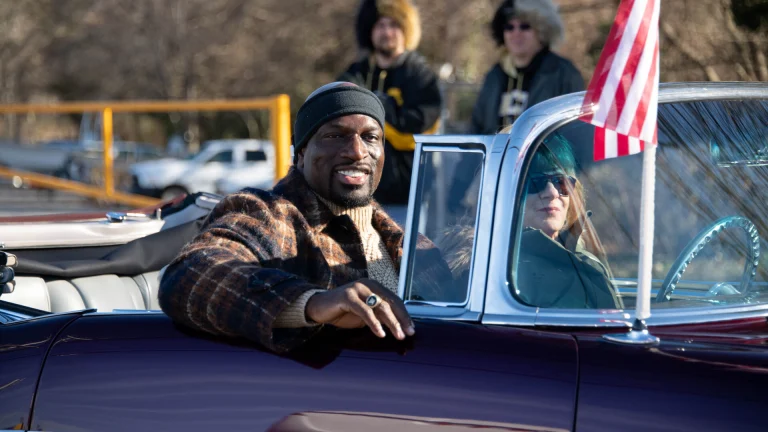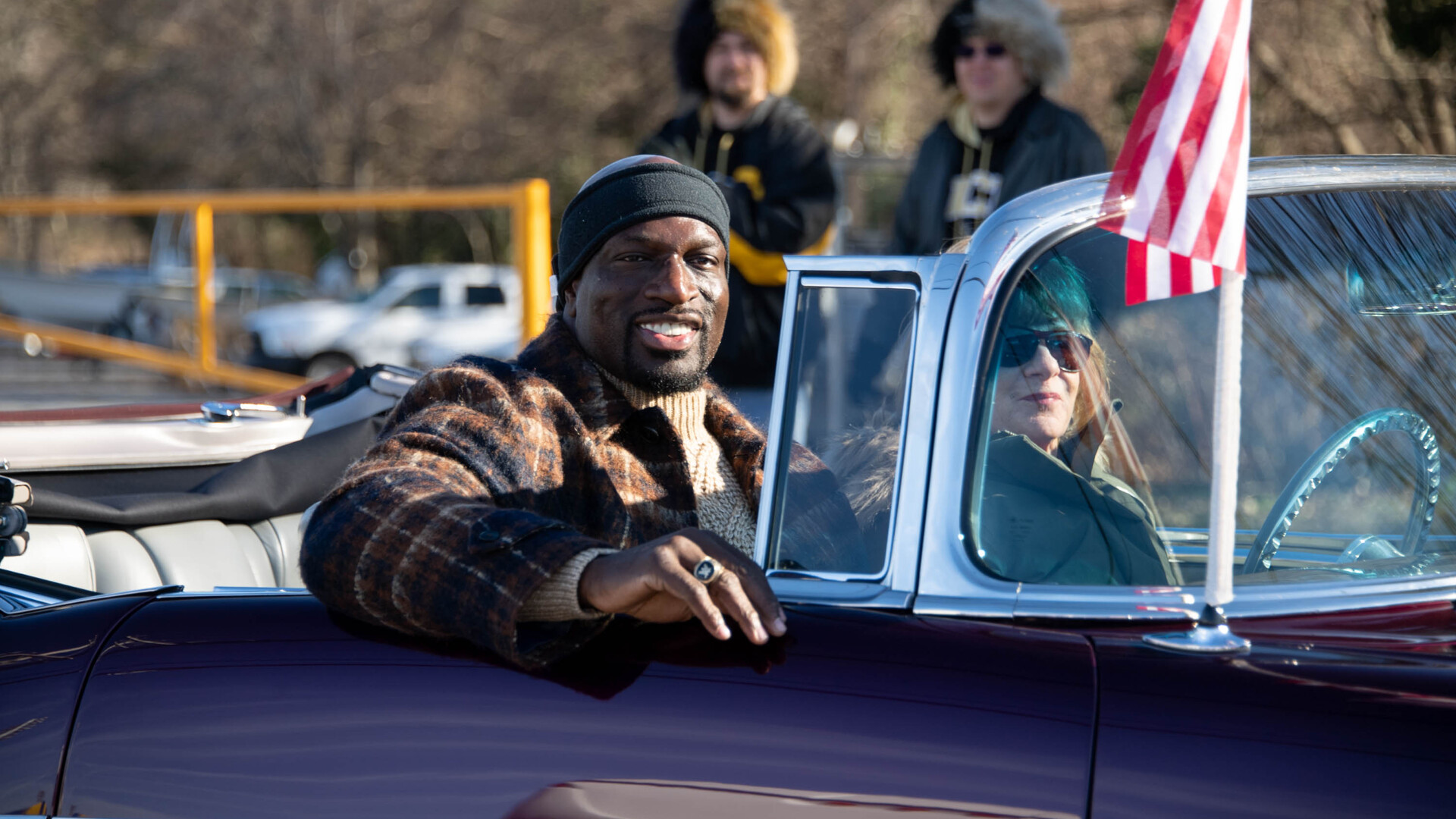
Titus O'Neil rides as grand marshal of the Military Bowl Parade in Annapolis, Md., on Dec. 28, 2022. (U.S. Navy photo by Stacy Godfrey, public domain, via Wikimedia Commons)
Titus O’Neil booked an Uber home from Jupiter, Florida, to Tampa this week and finished the trip as its driver. In a post on X late on Nov. 18, the WWE Hall of Famer wrote that his driver “started hitting road reflectors like a pinball machine,” so he offered to take the wheel as a joke. The driver said yes. O’Neil says he drove the last 2.5 hours to Tampa himself while the driver slept.
He gave himself a five-star rating and wrote that without that decision he “may not have been alive to tell this story.” Uber’s support account answered him publicly, telling O’Neil it was glad he made it home safely but that “this experience is not okay,” and asking him to send the account and trip details so the company could investigate.
O’Neil, a Tampa Bay native who received WWE’s 2020 Warrior Award, tells it as a joke, and it reads like one. Measured against Uber’s own driver policies and Florida’s ride-hail statute, his account describes a trip that ended safely because one rider was awake and willing to drive. Uber’s fatigue limit had no way to see the problem, and once O’Neil slid behind the wheel, the rules Florida wrote for that ride stopped describing what was happening in the car.
Uber’s 12-hour driving cap only counts time on Uber
Uber’s main defense against tired drivers is a timer. Its help page on driving time says the Driver app prompts drivers to go offline for at least six hours after a total of 12 hours of driving time, and that any time spent online and driving with Uber counts toward the limit. Uber rolled the limit out across the U.S. in February 2018, noting that some cities set different limits under local rules.
The timer can only count what happens inside the app. A full shift at another job, hours on a competing ride-hail app or a night without sleep never touch it, so a driver could start an Uber trip with the counter near zero after being awake for 20 hours.
Federal rules for commercial drivers count differently. A motorcoach driver may drive up to 10 hours after eight consecutive hours off duty, and a truck driver up to 11 hours after 10 off, according to the Federal Motor Carrier Safety Administration. The federal definition of on-duty time in 49 CFR 395.2 includes “performing any compensated work for a person who is not a motor carrier,” so a warehouse shift before a run eats into a log truck driver’s clock. Those rules cover commercial motor vehicles such as big rigs, buses and vans built for nine or more people, not a car carrying one paying rider across Florida.
Florida’s ride-hail law is written around the vetted driver
Florida regulates Uber trips under section 627.748 of the state statutes. The law defines a “TNC driver” as a person who receives connections to riders from a company like Uber and, for compensation, uses a vehicle to provide prearranged rides. Before that person can accept a single request, the company has to run local and national criminal background checks, search the national sex offender website and pull a driving history report. More than three moving violations in the previous three years makes a driver ineligible.
The insurance requirements follow that same person. During a prearranged ride, the statute requires at least $1 million in primary liability coverage, and it describes coverage in terms of the TNC driver being logged on to the app or engaged in a ride. O’Neil was a paying rider. Uber had never screened him, he wasn’t being paid, and he wasn’t the person the statute’s coverage is built around. The statute says nothing about a passenger taking over mid-trip, so whether a crash claim from that drive would have paid out would have come down to the policy’s own wording.
Florida adds a second layer for whoever owned the car. Under the state’s dangerous instrumentality doctrine, an owner who lets someone else drive can be held responsible for that driver’s negligence. Section 324.021(9)(b)3 limits that exposure for an individual who lends a vehicle to $100,000 per person and $300,000 per incident for bodily injury and $50,000 for property damage, plus up to $500,000 more in economic damages if the borrowing driver is uninsured or carries less than $500,000 in combined liability coverage. The caps don’t shield an owner from liability for his own negligence.
NHTSA says drowsy-driving deaths are undercounted
The National Highway Traffic Safety Administration counted 644 deaths in drowsy-driving-related crashes in 2024. Its broader estimate, for 2017, put drowsy drivers in 91,000 police-reported crashes that injured about 50,000 people and killed nearly 800. NHTSA says traffic safety, sleep science and public health researchers broadly agree that figure is an underestimate, because investigators can’t always tell when sleepiness caused a crash.
The crash NHTSA describes as typical is a single driver running off the road at high speed with no sign of braking, often on a rural road or highway. Uber’s drowsy-driving policy lists the warning signs a rider might notice, including a driver nodding off or being unable to keep the vehicle in its lane. Raised reflectors sit on the lane lines, so a car that keeps hitting them is drifting across those lines.
A first drowsy-driving complaint can cost an Uber driver six hours
The same policy spells out the penalty. A drowsy-driving complaint “may temporarily affect a driver’s access to the Driver app for 6 hours,” and serious or repeated claims can lead to permanent loss of access. The policy’s rider-side remedy is a report to customer support. That is the same six hours offline the 12-hour timer imposes on any driver who hits the limit.
O’Neil did not name his driver, and the driver has not been publicly identified. By O’Neil’s account, the man was falling asleep with a passenger aboard and then handed that passenger the keys, which puts the trip somewhere past an ordinary complaint. Uber’s reply on X asked for the details but did not say what it would do with them. Now Uber has to pick: a six-hour lockout, or the permanent ban its policy saves for serious cases. Also open: whether O’Neil, who asked to be paid in Uber credits, gets anything back for the ride he drove himself.
Should Uber’s 12-hour limit count every hour a driver has worked that day, the way federal rules do for truckers, or should a driver’s other jobs stay outside the app?
About the Author