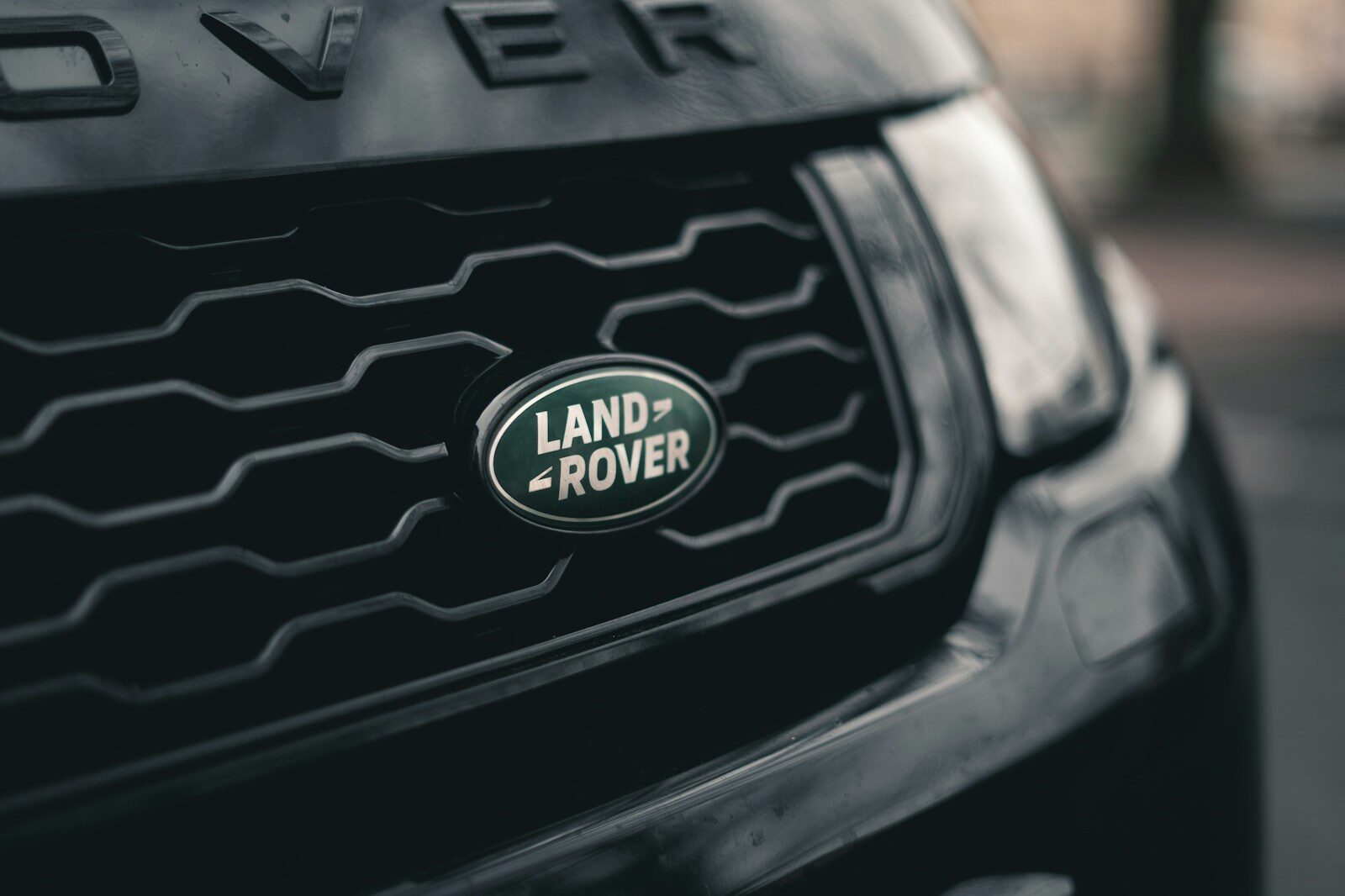
Read Land Rover’s Sport Electric announcement all the way through and try to find a number. Any number. Battery capacity, motor output, range, towing rating, kerb weight, price, on-sale date. There isn’t one. The release published on 16 July confirms that Range Rover’s second EV exists, that prototypes did some stunts at a private event, and that “further details of Range Rover Sport Electric will be announced later this year.”
Deal Alert: Nowell Leather’s Hand-Stitched Wallets and EDC Gear Are Built Like a Well-Kept Ride
That’s not a criticism of the car, which nobody outside JLR has driven. It’s an observation about what this announcement actually is: a demand-signal exercise dressed as a product reveal, aimed at people who might put down a deposit before knowing what they’re depositing on.
What the release does and doesn’t say
The confirmed facts are thin but real. The Sport Electric is Range Rover’s second EV. It was shown in a private preview at the Goodwood Festival of Speed, where prototypes ran driven challenges on the Goodwood Motor Circuit. The electric version will complete the Sport’s powertrain lineup alongside a plug-in hybrid, a mild-hybrid V8 petrol, and six-cylinder petrol and diesel. JLR promises “more power and torque” plus a new chassis tune and, notably, “audio sound.”
Related Articles
- A Small Town Just Tore Down Its License Plate Cameras — Drivers Should Pay Attention
- Zane Smith’s Payback Against Carson Hocevar Cost Him Twice at Chicagoland — And NASCAR Isn’t Stepping In
Two things worth flagging. First, “showcased at the Goodwood Festival of Speed” and “the public saw it” are different claims. This was a closed event on the circuit, not a run up the famous hillclimb in front of the grandstands. Every image in the media pack is from that controlled setting.
Second — and this is the sort of thing you catch only by reading the source — JLR’s own bullet points say “Range Rover Electric prototypes took on a series of driven challenges at Goodwood,” while the body text three paragraphs later attributes those same challenges to the Range Rover Sport Electric. Somebody copy-pasted from the full-size car’s release and didn’t finish the search-and-replace. Minor, but telling about how quickly this went out the door.
The five-powertrain claim doesn’t travel
Land Rover frames the completed lineup as diesel, six-cylinder petrol, mild-hybrid V8 petrol, plug-in hybrid and electric. Genuinely broad, and genuinely useful for a company selling into markets with wildly different emissions timetables.
Americans get four of those, because there’s no diesel Range Rover Sport in the US. Worth remembering the next time you see the five-powertrain talking point recycled without the asterisk. The strategic logic still holds — JLR can dial the mix market by market as regulations move — but the customer-facing version of that flexibility is thinner on this side of the Atlantic than the press release implies.
The stunts are a real reference, and they matter
JLR invokes two specific pieces of Range Rover Sport history: the 999-step ascent at Heaven’s Gate in China and the climb of an Icelandic spillway. Those weren’t marketing abstractions. They were engineered demonstrations of low-speed traction control and driveline modulation on surfaces where a slipping wheel means you’re going backwards down a mountain.
That’s exactly the discipline where electric drive should be better, and it’s the most interesting technical question hanging over this car. An electric motor delivers precisely metered torque from zero rpm with no clutch, no torque converter, no gear hunting and no stall. For crawling — the actual definition of serious off-roading, not the airborne stuff in commercials — that’s a genuine advantage over any combustion setup.
The trade-offs run the other way, and buyers should think about them before the reveal rather than after.
A battery pack integrated into the floor lowers the center of gravity, which is a gift on tarmac and a real help to a tall SUV’s body control. It also occupies the space under the car where ground clearance and breakover angle live. Air suspension can claw a lot of that back, which is why every serious electric off-roader has it. But the geometry is a physics problem, not a software one, and the specific numbers — approach, departure, breakover, wading depth — are the first things to check when the full spec lands.
Then there’s mass. EVs are heavy, and weight behaves differently on soft ground than it does on a circuit. A heavier vehicle sinks further in sand and mud, needs more recovery capacity, and puts more load through the tires it’s standing on. It also affects towing, and Range Rover Sport buyers tow. Demand the braked towing figure, and demand a real-world range-while-towing number rather than the headline range, because the gap between those two is where towing customers get ambushed.
The ownership questions nobody’s answering yet
Here’s what deserves more attention than the 0-60 figure the reveal will eventually lead with.
A high-voltage battery structurally integrated into the floor of a vehicle marketed on wading and rough terrain changes the accident and insurance math. Puncture a sump on a rock and you have an expensive, survivable repair. Puncture a structural battery enclosure and you frequently have a total loss, because insurers and manufacturers are conservative about pack integrity after impact and because a pack replacement can approach a meaningful fraction of the vehicle’s value. If you intend to use this car the way the press release implies, ask your broker specifically how underbody battery damage is treated before you sign anything.
Related Articles
- ENDS NOW: Win Two Ultra-Rare Mopar Dream Machines — Backfire News Readers Get More Entries!
- John Deere Just Lost Its Repair Monopoly, and Every Software-Locked Vehicle Owner Should Be Paying Attention
Same applies to a used-car horizon nobody’s discussing yet. Battery state-of-health documentation is becoming the single most important line item in EV resale, and it will matter more on a vehicle whose second owner has to wonder how hard the first owner went at the green lanes.
Practical takeaway
Land Rover says details come “later this year,” and it’s already late July. That’s a tight window, which suggests the full reveal is close and that the private preview was about locking in interest ahead of it.
If you’re seriously considering one, the useful move is not to get excited about a chassis tune nobody has independently assessed. It’s to write down the five numbers that will actually determine whether this car works for you — usable range, DC charging peak and taper, braked towing capacity, ground clearance and breakover, and price — and refuse to have an opinion until Land Rover publishes all five. The company’s own note to editors commits to fully electric models across the Range Rover family before 2030. There’s time to wait for the spec sheet.
About the Author