Small-town South Carolina isn’t the setting you’d pencil in for a surveillance-tech showdown, but Pageland—a Chesterfield County town of roughly 2,500 people—has one anyway. The Pageland Police Department says someone deliberately cut down two of the town’s Flock Safety camera poles, and it’s asking anyone who knows something to call 843-672-6437. In its post, the department framed the act as damage to property “that belongs to the Town” and credited the cameras with helping close a homicide, recover stolen vehicles, and identify hit-and-run suspects. Yahoo!
No suspect description, no location for the downed poles, no stated motive. You don’t need a criminology degree to guess at the “why,” though, because Flock’s roadside boxes have become some of the most argued-over hardware in the country.
What these things actually are
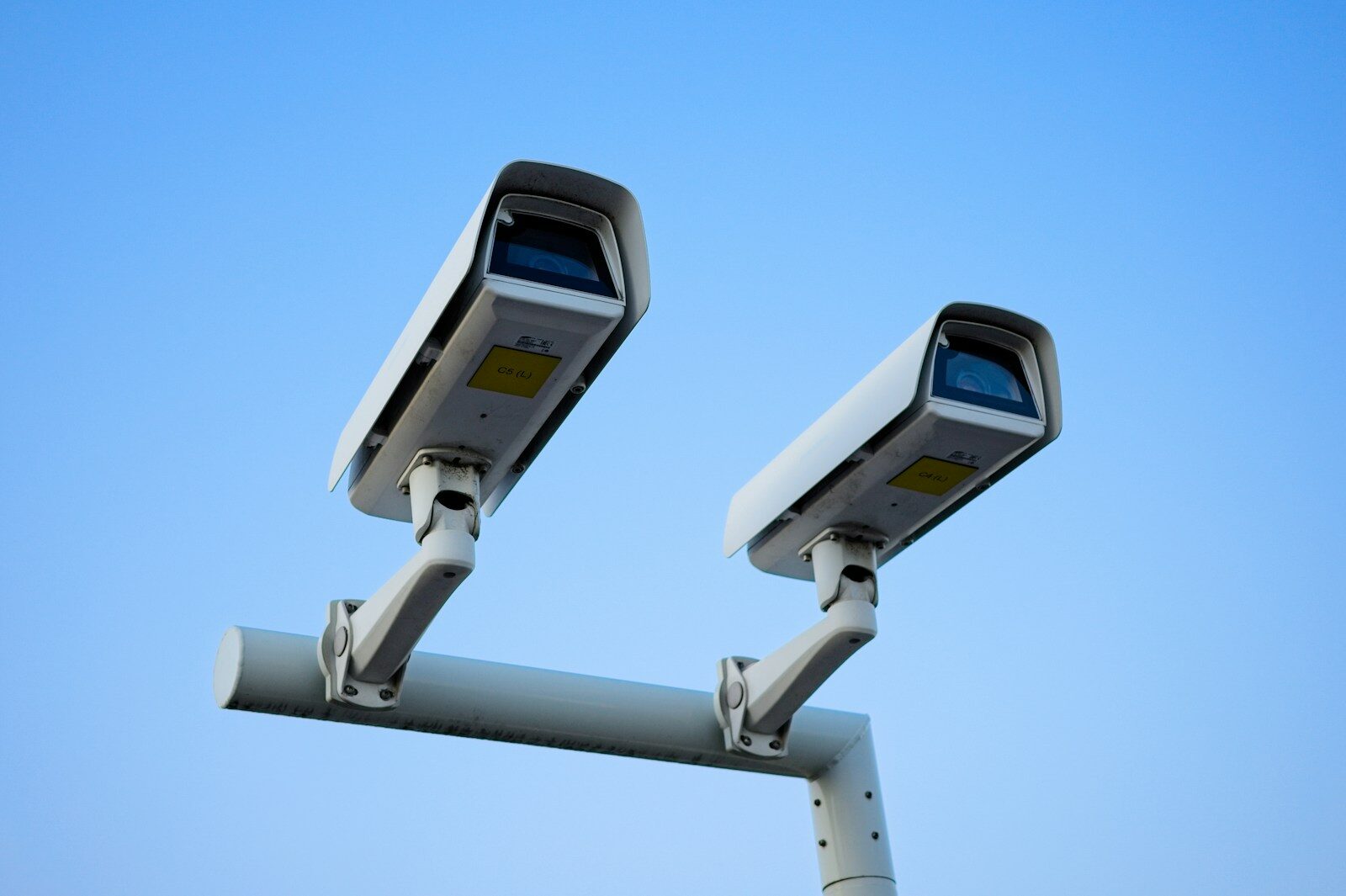
Flock cameras are automated license plate readers—ALPRs. Per Flock’s evidence policy, each unit uses passive infrared motion detection to wake up when a vehicle passes, snaps a still image, runs the plate against state and national crime databases, and uploads the whole thing to Amazon’s cloud, encrypted, for a default 30 days.
Related Articles
- Gresini Won’t Replace Fermín Aldeguer At The Sachsenring, And MotoGP Doesn’t Require Them To
- Herrin Hacks Binder’s Points Lead With Double Victory At Ridge — And Yamaha Quietly Made Hooligan History
Here’s the detail that matters for the vandalism angle: these are solar-powered, LTE-connected units that Flock advertises can install in hours with no wiring and no IT work. That’s the whole product pitch—but it’s also why they live on skinny standalone poles instead of hardened infrastructure. There’s no trenched conduit or junction box to deal with. It’s a pole with a box on top and a solar panel. A determined person with a saw can drop one, which is precisely what appears to have happened here. The flip side of “installs anywhere in an afternoon” is “removable in an afternoon.”
Why enthusiasts should care more than most
For our crowd, the concern runs deeper than “they photographed my plate.” Flock’s machine learning doesn’t just read the tag—it logs make, model, color, and distinguishing features like roof racks into a searchable vehicle profile. Drive something that stands out—a bagged widebody, a wrapped project, a numbers-matching classic with a vanity plate—and you’re trivially easy to isolate in a database. Every pass by every camera becomes a timestamped, geotagged data point, and Flock’s own hardware page brags about billions of plate reads a month feeding a shared network across agencies.
The 30-day figure has an asterisk
Flock leans hard on that 30-day auto-delete, and it’s real. But it’s a setting, not a statute. Flock’s LPR policy states retention can be increased or decreased on a case-by-case basis depending on a customer’s own law or policy. The agency owns the data; Flock just warehouses it. So the “short retention” everyone points to is a default that individual departments can dial up—and data flagged for an investigation isn’t on that clock at all.
The legal fight, briefly
Flock argues in its white paper that these are discrete still images at fixed locations rather than continuous tracking, and that the system has “No ability to search specifically for images of people.” Courts have largely sided with that reasoning, upholding warrantless use of fixed-location readers. The one notable outlier, a Virginia trial-court ruling in Commonwealth v. Bell, was later rejected by the Virginia Court of Appeals. The upshot for drivers: in most of the country, logging your plate on a public road without a warrant is currently legal. Flock Safety
Cutting it down accomplishes nothing—except a charge
Here’s the part worth spelling out for anyone tempted to follow suit. The footage a camera already captured doesn’t live on the pole—it’s in AWS. Dropping the hardware erases exactly none of the data recorded before the blade hit. All it does is stop future reads at that one spot until the town bolts up a replacement, which given the install time won’t take long.
Related Articles
- Herrin Hacks Binder’s Points Lead With Double Victory At Ridge — And Yamaha Quietly Made Hooligan History
- Red Bull KTM Signs Di Giannantonio And Alex Marquez For 2027, Wrapping Up MotoGP’s Earliest Silly Season Ever
What it does create is a criminal exposure. Destroying town property is malicious injury to property in South Carolina, so whoever did this traded a privacy grievance for a potential felony-grade charge depending on the repair cost. And there’s a certain irony to sabotaging a surveillance camera in a town blanketed with surveillance cameras—the odds that the act itself went unrecorded aren’t great.
The practical takeaway
If you own something distinctive, operate on the assumption your car’s plate and description are being logged whenever you’re on public pavement. That’s legal nearly everywhere right now. The actual lever for pushing back isn’t a reciprocating saw—it’s your city council meeting, your HOA’s Flock contract, and public-records requests into how long your local agency retains data and who it shares with. Cameras getting shot, painted, stolen, and sawed down is a growing national pattern, and every one of those acts hands the departments an easy narrative: look what the privacy people did to public property. If you want the cameras gone, the ballot box and the contract renewal beat vandalism every time.
About the Author