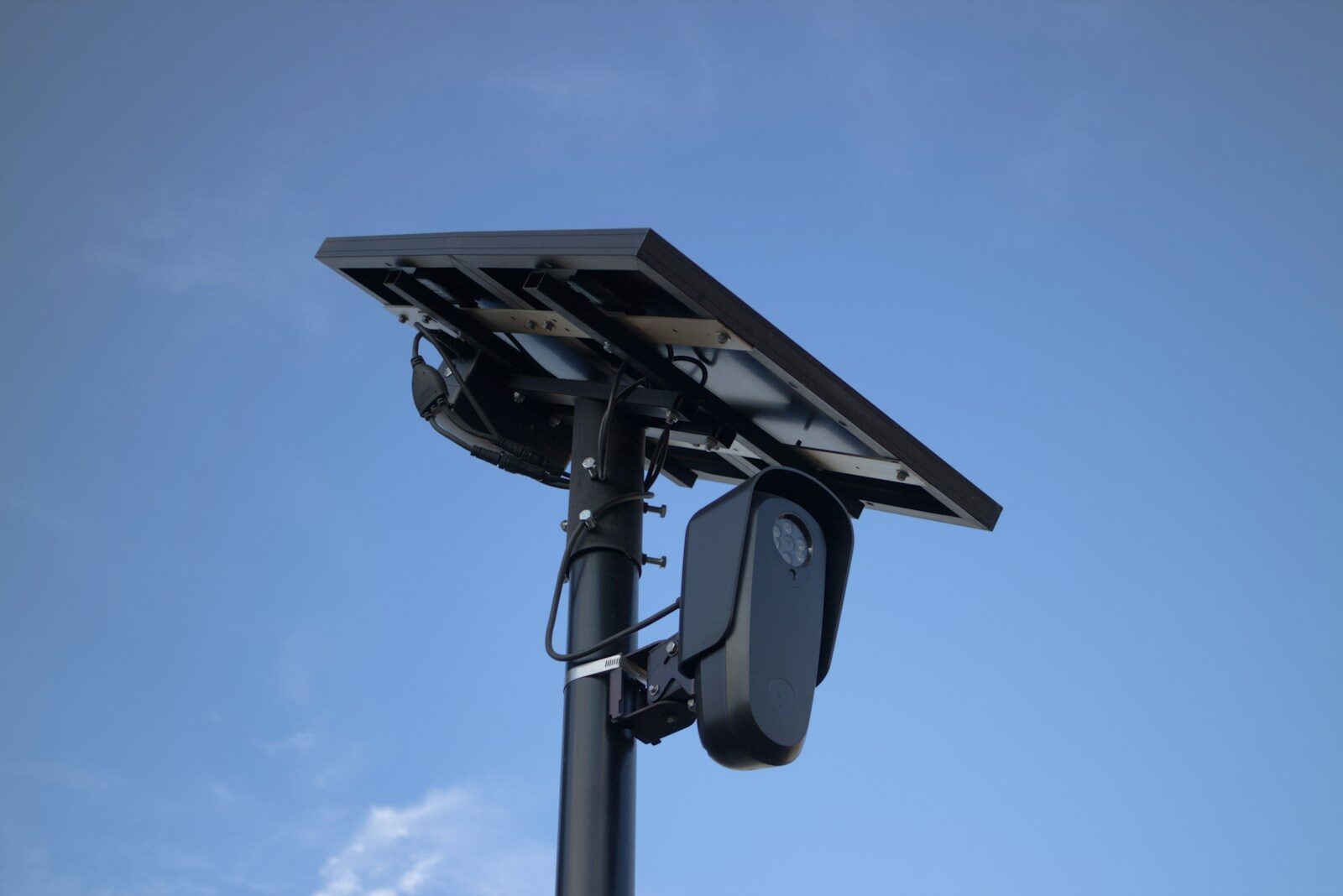
On August 13, the Brick Township Police Department’s detective bureau arrested Andrew Wardell, 31, of Brick, and charged him with fourth-degree criminal mischief. The department says the charge traces back to July 8, when officers were sent to the Exxon station at 181 Drum Point Road and found one of the agency’s Flock Safety license plate readers had been intentionally cut down. Police have not described how it came down, and they included the standard reminder that a charge is an accusation and that Wardell is presumed innocent unless proven guilty.
The arrest is the headline. The interesting part is the number bolted to it, because New Jersey does not charge property damage by mood. It charges by dollar amount, and “fourth degree” is a bracket, not an adjective.
Fourth degree is a price range, not a description
Under N.J.S.A. 2C:17-3, criminal mischief is graded almost entirely by pecuniary loss. Damage of $500 or less is a disorderly persons offense, handled in municipal court. Damage of $2,000 or more is a third-degree crime. The slice in the middle — more than $500 but less than $2,000 — is fourth degree. By charging at that level, investigators have effectively published their damage estimate without publishing a dollar figure.
That middle bracket is not a slap on the wrist. A fourth-degree crime in New Jersey is indictable, which moves the case to Superior Court in Ocean County rather than the municipal courtroom down the hallway. The statutory exposure runs to 18 months in prison under 2C:43-6 and a fine of up to $10,000 under 2C:43-3 — a fine ceiling roughly five times the maximum damage the charge itself alleges. Restitution is a separate line item on top of that.
Flock publishes its own parts counter, and the math lines up
Here is where the grading gets weirdly precise. Flock Safety publishes a 2026 reinstall and relocation fee schedule, and it reads like a service menu. A replacement camera is $800. A replacement Flock pole is $500. A replacement solar panel is $350. An advanced pole is $2,000 on its own. A technician visit for anything not on the list is $350, labor and materials included.
Take down a standard pole-mounted unit and you are plausibly looking at a camera, a pole and a solar panel: $1,650 before anyone bills the drive time. Drop that into New Jersey’s grading table and it lands inside the fourth-degree window with room to spare on both sides. The charge and the vendor’s price list agree with each other, which almost never happens in property crime.
Who actually eats that bill depends on a checkbox in the contract. Flock sells an optional annual Camera Protection Plan, and the company says enrolled agencies get covered cameras repaired or replaced at no additional cost — every replacement fee on that schedule is waived. Departments that skipped the add-on write the check themselves. For scale, Flock’s published government pricing puts a Falcon LPR at $3,000 per camera per year, with installation running from $150 on existing infrastructure to $1,900 for an advanced install. Multiply that across a network and you get the kind of contract math that has produced eight-figure camera deals in single counties.
Cutting the pole does not cut the data
This is the part that gets lost in the argument. The value in an automated plate reader is not in the box on the pole. Flock’s Falcon line reads plates and layers on what the company markets as Vehicle Fingerprint technology, cataloging identifying characteristics beyond the plate itself — which is why these systems can flag a vehicle that has no readable plate at all. Everything the unit captures leaves the site.
New Jersey agencies then hold that material for three years under Attorney General Directive 2022-12, trimmed down from the five-year retention window in the prior directive. A camera that came off its pole on July 8 had already banked whatever it saw before that moment, and nothing about the hardware coming down reaches back into the database. Brick’s detectives took roughly five weeks to make an arrest and described the work as a lengthy investigation.
New Jersey regulates these harder than most states
Directive 2022-12 is worth knowing if you drive here. Only designated, trained users may query the system. Non-alert data can be searched for exactly three purposes: locating a vehicle or person under a BOLO, investigating a specific crime scene, and crime-trend analysis. Certain higher-risk searches require supervisory sign-off. Agencies must complete an internal audit each year by January 31, with results reported publicly by March 31. Sharing with out-of-state agencies requires a written agreement approved by the State ALPR Coordinator, and private entities are not permitted to receive law enforcement ALPR data at all.
That audit requirement is the practical lever. It is the same category of record that has exposed misuse elsewhere, including the supervisor caught running a partner’s plate and the ongoing fight over whether federal agencies need a warrant to touch this data. Courts are circling the same question, and a recent privacy ruling has already dented the industry’s favorite legal argument.
The cameras also exist partly on the state’s dime. New Jersey’s federally funded ALPR initiative put $9.75 million behind the technology, with $5 million reserved for a State Police highway network and $4.75 million distributed competitively to local agencies. Purchases required State Police pre-approval for compatibility, and grantees were expected to communicate with residents about coverage areas and effectiveness — a condition that gets quoted back at police departments a lot lately.
Why poles keep coming down
The backlash is not free-floating paranoia. In August 2025, Representatives Robert Garcia and Raja Krishnamoorthi wrote to Flock chief executive Garrett Langley citing a single Texas search that reached roughly 83,000 cameras across 6,809 separate networks, plus about 4,000 immigration-related searches sitting in Flock’s own logs. Once a local camera is a node on a national lookup network, the debate stops being about one gas station driveway. Several jurisdictions have responded by pulling their cameras entirely, while others dropped Flock and signed with a competitor doing the same job.
What drivers should actually take from this
Brick’s own description of the technology is worth taking at face value: the system does not issue tickets, does not conduct traffic stops and does not determine that anyone committed a crime. A read is an investigative lead that officers weigh against other evidence. If plate reader data ever surfaces in a matter involving you, the query and audit trail behind it is supposed to exist by directive — which makes it something a defense attorney can ask for by name.
And for anyone who has watched the online sport of tearing these down and thought about it: the trade is terrible. You are not deleting a database. You are generating an indictable charge in a state where the fine ceiling alone is several times the hardware value, and other states treat it far more harshly still — West Virginia files it under a statute built for sabotaging emergency equipment, and at least one Georgia sheriff’s office has promised a felony for so much as tampering.
The camera outside the Exxon on Drum Point Road will be back on a pole soon enough, billed at either $800 or nothing depending on which service plan Brick signed. The case in Superior Court will outlast the repair by a year or more. That asymmetry is the whole lesson.
About the Author