Lee Schmidt just wants to drive around Norfolk without a private company logging every trip he makes. Instead, the retired Navy sailor and his co-plaintiff, home health aide Crystal Arrington, are two years into a federal lawsuit over the city’s camera network, and the legal ground under that fight just shifted thanks to a Supreme Court case that has nothing to do with cars.
Garage-worthy EDC gear, on sale this week.
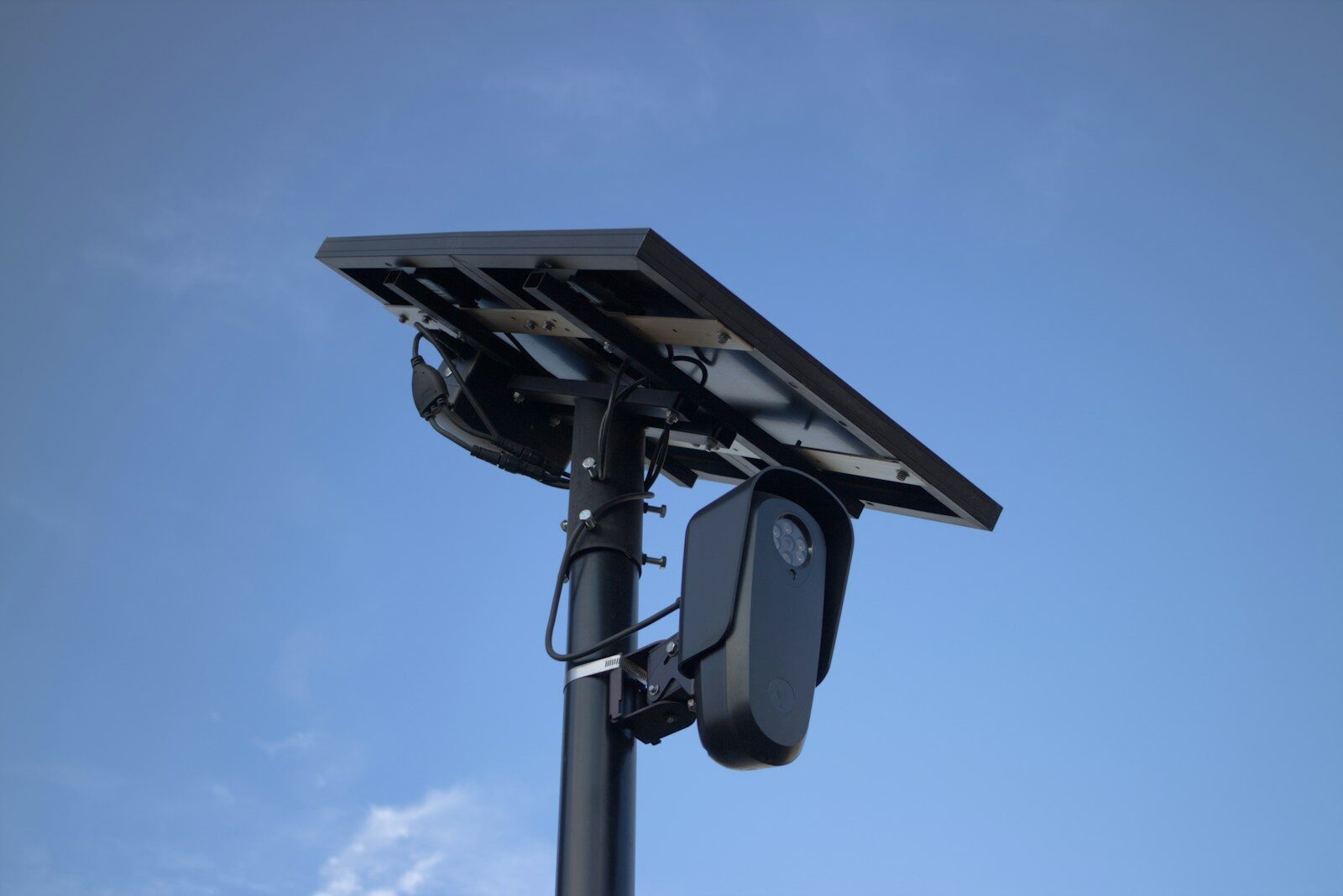
Here’s what makes this different from every speed camera you’ve ever rolled past. In 2023, Norfolk Police partnered with Flock Safety to bolt roughly 172 camera clusters across the city, and the hardware doesn’t wait for a crime before it takes your picture. Every car gets photographed, every time, and onboard AI reads the plate while building what Flock calls a Vehicle Fingerprint, a profile that includes paint color, body style, make, and even bumper stickers, so an investigator can search for a car without a plate number to start from. Virginia law now caps how long that footage sits in the system at 21 days, and Norfolk officers can query the database without ever asking a judge for a warrant.
Norfolk’s police chief described the goal in blunt terms when the network went up, telling reporters the cameras created a “nice curtain of technology” around the city. Schmidt and Arrington, backed by attorneys from the Institute for Justice, sued in October 2024, arguing that a city-wide dragnet capturing their daily movements is a warrantless search under the Fourth Amendment. A federal judge in the Eastern District of Virginia disagreed in January 2026 and granted summary judgment to the city, reasoning that a rolling 21-day window spread across roughly 175 camera clusters didn’t add up to the kind of exhaustive tracking the Supreme Court flagged in its 2018 Carpenter v. United States ruling on cellphone location records. Schmidt and Arrington appealed, and the case now sits before the Fourth Circuit as Schmidt v. City of Norfolk, No. 26-1227.
That appeal has drawn heavyweight interest from both directions. The ACLU, the ACLU of Virginia, and the Electronic Frontier Foundation filed a joint brief arguing that Flock’s networked databases let police departments run retrospective searches across jurisdictional lines, sometimes years after the fact, while the Cato Institute and the Electronic Privacy Information Center filed separately making a related point: a single camera catching a single plate is constitutionally unremarkable, but a 175-camera grid feeding a searchable, multi-week archive is a fundamentally different animal. On the other side, South Carolina led fifteen other states and the District of Columbia in a brief defending Norfolk’s approach as consistent with decades of precedent holding that nobody has a privacy interest in a plate that any passerby could read off the bumper.
A Bank Robbery in Richmond Changes Everything
In 2019, a man walked into a credit union near Richmond, handed the teller a note, and left with nearly $200,000. Investigators had no suspect from witnesses or surveillance footage, so a detective asked Google for a geofence warrant, a request for location data on every phone that had been within 150 meters of the bank around the time of the robbery. Google handed over the information in three escalating steps: first a list of 19 anonymous accounts, then more detail on nine of them, then names and account information for three, one of which belonged to Okello Chatrie. That data led detectives to search two residences, where they found roughly $100,000 in cash, a gun, and demand notes. Chatrie pleaded guilty to bank robbery but preserved his right to challenge the warrant, and was sentenced to nearly 12 years in prison.
On June 29, 2026, the Supreme Court ruled 6-3 that pulling Chatrie’s location data was a Fourth Amendment search. Justice Elena Kagan wrote the majority opinion, joined by Chief Justice Roberts and Justices Sotomayor, Kavanaugh, and Jackson, holding that an individual has a reasonable expectation of privacy in records about his cell phone’s location. Justice Gorsuch wrote separately, reasoning the same result through old-fashioned property law rather than privacy doctrine. Justice Alito dissented, joined in part by Justices Thomas and Barrett, arguing officers had acted in good faith and that Google had since changed its Location History practices anyway. The bigger point for Norfolk isn’t the outcome for Chatrie personally, since the case was sent back down to determine whether the warrant was reasonable. It’s the reasoning: the Court rejected the government’s argument that the search was fine because investigators only pulled a narrow, time-limited slice of a much larger dataset. Once the Fourth Amendment applies, the size of the slice doesn’t matter.
Why a Phone Case Just Became Norfolk’s Problem
Here’s where it gets awkward for the states defending Norfolk. Their amicus brief leaned on a 2024 Fourth Circuit panel opinion holding that geofence data collection wasn’t a search at all, the very ruling the full Fourth Circuit later upheld en banc. That en banc decision is exactly what the Supreme Court wiped out on June 29. The precedent Norfolk’s allies cited to prop up their case no longer exists in any form, and the doctrine that replaced it cuts against them. None of this automatically kills Flock’s win at the district court. Chatrie is a cell phone case, and stationary roadside cameras have a different legal pedigree going back to United States v. Knotts, the 1983 ruling holding that a person driving on public roads has no reasonable expectation of privacy in movements from one place to another. Norfolk’s defenders will keep leaning on that line of cases. But the more interesting fight is over duration and aggregation. In Carpenter, seven days of cell-site records was enough to trigger Fourth Amendment protection. In a 2021 Fourth Circuit case out of Baltimore, an aerial surveillance program photographing roughly 90 percent of the city every second for 40 or more hours a week was ruled a search too. Norfolk’s 21-day retention window sits uncomfortably between those benchmarks, and the argument that 21 days and 175 cameras don’t add up to tracking someone’s full sweep of movement gets harder to defend now that the Supreme Court has said the size of the data slice isn’t supposed to be the test in the first place.
Flock’s Reputation Problem Predates This Ruling
Flock isn’t just fighting this in court. The company has spent the past several months publicly reassuring customers after reports surfaced that federal agencies had queried local ALPR data outside the terms local police departments had agreed to, a controversy that pushed several cities to reconsider or cancel their contracts entirely. Flock’s response has included a mandatory offense-type field on every search query, tighter restrictions on federal access permissions, and the December 2025 hire of Chris Castaldo as the company’s first chief information security officer, all moves aimed at making the product look more defensible in court and in city council meetings alike. Meanwhile, the misuse cases keep piling up separately from the constitutional question. One Milwaukee officer resigned after running a woman’s plate 179 times without any investigative reason, and a Georgia sheriff’s office has gone the opposite direction, threatening felony charges against anyone who so much as touches one of its camera poles. A ruling against Norfolk at the Fourth Circuit would land on top of all of that reputational pressure at a rough time for the company’s sales pipeline.
What This Actually Means If You Own a Car
Automated plate readers are now standard equipment for police departments, homeowners associations, and even private toll operators, and the data they generate typically isn’t governed by anything close to the warrant requirement that applies to a phone tap or a home search. That’s the practical stakes here, and it extends well past one Virginia lawsuit. If the Fourth Circuit, and eventually the Supreme Court, extends Chatrie’s reasoning to camera networks, expect retention limits, warrant requirements, and interstate data-sharing restrictions to tighten across the board, the same way Carpenter reshaped how police request cell records after 2018. Until then, the rules vary enormously by state. Virginia caps retention at 21 days and restricts sharing outside state lines, while plenty of other jurisdictions running the same Flock hardware keep data far longer with far fewer strings attached, and some towns have decided the legal and political risk isn’t worth it and torn the cameras down altogether. Nothing about the Chatrie decision forces Norfolk to power off a single camera today. But the Fourth Circuit now has to work through an opinion that dismantled the exact legal scaffolding the states used to defend Flock’s cameras, while Schmidt and Arrington have a fresh stack of citations to hand the judges. Whichever way that panel rules, this is very likely headed back to the Supreme Court, and the next stop after that is every driveway in the country with a Flock camera parked at the end of the street.
About the Author