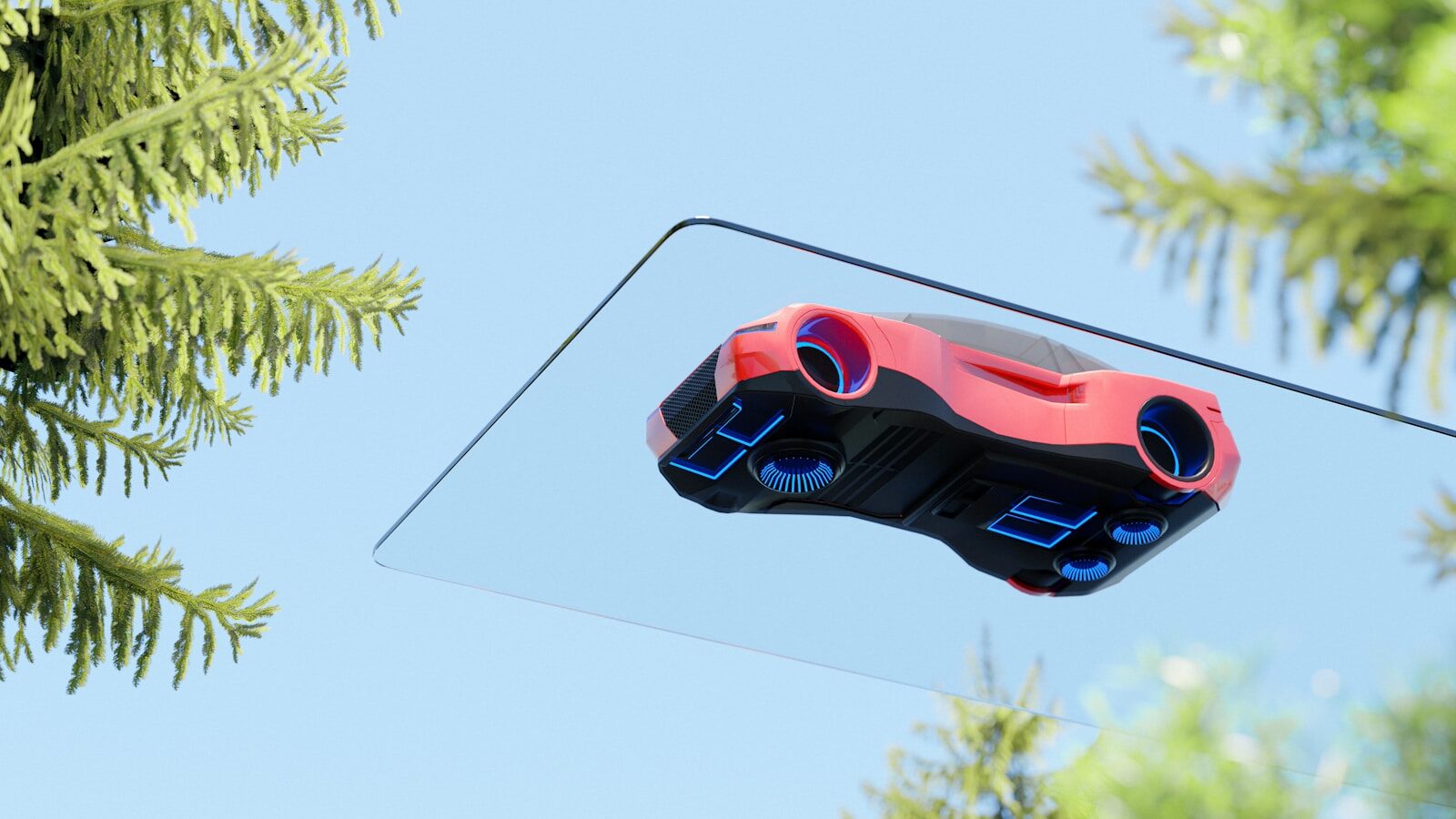
Volkswagen built two full-size flying machines, won a design award for one of them, sat a Chinese premier in the cabin, and then quietly walked away. Not a single paying passenger ever left the ground.
The company’s Vertical Mobility project — the thing that became V.MO — was killed in 2024, five years after it started, a finding Reuters reported last week from internal documents. Volkswagen has published nothing about the shutdown. But the primary record it left behind between 2020 and 2023 tells a more useful story than the obituary does, because you can watch the timeline slip in real time.
What VW actually built
The V.MO was not vaporware. Volkswagen Group China’s own July 2022 release describes a 11.2-meter-long airframe with a 10.6-meter span, eight fixed lift rotors and two rear pusher props — a lift-plus-cruise layout, the most conservative architecture in the eVTOL playbook. Target: four passengers plus luggage, 200 km range.
That configuration matters mechanically. Lift-plus-cruise means you carry eight rotors and their motors as dead weight the entire time you’re in forward flight, and you carry two pushers as dead weight the entire time you’re hovering. In exchange you get rid of tilting mechanisms, which are the single hardest thing to certify on a tilt-rotor because a tilt actuator failure at transition is unrecoverable. VW chose weight penalty over failure-mode complexity. For a company with no aviation certification history, that’s the right call.
Related Articles
- Justin Marks Says Max Verstappen’s NASCAR Path Runs Straight Into a Ford Badge
- Florida Is Making an Example Out of Supercars, and This 137 MPH Lamborghini Just Became Exhibit A
The engineering constraints show up plainly in Volkswagen Group China’s own interview with project manager Zhou Jin. The battery came from CATL and Magna, developed exclusively for Volkswagen, and the team initially believed no suitable product existed. That is the whole problem with car companies building aircraft in one sentence.
An automotive traction pack optimizes for energy density and cycle life. An eVTOL pack has to deliver enormous continuous power during hover, tolerate the thermal load of doing it again on landing, and still hold a diversion reserve — because unlike a car, you cannot coast to the shoulder. Zhou’s team targeted 60 minutes of flight endurance. VW promised 200 km of range. Do that math and you get an average cruise near 200 km/h, which is exactly the figure the interview quotes, though it renders it as a range number rather than a speed. VW’s own published materials mix up the two.
The interview also contains a line worth pausing on: the eight-rotor layout was the team’s fourth attempt at a configuration, delivered from concept to full-scale validation article in eight months. “It feels like a world record!” Zhou said. In automotive terms, it is fast. In aviation terms, eight months to a validation article is the easy part.
The clock that actually ran out
VW’s 2022 release committed to an improved prototype flying “advanced test flights by late summer 2023.” No such flight was ever announced. Design partner Tangerine, which spent two years on the program, states on its own project page that working prototypes were built to test flight — but Volkswagen never published a flight-test result, a flight-hour count, or a certification basis agreement with Chinese regulators.
Compare that to what was happening around it. In October 2023, EHang received the world’s first type certificate for a pilotless passenger eVTOL from the Civil Aviation Administration of China — a process EHang says took more than 1,000 days from application acceptance. A production certificate followed in April 2024. In March 2025, CAAC issued the first air operator certificates for commercial human-carrying pilotless flights, in Guangzhou and Hefei.
That sequence — type certificate, production certificate, airworthiness certificate, operator certificate — is the entire ballgame, and it’s the part automakers consistently underestimate. In cars, you self-certify to FMVSS or type-approve to UNECE regs and the regulator generally trusts your test data. In aviation, the authority signs off on your design, your factory, each individual airframe, and your ability to operate it as a business. Four separate certificates, four separate audits, and no shortcut for being Volkswagen.
Volkswagen never entered that pipeline in any publicly documented way. The 2022 release said only that the Group would work with authorities “as the Vertical Mobility project develops.” Two and a half years later it was over.
The market told them, too
Here’s the detail that makes the whole thing sting: Volkswagen owned the research that predicted this outcome. Porsche Consulting — a Volkswagen Group subsidiary — published a vertical mobility study in 2021 concluding that the sector would reach roughly $32 billion by 2035, require at least $20 billion of investment to get there, and hold under 0.3 percent transport market share. Senior partner Gregor Grandl called it a “lucrative niche area.” Niche is doing heavy lifting in that sentence.
Related Articles
- Ford’s 1.0L EcoBoost Timing Belt Can Kill an Engine at 70,000 Miles. NHTSA Just Escalated Its Investigation.
- Portland’s Freightliner Plant Is Closing — And Daimler Filed This Plan Once Before
Meanwhile Beijing was building an industry around it. China’s State Council wrote the low-altitude economy into the national Government Work Report in 2024 as a growth engine, and CAAC projects the sector at 1.5 trillion yuan in 2025 rising past 3.5 trillion by 2035. When a government designates a category strategic, domestic firms get airspace corridors, test ranges, and regulators who answer the phone. A German joint-venture partner does not get the same access, no matter how good the airframe is.
There is a lovely piece of timing in the public record: the Sky Garden variant, credited to Volkswagen (China) Investment Co., took a German Design Award in 2024 — the same year the program was cancelled. The trophy outlived the project.
What enthusiasts should take from this
First, the recurring lesson of automaker aviation ventures: the hard problem was never the vehicle. Building an airframe that hovers is an engineering exercise a competent team can do in months. Proving it will not kill anyone, to a regulator’s satisfaction, is a multi-year capital commitment with no revenue in the middle. Every car company that has flirted with eVTOL has discovered the same asymmetry.
Second, insurance and liability are the quiet reason these programs die. A passenger aircraft creates exposure denominated in a different currency than a passenger car. Certification is the only mechanism that makes that exposure underwritable, which is why the certificate stack isn’t bureaucratic drag — it’s the product.
Third, and most relevant for anyone watching Volkswagen’s numbers: the group is retrenching in China because it has to. Killing a speculative aviation program while your core business is losing share to domestic EV makers is not a failure of nerve. It’s arithmetic. The interesting question is not why VW stopped. It’s why a company that already owned a study warning of no return before 2030 spent five years and two airframes finding that out the expensive way.
About the Author