Affiliate disclosure: Backfire News may earn a commission from qualifying purchases made through links in this article, at no extra cost to you. This does not influence which products we recommend.
Most dash cams make the same pitch: sharper video, better night vision, a parking mode that won’t kill your battery. Vueroid’s S1 4K Infinite makes all of those promises too, then adds one that’s harder to ignore. It claims it can take a blurry license plate from your footage and use AI to figure out what it actually says.
This one is currently on Amazon Prime deal days sale here.
Vueroid sent us the two-channel (front and rear) version to put through its paces. Here’s what it is, what it costs, and how it held up in our car.
Who Is Vueroid?
If the name doesn’t ring a bell, you’re not alone. Vueroid is the dash cam brand of NC&, a South Korean company that started out designing image signal processing (ISP) chips and has supplied camera tech to CCTV makers and automakers for years. The company says it has built more than 4 million dash cams over the last five years, and every Vueroid unit is made in South Korea.
That ISP background is the whole sales pitch here. Plenty of dash cams use the same Sony sensors. Vueroid’s argument is that the tuning behind the sensor, the software that handles brightness, sharpness, noise and glare, is where its cameras pull ahead.
The Hardware
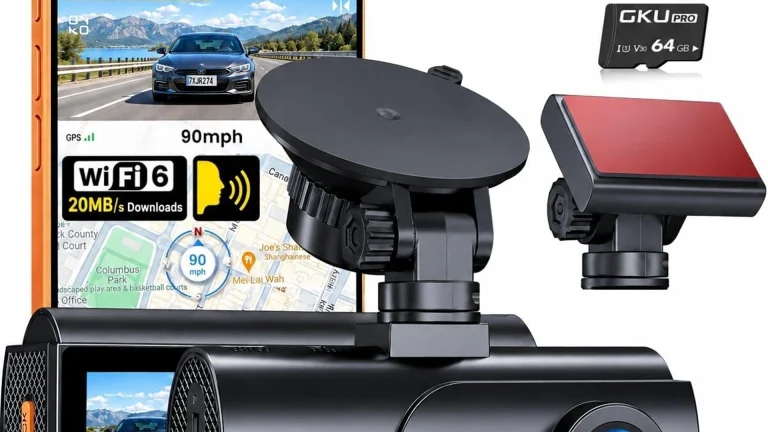
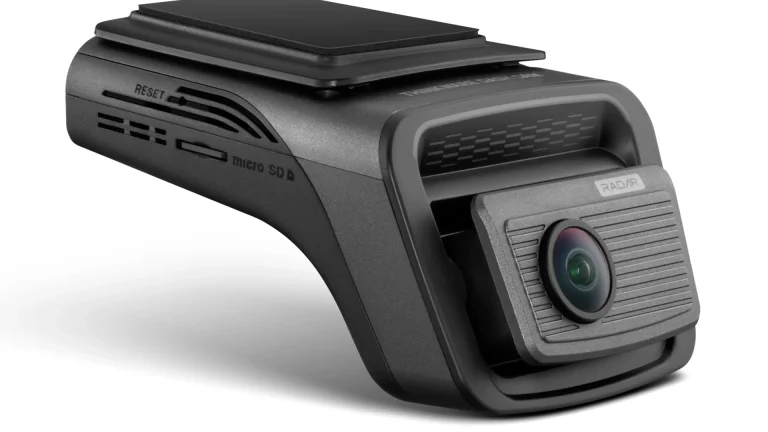
The S1 4K Infinite 2CH pairs a 4K front camera with a 1440p (2.5K) rear camera. Here are the key numbers:
- Front camera: 4K (2160p) at up to 60 fps, Sony STARVIS 2 IMX678 sensor, 151° field of view, f/1.6 lens
- Rear camera: 2.5K (1440p), 160° field of view
- Connectivity: 5GHz Wi-Fi to the Vueroid HUB app, plus built-in GPS
- Power: 12V hardwire or 5V USB-C
- Parking mode: draws under 1mA in standby, starts recording in under a second after an impact
- In the box: CPL (polarizing) filter and a hardwire kit. A microSD card is not included with the base kit.
The included extras are a nice touch. A CPL filter cuts dashboard reflections off the windshield, and a lot of brands charge extra for one. The same goes for the hardwire kit, which you’ll want if you plan to use parking mode.
[TEST NOTES: Build quality, size and how it looks on the windshield. Was the rear cable long enough for our vehicle? Year/make/model of the test car.]
Installation and Setup
Vueroid asks reviewers to update the firmware first through the Vueroid HUB app, which handles the update over Wi-Fi. On first power-up, the camera walks you through language, date, time zone, rear camera use, resolution, bitrate and memory allocation. The app needs Android 10 or iOS 15 or later, and connecting doesn’t require a password.
One quirk worth knowing: the camera pauses recording while you’re browsing playback or settings in the app.
Installation was easy, done at home by someone who has installed three or four of our personal dash cams before.
Video Quality: 30 FPS Beats 60 FPS After Dark
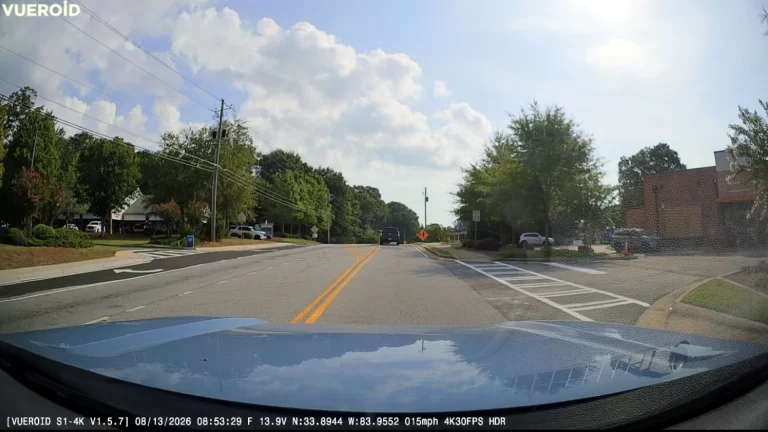
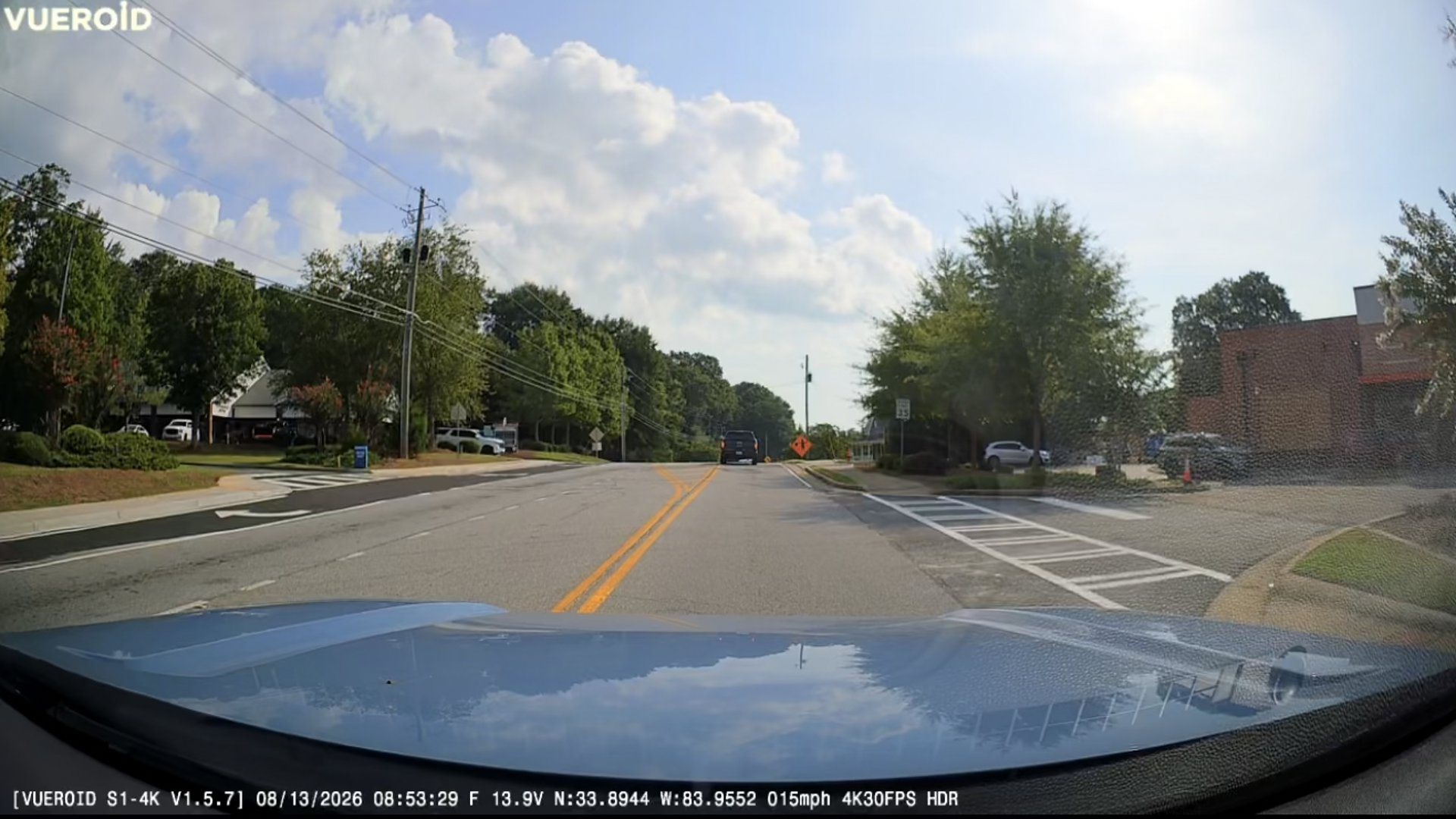
The headline spec is 4K at 60 fps, but there’s a catch. HDR only works at 30 fps, so running at 60 fps drops the camera into its Normal mode. Vueroid itself recommends 4K at 30 fps with the “HDR + Infinite Plate Capture” mode for the best results, especially at night. Infinite Plate Capture is tuned to reduce motion blur on license plates while you’re driving.
We used this one a lot while off-roading in our 4Runner. It stood up to the dim conditions and low light in nature. You can see the footage on our Instagram page.
The AI Plate Restoration Feature
This is the feature that sets the S1 apart. Inside the HUB app, you download a clip to your phone, pause on a frame with a fuzzy plate, draw a box around it and send it off for processing. The app comes back with its best guess at the characters.
There are some big caveats, and to its credit, Vueroid spells them out. Processing happens in the cloud, so you need to upload the image over cellular data. The model is trained on U.S. plates. It’s not meant for plates you can already read. And both AI features are still labeled beta, with Vueroid saying results should be treated as hints, not proof.
The second AI tool, Privacy Protection, works in reverse. It automatically blurs faces and license plates in a clip so you can post or share footage without exposing other people. Since 4K files are large, expect uploads to take a while and eat into your data plan.
Parking Mode That Handles the Heat
Parking mode is where Vueroid put a lot of effort, and a few features stand out:
- Extreme low power: The camera sleeps at under 1mA and wakes to record a 30-second event clip in under a second when it detects a hit.
- Durashift: When the cabin gets dangerously hot, instead of shutting down, the camera drops into an ultra-low-power state and still wakes up to record if something hits the car.
- Auto REC Off Zone: Using GPS, you can set up to three zones, like your garage or office, where parking mode switches off automatically. The radius is adjustable at 30, 50 or 100 yards.
- One-button toggle: A long press of the Confirm button turns parking mode on or off.
The Auto REC Off Zone is a smart idea. There’s no reason to drain your battery recording your own driveway all night.
Price and Availability
The S1 4K Infinite 2CH lists at $429.99, but it was on sale for $256.49 on Amazon during Prime Days. It also comes in a front-only 1CH version ($349.99 list) and a 3CH version that adds an interior camera ($499.99 list). Bundles with microSD cards are also available.
The Verdict
Can’t lose with this one. Durable, high quality, and high tech. The only somewhat complaint, and this isn’t likely to come up for normal drivers, is we had to crank the sensitivity way down for the crash detection – but unless you live around a lot of speed bumps, or drive unpaved roads a lot, you’re unlikely to notice.
Vueroid provided the S1 4K Infinite to Backfire News for review. As with all of our reviews, no promises are made, no strings are attached – we are unbiased, if we don’t like something, we will tell you.
About the Author