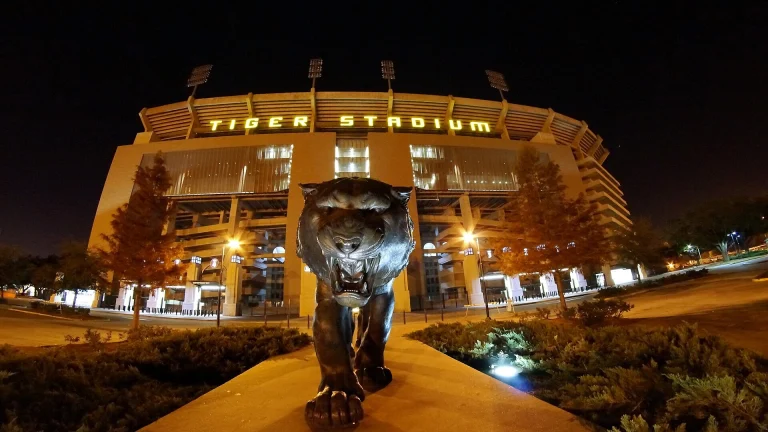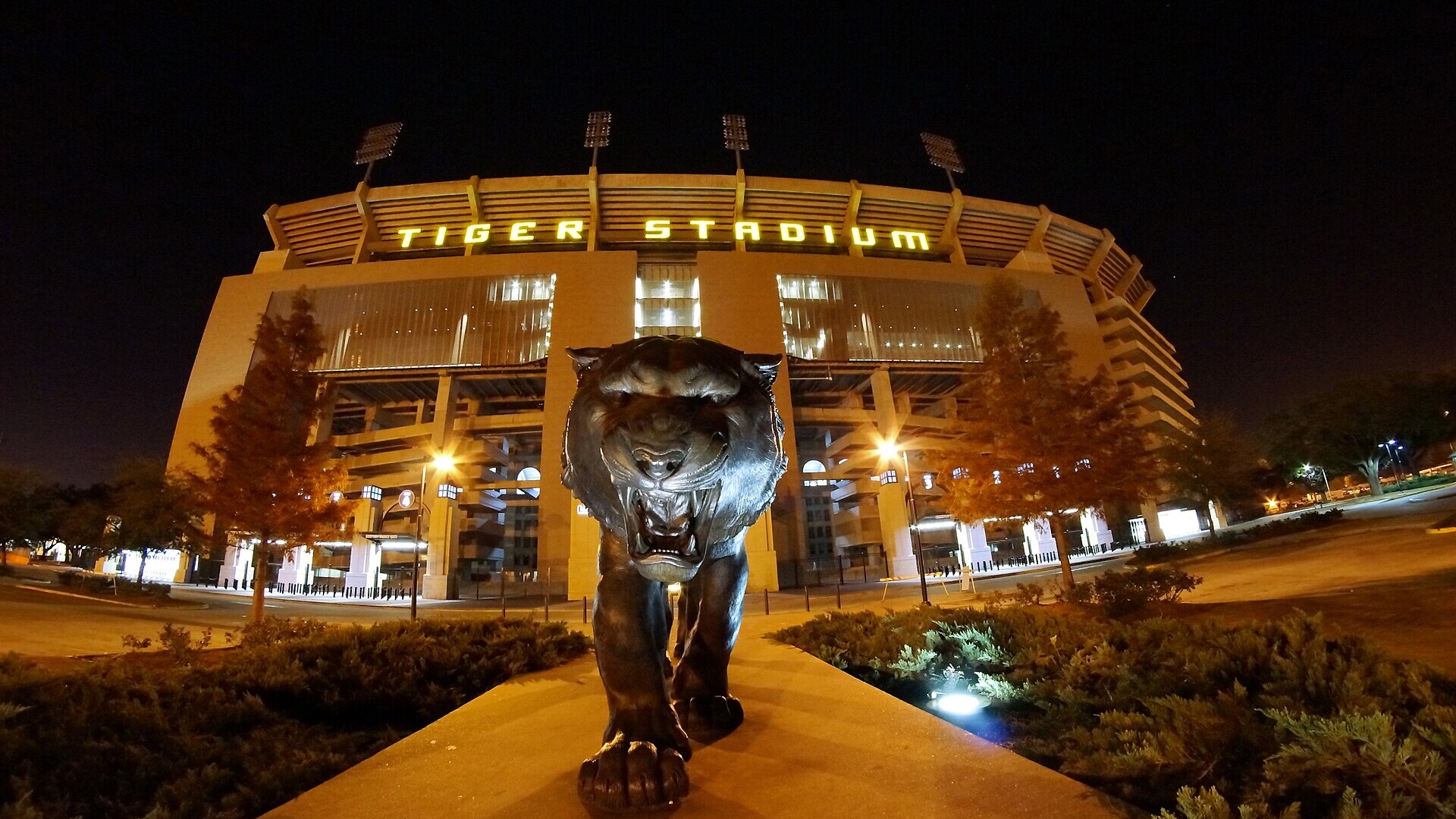
Tiger Stadium in Baton Rouge. Photo: getmahesh / Wikimedia Commons, CC BY-SA 2.0
LSU guard MiLaysia Fulwiley, 21, was arrested in Baton Rouge on Saturday night after Louisiana State Police said she hit an officer with her Dodge Charger and drove away from a traffic stop as the LSU–Texas game let out at Tiger Stadium. Fulwiley wrote on X that “the cop is literally lying,” then deleted the post. State Police have declined to say whether any dashcam or bodycam video exists.
What State Police say happened
State Police told WAFB that officers handling post-game traffic saw Fulwiley’s Charger driving erratically and stopped it shortly after 10:15 p.m. near Burbank Drive and West Lee Drive. The agency says she refused commands, hit a Department of Public Safety officer with the car and fled, and that officers later stopped the car and took her into custody. Impairment is not suspected, WAFB reported, and the officer’s injuries were minor.
The published accounts differ on the detail that matters most. The AP report, which WBRZ broke, says the right front of her car struck a police vehicle, after which she tried to cut through a store parking lot and was blocked in. OutKick, citing arrest records, reports that she was told to back up, reversed, then accelerated forward and struck an officer with the front right of the car, ran north on West Lee Drive and was intercepted on Highland Road.
She was booked into East Baton Rouge Parish Prison on aggravated battery, aggravated assault, flight from an officer and resisting an officer. WAFB and OutKick both list a fifth count, failure to obey a police officer. ESPN reported she posted a $20,000 bond. OutKick reported that the district attorney’s office will review the case before deciding on formal charges. LSU said it is “aware of the situation and have no further comment at this time as it’s an ongoing legal matter.” Her availability for Monday night’s home game against Troy was unclear as of Sunday.
Why a Charger can be charged as a dangerous weapon
Under R.S. 14:34, aggravated battery is “a battery committed with a dangerous weapon,” punishable by up to $5,000, up to 10 years with or without hard labor, or both. A battery, under R.S. 14:33, is the intentional use of force or violence “upon the person of another.” The statute’s wording points at a person, which is why the difference between an officer and a police vehicle is more than a detail in this case.
Whether a car qualifies as a weapon is answered by R.S. 14:2(A)(3), which defines a dangerous weapon as any instrumentality that, “in the manner used, is calculated or likely to produce death or great bodily harm.” The definition turns on how the object is used, not what it is. Aggravated assault, R.S. 14:37, borrows the same definition but tops out at $1,000, six months, or both.
The flight count has a lights-and-siren requirement
R.S. 14:108.1 defines flight from an officer as intentionally refusing to stop after a visual and audible signal from the emergency light and siren of a marked police vehicle, when the officer has reasonable grounds to believe the driver committed an offense. The penalty is $150 to $500, up to six months, or both. The reports describe officers working traffic control after a football game, and none of the ones I read says whether a marked unit with lights and siren signaled her.
The aggravated version of that statute carries up to 10 years and a $2,000 fine, but it requires conduct that endangers human life, which the law defines as at least two acts from a list that includes leaving the roadway, colliding with another vehicle, or going 25 mph or more over the limit. The booking counts reported so far say flight from an officer, not aggravated flight. Resisting an officer, R.S. 14:108, carries up to $500, six months, or both, and counts flight as obstruction when a person flees after notice of arrest is given.
What happens next
A booking is not a charging decision. The district attorney decides what, if anything, is filed, and counts can be dropped, reduced or added after prosecutors see the reports and any video. Of the five counts reported, aggravated battery is the one with a 10-year ceiling, and it rests on whether the Charger made contact with a person. Fulwiley denies that it did. State Police say it did. A dashcam or bodycam recording, if one exists, would answer it.
Featured image: Tiger Stadium at night. Photo by getmahesh via Wikimedia Commons, licensed CC BY-SA 2.0.
Her word against the officer’s, and State Police won’t say whether video exists. When stories collide, should agencies release footage fast or hold it until prosecutors pick charges?
About the Author