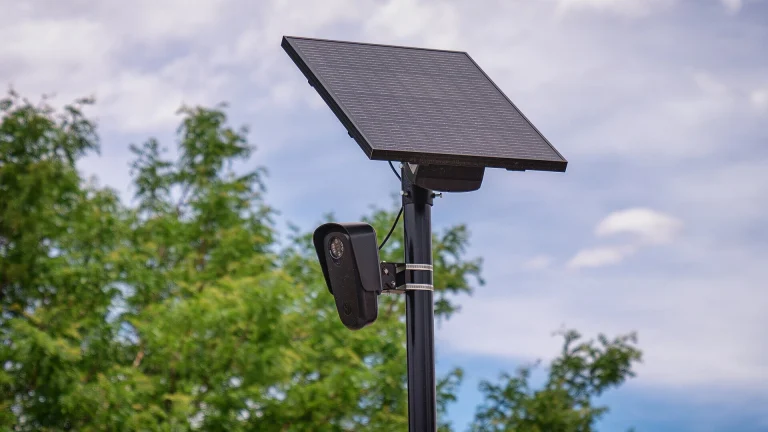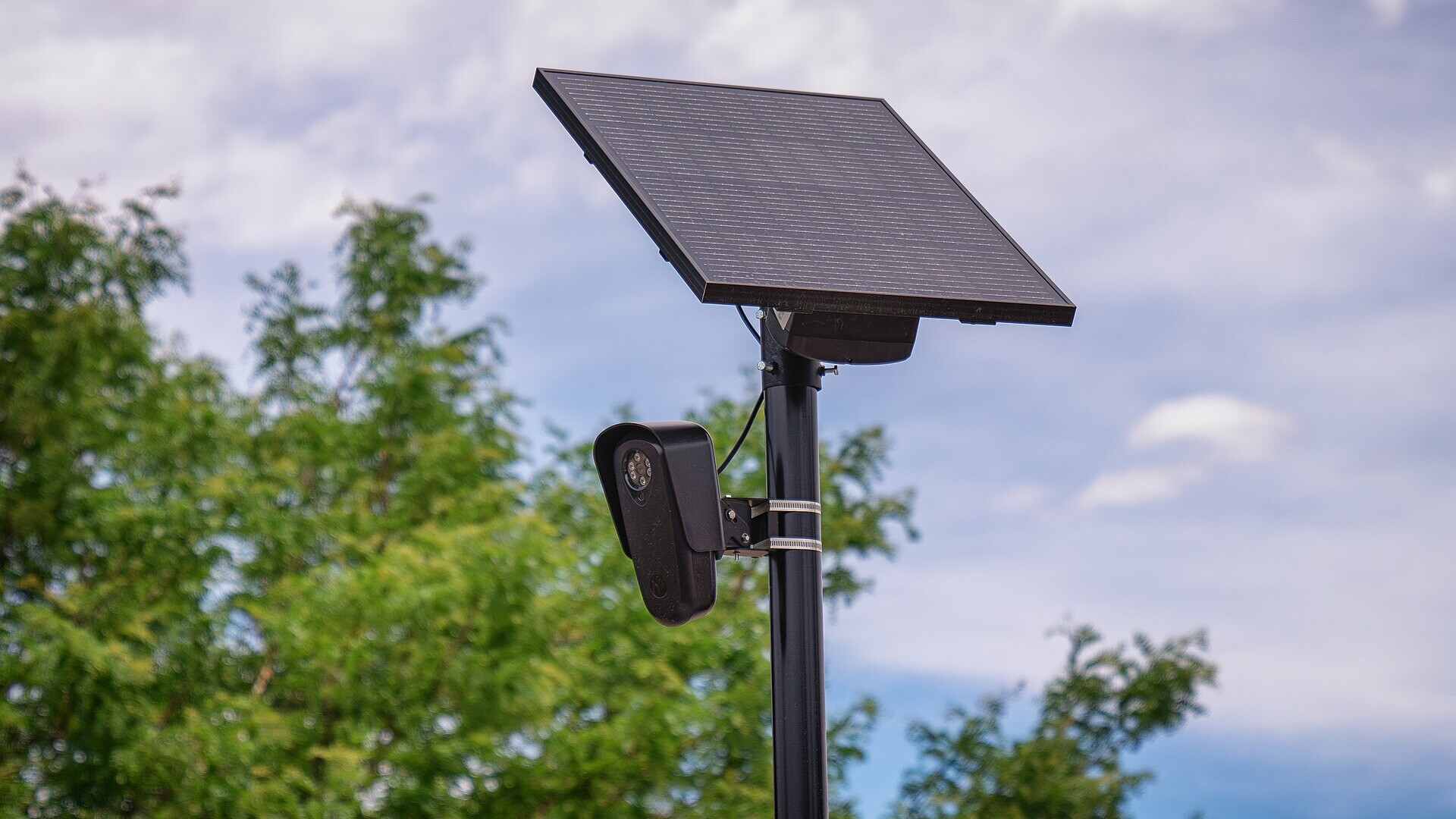
A Flock Safety license plate reader camera in Aurora, Colorado. Photo: Tony Webster / Wikimedia Commons, CC BY 2.0
Jayne L. Holland, 45, a former Harnett County, N.C., sheriff’s detective, turned herself in at the Wake County Detention Center on Tuesday, Nov. 3, and left on a $5,000 bond, one more North Carolina officer charged this year in a case about Flock license plate camera searches. The State Bureau of Investigation says a Harnett County grand jury indicted her, according to WLOS. An indictment is an accusation, and Holland is presumed innocent.
Reports differ on how many counts she faces
WLOS, relaying the SBI, reported one felony count of unlawfully accessing a government computer and one misdemeanor count of violating the state’s automated license plate reader law. WRAL, citing court documents, reported two misdemeanor plate reader counts plus the felony, with offense dates of Jan. 22 and April 1. A third report, distributed on Yahoo News, cited court documents for a window of Oct. 30, 2025, through April 15, 2026. I could not pull the indictment itself, so each description here is attributed to the outlet that gave it. The Harnett County court file will settle the count.
Fired Sept. 15, charged Nov. 3
Holland joined the Harnett County Sheriff’s Office in 2019 and last worked in its Criminal Investigative Division, the Sanford Herald reported. Sheriff Wayne Coats said the office received a complaint that she may have used the Flock camera system to track an individual for personal reasons. The office’s Professional Standards Division investigated, and she was fired effective Sept. 15. Coats and District Attorney Suzanne Matthews jointly asked the SBI to investigate, the JoCo Report said. The Daily Record reported on Oct. 9 that Coats would not say whether the firing was tied to the Flock inquiry and said only that she was no longer employed there.
Authorities have not identified the person allegedly tracked. WRAL’s headline says a woman. The Daily Record reported that a lawyer for a woman who says she was tracked sent Coats, the office’s staff attorney and Matthews a letter dated Aug. 1 asking them to preserve Flock query histories, audit logs, user access records and communications, to show whether her vehicle was searched, by whom, and what law enforcement purpose was recorded. I found no document saying whether that woman is the person named in the indictment. No statement from Holland or an attorney for her appeared in the reports I reviewed.
What North Carolina lets a detective do with a plate reader
Before an agency runs a plate reader system, G.S. 20-183.31 requires a written policy, and data may be obtained, accessed, preserved or disclosed only for a law enforcement purpose. G.S. 20-183.30 defines that as a criminal investigation, arrest, prosecution, or post-conviction confinement or supervision; apprehending someone with an outstanding felony warrant; locating a missing or endangered person; or locating a lost or stolen vehicle. Tracking someone for personal reasons, the allegation the sheriff’s office described, is not on that list, and the statute also bars using the data to enforce traffic violations.
The penalty for going outside that list is in G.S. 20-183.33: a Class 1 misdemeanor. Under the state’s misdemeanor sentencing chart, that tops out at 45 days for someone with fewer than five prior convictions, with community punishment only at the lowest level, and 120 days for someone with five or more. For a detective with a clean record, the plate reader count alone carries a 45-day ceiling.
The felony comes from a different law. G.S. 14-454.1(b) makes willfully accessing a government computer without authorization a Class H felony, and subsection (a), covering a scheme to defraud or to obtain property by false pretenses, is a Class F felony. The reports do not say which subsection was charged. At the lowest prior record level, the felony chart sets a presumptive minimum of 5 to 6 months for a Class H offense and allows community, intermediate or active punishment, so probation is possible. The computer-crime statute dates to 2002 and supplies the only felony count in the case.
How a driver would find out a plate was searched
Under G.S. 20-183.32, captured plate data is confidential and is not a public record. It can be disclosed only to specified criminal justice or federal officials for a legitimate law enforcement purpose on a written request, and it cannot be sold. Agencies generally cannot keep it more than 90 days without a preservation request or a warrant, and G.S. 20-183.31 requires them to audit system use at least annually. A driver who suspects a search cannot use a public records request to find out. What exists is the agency’s own audit trail, the same records the Aug. 1 letter asked the sheriff’s office to keep.
Other North Carolina cases this year
WLOS listed earlier 2026 cases in its Holland coverage: a Charlotte-Mecklenburg officer arrested in June after state authorities accused the officer of illegally accessing Flock cameras and running an unauthorized data request; a Mooresville officer charged in August with using plate readers to track a boyfriend’s ex-wife; a Wrightsville Beach officer arrested in September; a former Brunswick County deputy facing more than a dozen charges in October; and a Macon County deputy fired in October over reported misuse. Each is an allegation. Backfire News has also covered a Georgia investigator accused of misusing Flock cameras who surrendered on $7,500 bond and a Milwaukee officer who resigned after running a woman’s plate 179 times.
Court date and the cases she charged
Holland’s first court date is Dec. 14 at 9:30 a.m. in Harnett County Superior Court, WRAL reported. Matthews told the Daily Record in October that her office would review pending criminal cases in which Holland was the charging officer, case by case. The reports do not say how many cases that covers or what they involve. Anyone with a pending case Holland charged falls inside that review.
Should North Carolina make misusing a plate reader a felony on its own, or is a Class 1 misdemeanor plus the existing computer-crime felony enough to deter an officer with a login?
About the Author