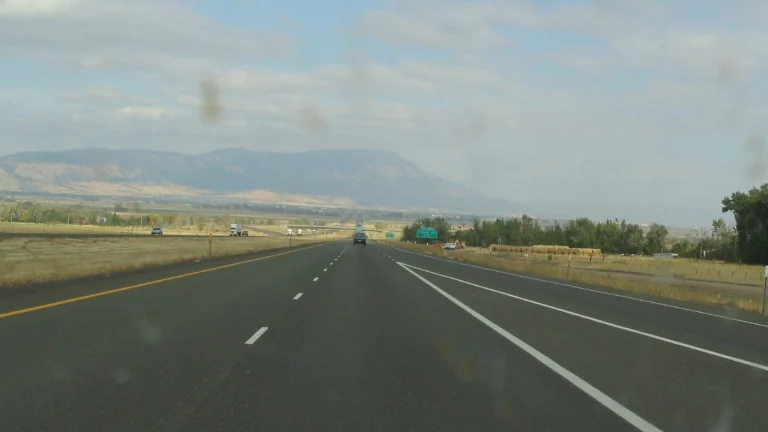
At 3:34 a.m. on Friday, Nov. 13, a Hillsborough County sheriff’s deputy pulled over a 26-year-old driver on U.S. 41 South near Anna Avenue in Gibsonton, Florida, a few miles south of Tampa. The sheriff’s office says the car was doing 156 mph in a 55 mph zone. That is 101 mph over the limit, and 229 feet of road every second by Backfire News’s math.
The sheriff’s office posted video of the stop. In the exchange as transcribed by WFLA, the deputy asks, “Do you have an emergency?” The driver says, “No.” The deputy tells him to shut the car off, repeats the number, and calls it “unacceptable.” The driver answers, “It’s my bad.”
Related Articles
- Milwaukee’s First-Strike Car Seizures Hit 354 in Year One: What Owners Must Know
- Porsche Ran 12 Young Drivers Through 571 Laps at Portimão to Find Its 35th Junior, With Two Sim Racers Tested Separately
Deputies charged him under Florida’s dangerous excessive speeding statute, which everyone calls the Super Speeder law, for driving 50 mph or more over the limit. FOX 13 reported that he bonded out of jail Friday night. The charge is an accusation. No court has ruled on it.
The penalty attached to this arrest has been described on TV as 30 days in jail, a $500 fine, and a tow. The law Florida passed says something different. Jail is a ceiling, not a requirement. The statute says nothing about towing. A tow was in the bill when it was filed, and lawmakers took it out.
What a first conviction under Section 316.1922 can cost
Section 316.1922 defines the offense two ways. You commit it by driving 50 mph or more over the speed limit, or by driving 100 mph or more in a way that threatens people or property or interferes with other traffic. For a first conviction, the judge can impose up to 30 days in jail, a $500 fine, or both. A second conviction carries up to 90 days and a $1,000 fine. If the second one comes within five years of the first, the driver also loses their license for at least 180 days and up to a year.
That gives a judge three choices on a first offense: jail, the fine, or both. Thirty days is the most a court can impose, not the starting point. The fine is the fixed number. The statute sets it at $500, not “up to” $500.
Before the law took effect on July 1, 2025, 156 in a 55 was a civil traffic infraction. According to the House Criminal Justice Subcommittee’s staff analysis, the civil fine for going 30 mph or more over the limit was $250, and the fine doubled for a second offense within 12 months. The driver also had to appear at a mandatory hearing. The new law doubles the money and turns it into a criminal case, with the jail risk, booking, and criminal record that come with one.
The impound provision lawmakers cut
State Rep. Rachel Plasencia’s bill, HB 351, was filed on Feb. 3, 2025, and took a harder line. The filed version made driving 50 mph over the limit, or 100 mph or more, reckless driving per se. It also let an officer impound the car on the spot: “The motor vehicle may be impounded for up to 30 days.”
Committees rewrote the bill. The House Criminal Justice Subcommittee replaced the reckless-driving approach with a separate dangerous excessive speeding offense. A Senate amendment to the companion bill would have allowed up to 90 days in jail for a first conviction. The version that passed had no impound provision and a 30-day jail maximum. The House approved it 75-38 on April 23, 2025, and the Senate approved it 37-0 the next day. Gov. Ron DeSantis signed it on May 22 as Chapter 2025-77. The enacted text says nothing about impoundment, towing, or vehicle seizure.
So “30 days and a tow” combines the jail cap that survived with an impound provision that didn’t. The car can still end up on a hook. When a driver is arrested and taken to jail, the car can’t stay on the shoulder of U.S. 41, and the arresting agency’s own procedures decide what happens to it. That is a cost of being arrested, though, not a penalty in Section 316.1922. Neither the sheriff’s account nor the local reporting I found says what happened to this driver’s car.
Why speed alone is now a crime
The bigger change is the one nobody on TV is talking about. Florida’s reckless driving statute requires “willful or wanton disregard” for safety. The House staff analysis cites Harris v. State, 318 So. 3d 645 (Fla. 2d DCA 2021). In that case, a Florida appeals court held that excessive speed by itself does not prove reckless driving. Prosecutors had to show something more, such as weaving, close calls, or wet roads.
The new statute keeps that kind of requirement for one charge and drops it for the other. A driver at 100 mph or more can be charged only if the speed threatened someone or interfered with traffic. A driver 50 mph over the limit can be charged on the radar number alone. The deputy in Gibsonton charged the 50-over version. At 101 over, the charge doesn’t depend on anyone deciding whether the driving was dangerous.
That 50-mph line follows the posted limit wherever it is. On a 45-mph suburban road, 95 mph is a criminal charge even though it is under 100. The deputy’s question about an emergency matters for the same reason. Section 316.1922 contains no emergency exception. Any argument about why the driver was going that fast would have to be made in court.
U.S. 41 in Gibsonton and other Tampa Bay cases
The sheriff’s office has targeted this road before. In a January 2025 release, it listed U.S. 41 from Ohio Street to Gibsonton Drive among its high-visibility traffic enforcement corridors. That work was paid for through a Florida Department of Transportation contract administered by the University of North Florida.
Triple-digit arrests have become routine around Tampa. In January, the Florida Highway Patrol said a 19-year-old in a Mustang reached 154 mph on wet pavement on I-4 in Hillsborough County after a trooper got behind him. FOX 13 reported he was charged with reckless driving and dangerous excessive speeding. In that case, troopers alleged weaving and lane changes without signaling, so prosecutors have more than a radar number. In the Gibsonton case, the sheriff’s account describes only the speed.
Related Articles
- Cape Breton Police Charge 4 People With 220 Offences After Stolen Vehicles Turned Up at a Salvage Yard and a Former School
- Prosecutors Charged an Apple Employee With Murder for Driving Nearly 100 mph Into a Stopped Car in Cupertino
The law has not ended the problem, according to the state’s own troopers. FHP Trooper Kenneth Watson told FOX 13 this week: “Unfortunately, we have seen it go up a little bit.”
What happens next for the Gibsonton driver
The case now goes to Hillsborough County court as a criminal misdemeanor. Unlike the old $250 civil ticket, it can’t be resolved by paying online. No court date or defense attorney appeared in the sheriff’s account or the local reporting as of Monday. If he is convicted, a judge will pick from the options in the statute: up to 30 days, the $500 fine, or both. A conviction would also start the five-year period in which a second one costs him his license.
The 50-over line moves with the posted limit, and the charge can rest on speed alone. What the law leaves out: mandatory jail and an impound.
Florida dropped the 30-day impound from the original bill and kept jail time, at a judge’s discretion, as the main penalty. Should the state have kept the power to take the car, or is a criminal charge with possible jail enough?
About the Author