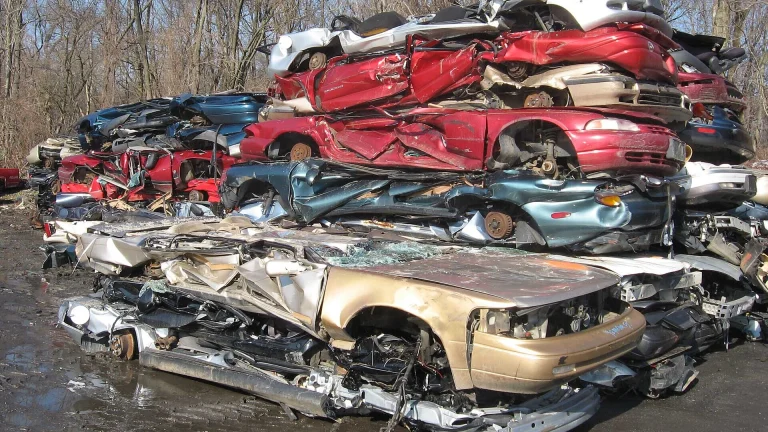
For years Milwaukee tried to ticket its way out of its reckless driving problem. A year ago it started taking the cars instead.
Ald. Lamont Westmoreland, who wrote ordinance MCO 101-24.9, put out first-year figures on Nov. 6. Police impounded 354 vehicles for reckless driving in 12 months. Owners left 27 of them at the tow lot, the city auctioned one and sent two to the recycler. The city took in $66,564.11 in impound fees, plus $14,804.80 in old citations that owners had to pay before getting their cars back. His office also says none of the impounded vehicles were stolen and no driver was caught twice.
The loophole that got closed
Milwaukee could tow some cars before this, but the rules had gaps you could drive a Charger through. Under the existing state statute, a city could impound a car only if the driver owned the vehicle and still owed an unpaid fine from an earlier reckless driving case. A first offense didn’t count. Neither did a borrowed car.
Related Articles
- A Philadelphia Crew Ran About 60 Carjackings in a Year, Prosecutors Say. Sentences Run 35 Years to Life Plus 138
- Chris Hemsworth’s Home Hit by 4 Intruders Who Took 3 Vehicles — Now Police Have Every One Back
Act 46, enacted Oct. 31, 2025, changed that. According to the city’s eight-month update, cities can now impound after a first offense no matter who owns the car. Milwaukee’s version took effect Nov. 5, 2025. Westmoreland’s launch statement aimed it at people “driving like fools on our streets.”
The numbers behind the number
Impounds sped up over the year rather than tapering off. The city counted 100 in the first four months and 121 in the next four. Subtract those from 354 and the last four months come to 133. You can read that as police getting comfortable with the tool, or as proof that a year of tows hasn’t changed behavior much yet. The data can’t settle which.
The most telling figure is one the city treats as a side note. Owners registered 115 previously unregistered vehicles before they could take them home. That’s nearly a third of all impounds. Reckless driving and paperwork-free cars clearly overlap. Anyone who has priced uninsured-motorist coverage in Milwaukee can guess what that says about who’s crashing into whom.
The fee totals tell you something too. Spread $66,564 across the roughly 327 cars that were claimed and you get about $204 each. At a $150 minimum tow plus $25 a day for storage, most owners seem to have paid up within a couple of days. The penalty is quick and it hurts, but it isn’t financial ruin, and the city clearly designed it that way.
What owners need to know
The city’s ordinance FAQ is blunt on the parts that matter:
- The titled owner pays, whoever was driving. If your nephew borrows your Altima and does 90 on Capitol Drive, the tow bill is yours.
- Fees: a $150 minimum tow, $25 a day for storage, and a $50 relocation fee if an uninsured car goes to a private tow company.
- Getting the car back: you need a valid license and every outstanding citation paid in full. A state ID or passport works only if a licensed driver or a private tow truck takes the car.
- Deadline: 90 days. On day 91, the city can sell the car or scrap it, whichever brings in more money.
- Stolen cars: fees are waived. Act 46 requires officers to make a reasonable check of stolen-vehicle reports and return a stolen car to its owner free of charge. If your keys go missing, report the theft right away. A late report could leave you paying for a thief’s joyride.
The court bill comes later
The tow is only the first cost. Reckless driving in Wisconsin means criminally negligent driving that creates a substantial risk of death or great bodily harm. Milwaukee prosecutors are also dropping fewer of these cases. The City Attorney’s office reported an 84% conviction rate in 2025 on original reckless driving charges that went to trial, up from 15% in 2023. A second offense is now a crime, with fines up to $1,000 and up to a year in county jail. The law also sets no time limit on which earlier offenses count.
Related Articles
- Red Bull’s Bryce Menzies and Christopher Polvoorde Go From Baja 1000 Teammates to Rivals
- A University City, Mo., Tow Truck Took 150+ Cars From Driveways and Backyards in 3 Years, No Warrants, a Lawsuit Says
For insurance, the impound itself isn’t the problem. The conviction is. Insurers treat reckless driving as a major violation, and it can follow a policy far longer than a week at the tow lot follows a bank account.
Spreading beyond Milwaukee
Milwaukee isn’t alone anymore. The city’s update lists Appleton, Brookfield, DeForest, Grand Chute, Green Bay, Waukesha, West Allis and Whitefish Bay as having adopted or pursued similar ordinances. The first-strike tow is turning into a statewide template, so drivers in the suburbs shouldn’t assume it stops at the city line.
The missing metric
Westmoreland’s statement says plainly: “I am not declaring victory.” He’s right not to. The release counts tows, fees and registrations, but it doesn’t show whether reckless crashes, injuries or deaths went down. Until the city publishes that, 354 impounds shows that police are using the tool. It doesn’t yet show that the tool is working.
About the Author