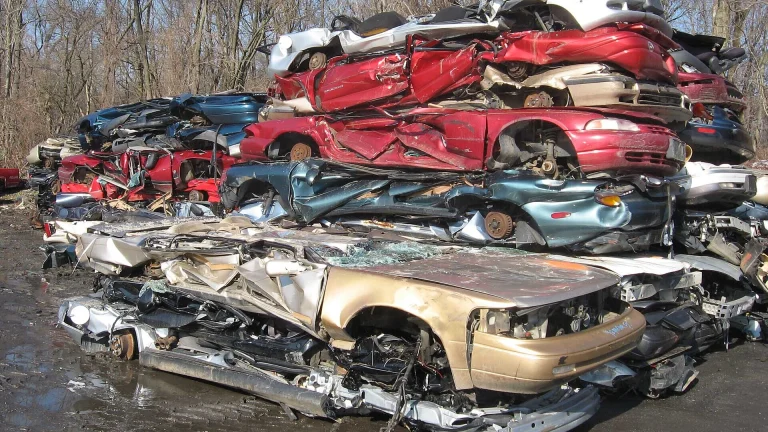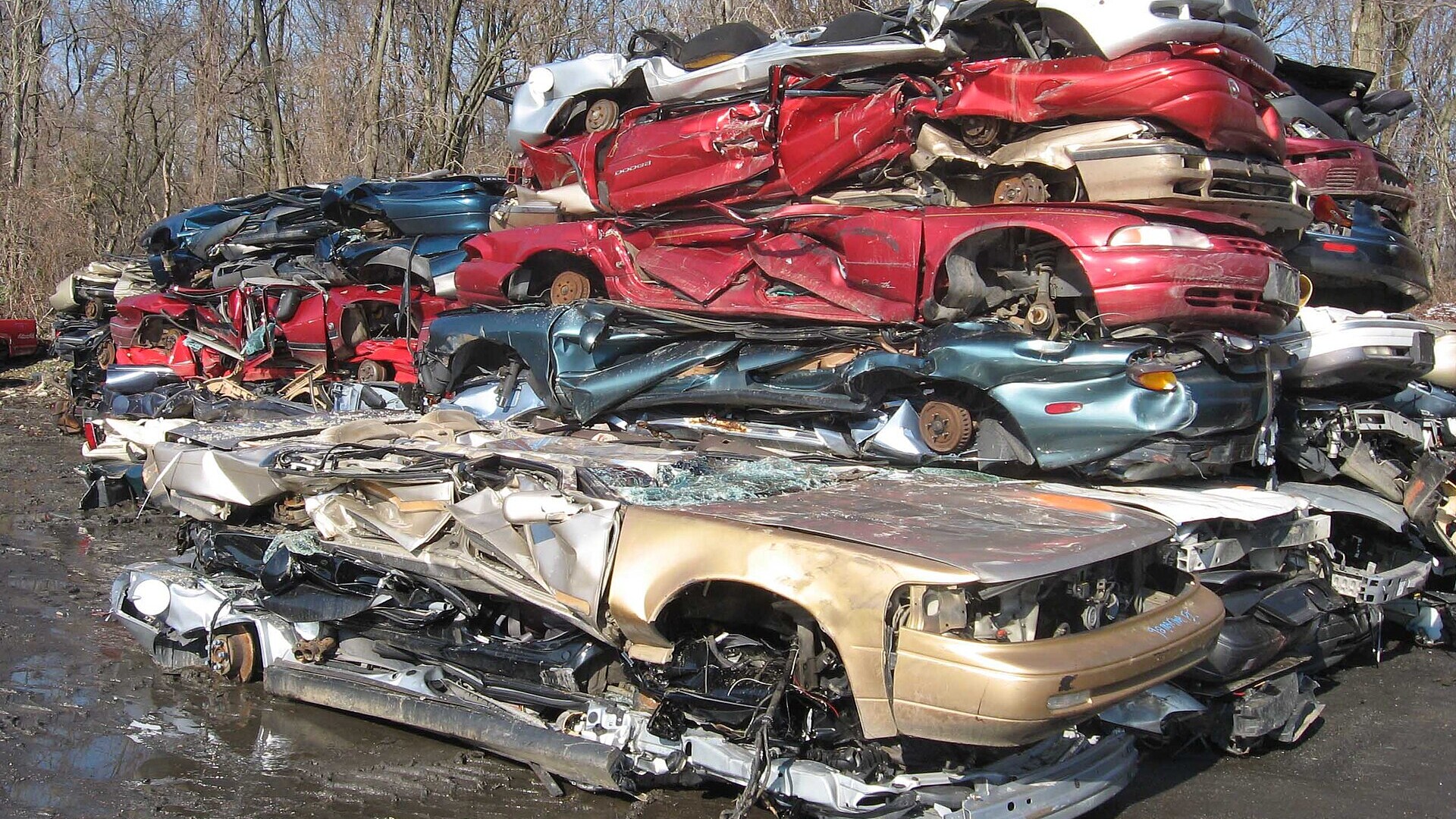
Representative image of a scrapyard, not the Florence, N.S., site. Photo: IFCAR / Wikimedia Commons (public domain)
Cape Breton Regional Police laid a combined 220 charges against four people on Nov. 12, after searches that included a decommissioned school in Florence, N.S., where Inspector Bill Turner said stolen-vehicle parts lined a hallway, “all bar-coded and sold online.”
In a release, the Cape Breton Regional Police Service said the 16-month investigation, led by its Street Crime Unit, found an organized operation based in the Cape Breton Regional Municipality that possessed, trafficked, dismantled and resold more than $10 million in stolen vehicles and related property. The vehicles came from Ontario, New Brunswick, Nova Scotia, Newfoundland and Manitoba. The release also says the operation had international connections and does not name a country.
Who is charged
Police named Sandy Joseph Young, 47, and Jesse William Young, 22, both of Little Pond, N.S., and Jason John McDonald, 42, and Melissa McDonald-Gray, 41, both of Stouffville, Ont. The charges listed include participating in the activities of a criminal organization, laundering proceeds of crime, possessing and trafficking property obtained by crime, and tampering with a vehicle identification number. Coast 89.7 FM reported that most of the 220 charges are against the two Youngs and that police are seeking warrants for the two Ontario accused. None of the allegations has been tested in court, and all four are presumed innocent.
How the search started
In July 2025, police were asked by the Criminal Intelligence Service of Nova Scotia and the Équité Association to help locate one stolen vehicle that had been tracked to a property in Florence. Officers found several more confirmed stolen vehicles there, which led to search warrants for five connected properties: Bill Young’s Auto Salvage, Bill Young’s Auto Body, two residences in Little Pond and the former school. Équité is the same group whose most-stolen list put the Honda CR-V on top again this week.
Police say they seized stolen vehicles, parts, commercial equipment, machinery and illegal firearms. The release gives no counts for any of it. CBC reported roughly 150 vehicles in various stages of dismantling.
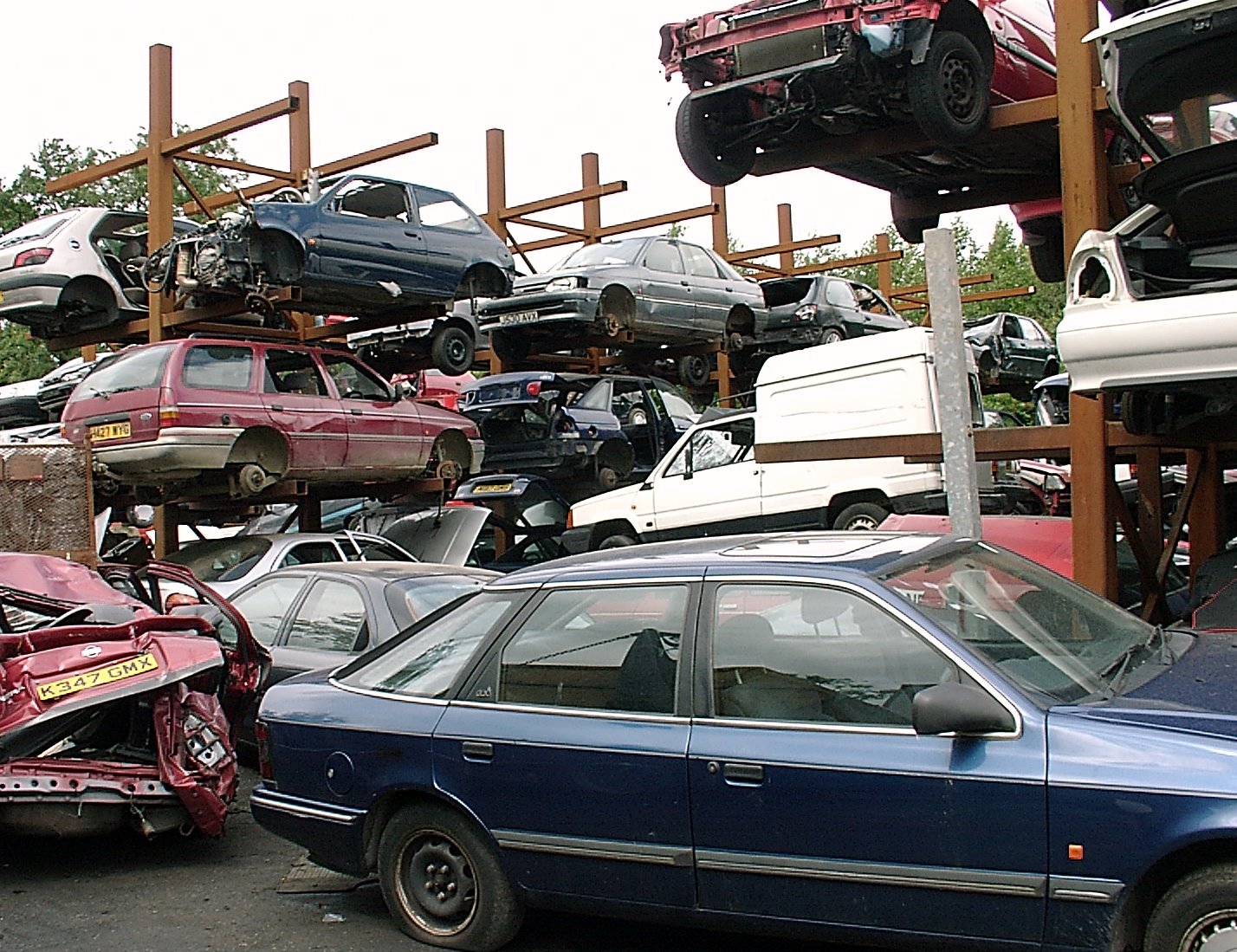
Police describe two exits for a stolen vehicle. Some had their VINs replaced or manipulated so they could be resold whole, and the rest were taken apart and sold as parts through an online retailer. The VIN-tampering charge is the same one at the center of the Georgia surgeon case, and a parts pipeline is what investigators described in Richmond, Va., and in a Wickenburg, Ariz., chop shop case that paid $500 a vehicle.
What the release doesn’t say
It doesn’t name the online retailer, so there is no way to tell from it which listings carried parts from these vehicles. It doesn’t say who owns the two businesses searched, how many firearms were seized, which country the international connections lead to, how the 220 charges divide among the four, who is in custody, or when anyone appears in court. A buyer of a used part or a salvage-yard vehicle can still ask the seller for the donor vehicle’s VIN and have its history checked before paying.
Warrants for McDonald and McDonald-Gray were still being sought as of the release. Should online parts retailers be required to show the donor vehicle’s VIN on every used part they sell?
Sources: Cape Breton Regional Police Service news release, Nov. 12, 2026; Coast 89.7 FM; CBC News; CTV News Atlantic.
About the Author