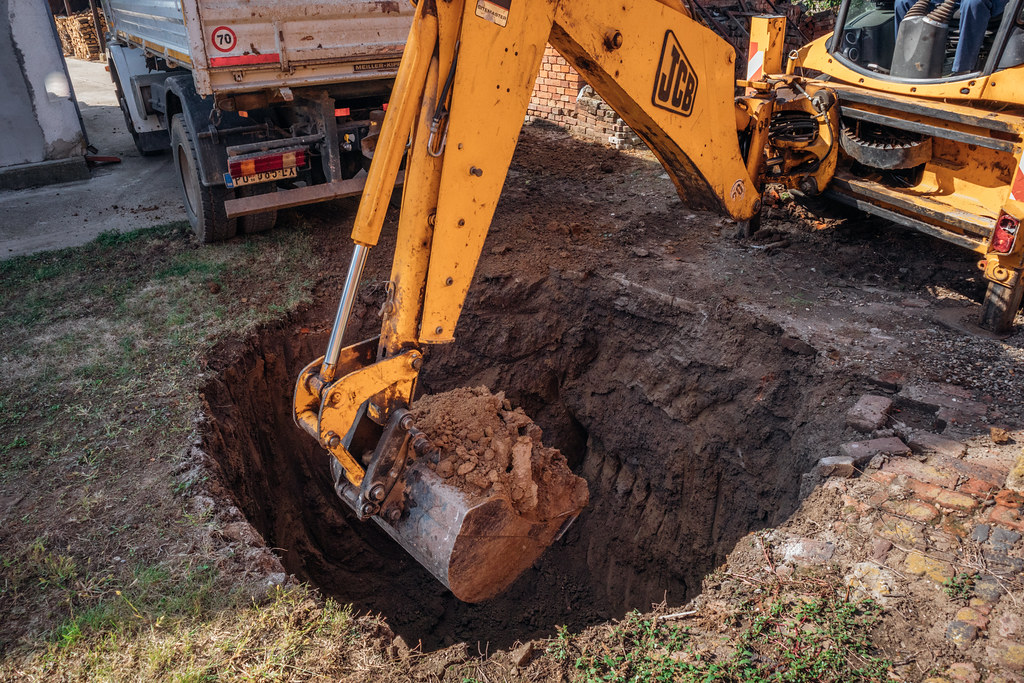
Police say the suspect hired an excavator to dig a hole and bury a stolen truck. Representative image. Photo: Ivan Radic / Flickr (CC BY 2.0)
Most stolen trucks end up in a scrapyard, a shipping container or a lake. Police investigating an alleged Wickenburg chop shop in Arizona say one ended up underground.
The Wickenburg Police Department says a couple living on a rural property outside town ran a chop shop that stripped stolen Phoenix-area vehicles for parts, and that when investigators started closing in, the husband hired an excavator, dug a hole and buried a stolen truck in the dirt. Officers found it anyway. Freshly graded soil and tractor tire tracks are hard to explain on a quiet desert lot.
“I’ve never seen a vehicle buried. That was a new one for me,” Wickenburg Police Officer Robert Pendergast told Phoenix station AZFamily.
Gearheads have seen plenty of tired trucks put out to pasture, but not many that got a funeral. According to police, the operation paid about $500 per vehicle.
What Police Say Happened at the Wickenburg Chop Shop
Wickenburg officers arrested two people Saturday morning, September 26, near 355th Avenue and Painted Wagon Trail in the Whispering Ranch area west of town, AZFamily reported. Police said both were expected to be booked into the Maricopa County Jail on multiple charges. AZFamily has since identified the pair as Thomas and Lori Musser. They appeared in court Saturday night and face more than a dozen combined charges, including operating a chop shop, altering vehicle identification numbers and theft of means of transportation. Their next court date is in October. The charges are accusations, and both are presumed innocent unless proven guilty.
According to FOX 10 Phoenix, the month-long investigation started the way a lot of these cases do: a traffic stop that turned up a stolen vehicle. An anonymous tip followed, then a confidential informant. “It kind of turned into a bigger investigation using a confidential informant,” Wickenburg Police Lt. Aaron Hadley told the station. FOX 10 reported three stolen Phoenix-area vehicles were recovered: the buried one and two more on the property that couldn’t be driven.
The setup police describe is pure backyard fabrication. An engine hoist was bolted to a concrete slab, and vehicles were rolled underneath it to be stripped. Parts were sold, and what was left went to a scrap yard, AZFamily reported. Police say stolen parts connected to the operation trace back to cases as far back as 2022, and investigators suspect Thomas Musser may have been working for other people who are also under investigation.
How Do You Find a Buried Truck? Look at the Dirt
Pendergast told AZFamily he believes Musser sensed police were closing in and buried the truck to get rid of evidence. It didn’t work. Officers spotted “newly graded” soil and tractor tire marks where the truck was buried, according to FOX 10. Then the town helped out. “We solicited the help of our community here, and they were more than willing to drive a backhoe over there and dig it up for us,” Hadley said.
Burying a vehicle doesn’t hide it for long, and it doesn’t preserve it either. Car people already know this from Tulsa’s “Miss Belvedere,” a brand-new 1957 Plymouth Belvedere sealed in a concrete vault as a time capsule. When it was dug up in 2007, water had leaked into the vault and the car came out a rusted, silt-covered wreck. A truck dropped straight into bare dirt, with no vault at all, starts rotting right away. It also leaves a big patch of disturbed ground, which is the first thing investigators look for. As a way to hide evidence, it is slow, expensive and obvious.
Stolen trucks have turned up in strange places before. We’ve covered a stolen Dodge Ram a fisherman’s sonar found 25 feet down in a Michigan lake. But an intentional desert burial with a hired excavator is a first for this newsroom too.
The $500 Math: Why Chop Shops Want Parts, Not Trucks
Five hundred bucks a vehicle sounds absurd when a clean used pickup costs tens of thousands. But that number explains how chop shops think. A whole stolen truck is a huge liability. It has a VIN on the dash, a VIN on the door jamb, a title trail, and an insurance claim attached to it. It can be spotted by license-plate readers and anyone who happens to see it. Take it apart, though, and most of that risk goes away. A tailgate, a set of wheels, a catalytic converter or a seat on a marketplace listing doesn’t look stolen. It just looks like a used part.
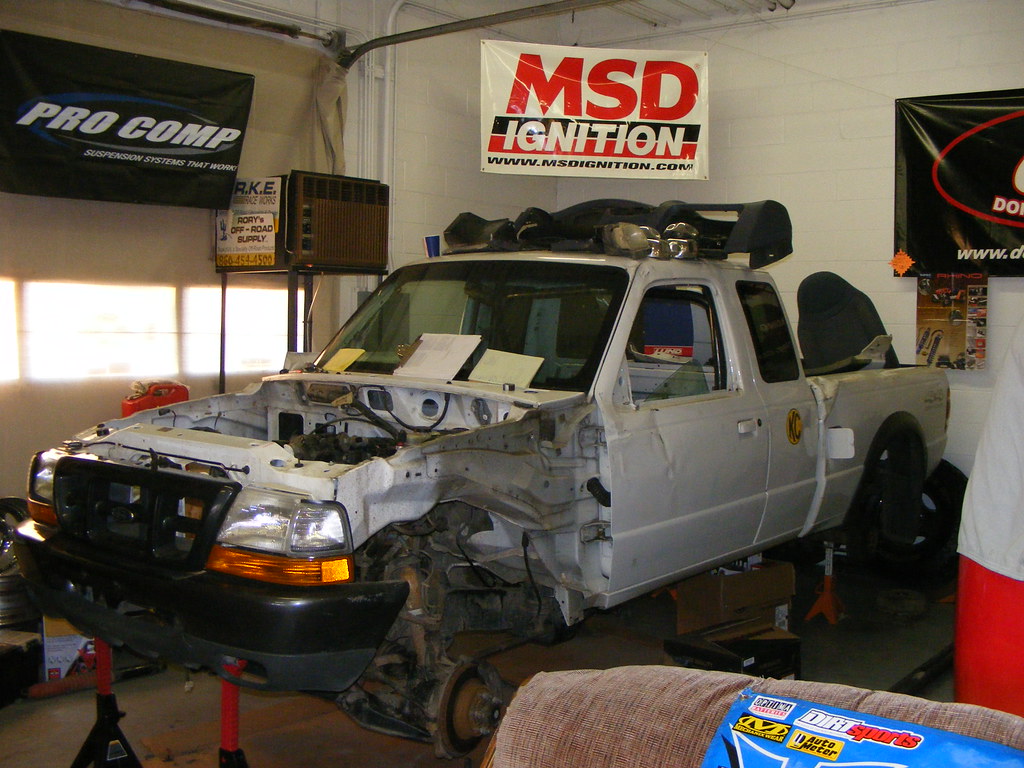
Federal regulators saw this coming decades ago. Under the federal theft prevention standard, 49 CFR Part 541, automakers have to stamp or label the VIN on major parts of vehicle lines NHTSA covers. On a light-duty pickup, that list includes the engine, transmission, both front fenders, hood, doors, bumpers, the pickup box and the tailgate. That’s why altering VINs is a charge that so often shows up in chop shop cases. The parts marking is what connects a random fender back to a stolen truck, so thieves grind those labels off.
Arizona law comes down hard on it. Under A.R.S. 13-4702, knowingly owning or operating a chop shop is a class 2 felony. That’s the second-most serious class of felony in the state. Moving vehicles or parts to or from a chop shop, buying from one, altering VINs, or possessing a vehicle or part with an altered VIN are each class 4 felonies. Plain vehicle theft, called “theft of means of transportation” under A.R.S. 13-1814, is a class 3 felony. So running a chop shop is treated as a more serious crime than stealing the truck in the first place.
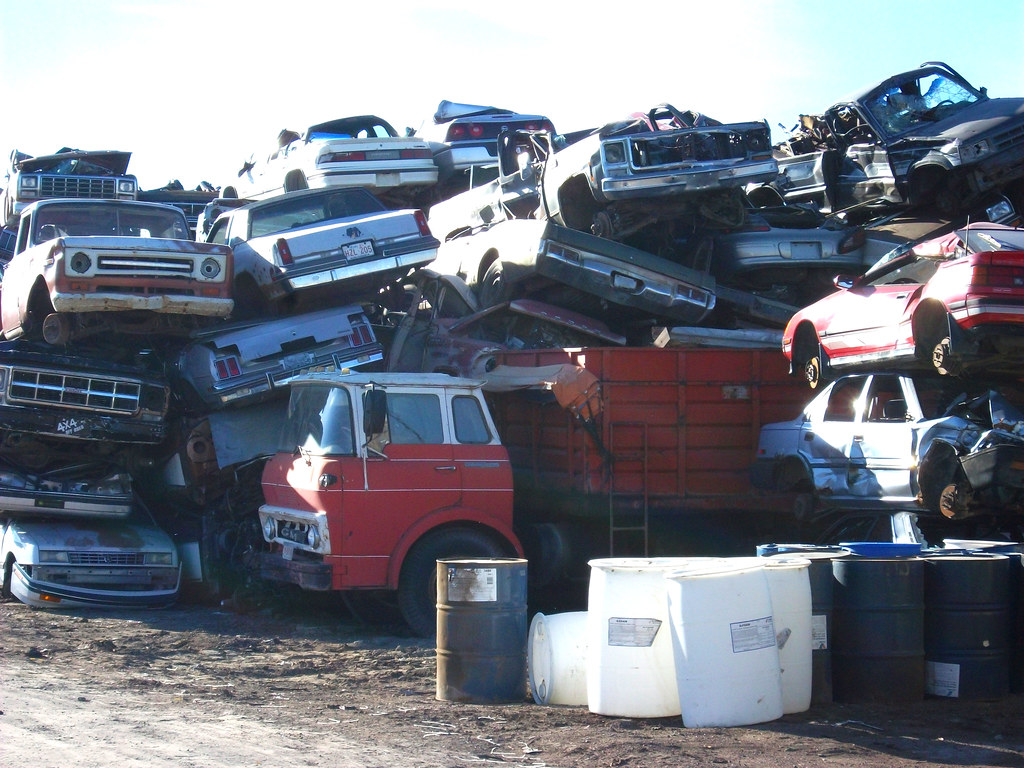
Trucks Are Still Prime Targets
There’s good news in the big picture. The National Insurance Crime Bureau reports 659,880 vehicles were stolen nationwide in 2025, down 23% from 2024, and Arizona’s thefts fell 27%. But pickups are still near the top of the list. The Chevrolet Silverado 1500 was America’s fourth-most-stolen vehicle in 2025, with 16,764 thefts, and the Ford F-150 was seventh with 10,102.
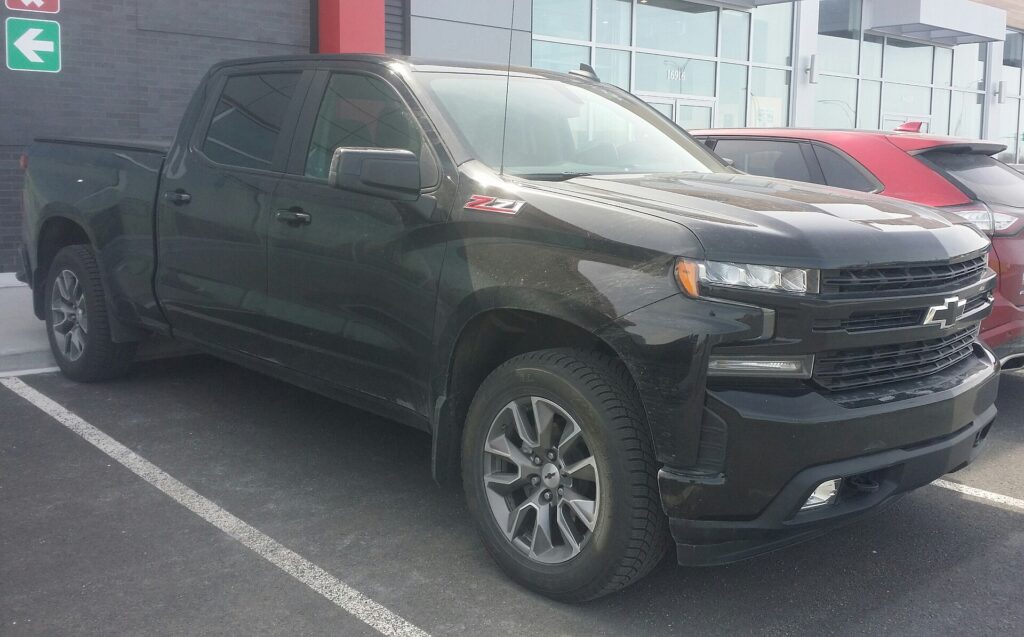
Full-size pickups share a lot of parts across model years and trim levels, so there’s a big, easy resale market for their tailgates, wheels, headlights, seats and drivetrains, which is exactly what makes them worth stripping. It’s the same economics behind the Memphis chop shop a vehicle tracker exposed and the Texas operation that unraveled after a single traffic stop. Wickenburg’s case started with a traffic stop too.
If You Own a Truck or Buy Used Parts
- Check for the labels. If a used body panel, engine or transmission from a covered vehicle line has a scraped-off or missing VIN label, walk away. Under Arizona law, having a part with an altered VIN can be a felony all by itself.
- A price that’s too good is a warning sign. Parts sold at chop-shop prices got that way for a reason. Ask where the donor vehicle came from and get a receipt with the seller’s name.
- Read your comprehensive coverage. A stolen truck that comes back stripped, or dug out of the ground, is often a total loss. Comprehensive coverage is what pays for theft, and liability-only policies don’t.
- Make your truck the harder target. Trackers, steering-wheel locks and VIN etching on the glass won’t stop a determined thief, but they make a truck riskier to take apart and resell. Detectives in Dayton recently got a stolen $400,000 GTO Judge back before lunch. Speed matters, because every hour a stolen truck sits in a shop, more of it disappears.
VIN checks are still one of the best tools police have. A single routine check cracked a Chevelle theft that was decades cold, and a Milwaukee man was accused of building a Hellcat 300 out of three stolen Mopars.
Wickenburg police say the investigation is ongoing. The Mussers are due back in court in October.
Sources: Wickenburg Police Department statements as reported by AZFamily (KPHO/KTVK) and FOX 10 Phoenix; Arizona Revised Statutes 13-4702 and 13-1814; 49 CFR Part 541; National Insurance Crime Bureau.
Image credits: Ivan Radic / Flickr (CC BY 2.0); 5of7 / Wikimedia Commons (CC BY-SA 2.0); HowdeeDoodat / Flickr (CC BY-SA 2.0); dave_7 / Flickr (CC BY 2.0); Bull-Doser / Wikimedia Commons (public domain). Excavator, teardown and scrap yard photos are representative and do not show the vehicles in this case.
About the Author