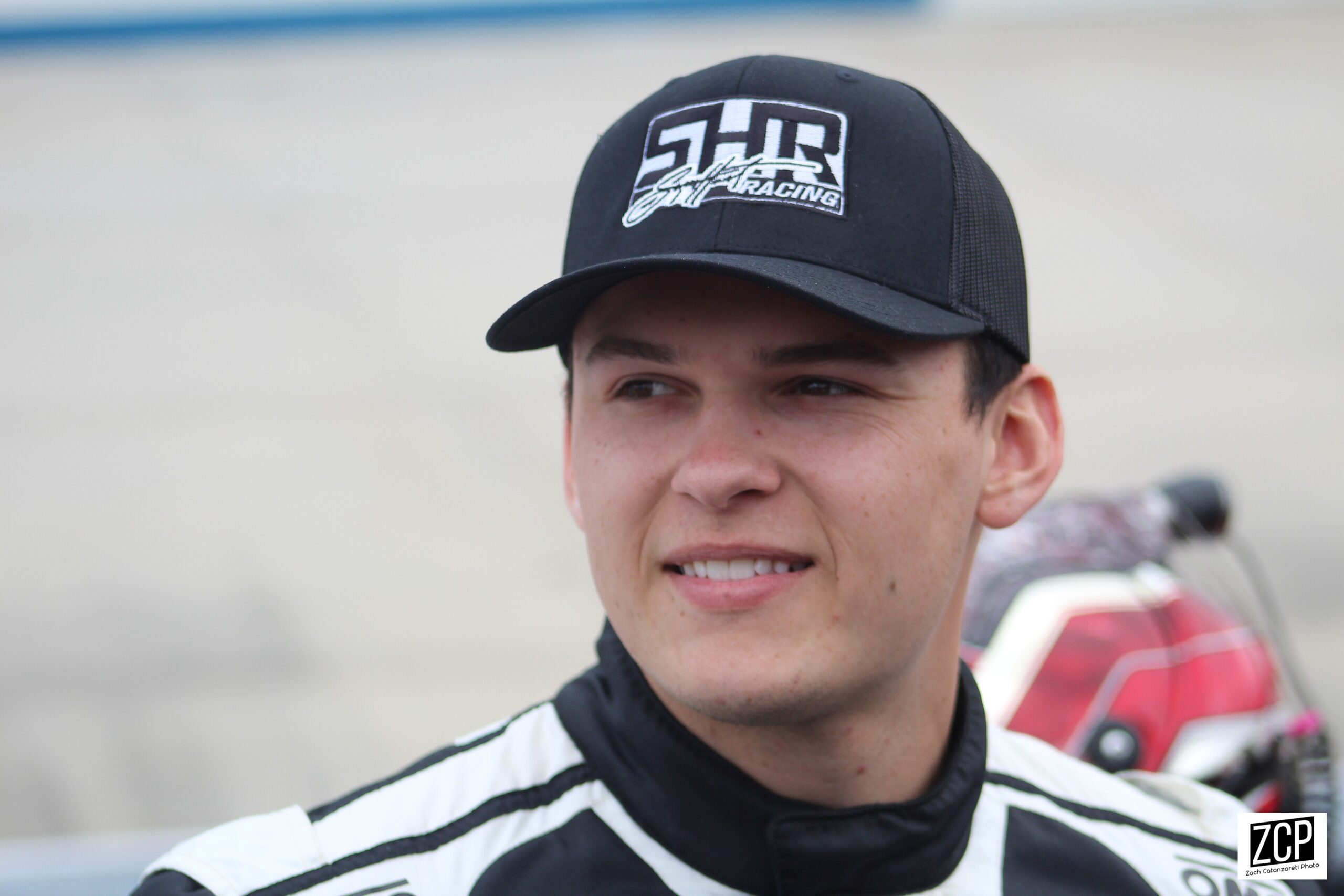
Corey Heim, photographed in 2023. Photo: Zach Catanzareti Photo, CC BY 2.0, via Wikimedia Commons
Corey Heim finished second in Saturday night’s ValleyStar Credit Union 300 at Martinsville Speedway in Ridgeway, Virginia. Not long after, he was covering his head beside the track’s hot dog stand while, according to USA Today’s description of the video, at least three people threw punches at him. Henry County Sheriff’s Office deputies broke it up after about 20 seconds, and two deputies walked Heim out of the track, USA Today reported.
At 10:11 p.m., Heim posted his review of the effort on X: “Solid effort, but at least make it count next time,” with a laughing emoji, a thumbs-up selfie and the broadcast clip of the fight attached.
The joke works because Heim appears to have walked away fine. The legal exposure for the people who swung at him doesn’t depend on that. The punches landed on private property in Henry County, where Virginia’s battery statute applies the same way it does on a highway shoulder after a rear-end tap. NASCAR has fined and suspended people for fights at its national events, but Saturday’s race was a regional late-model show, and nobody has said yet whether the sanctioning body will reach down to it. Virginia’s deadline to bring a misdemeanor charge is one year.
A two-lap shootout for second, a cooldown-lap wreck and a 20-second fight
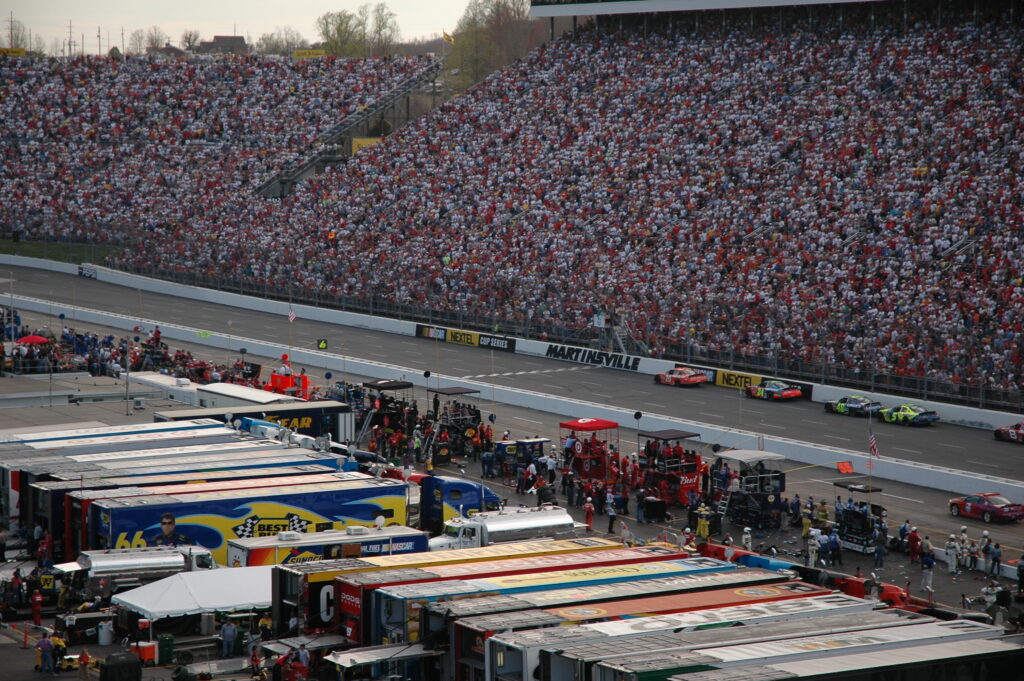
The ValleyStar Credit Union 300 is a 200-lap Late Model Stock race sanctioned by NASCAR Regional, and it paid the winner $32,000 and a grandfather clock, according to NASCAR’s race preview. Caden Kvapil won it and clinched the Virginia Late Model Triple Crown, WSET reported.
Heim drove the No. 22A for Nelson Motorsports, and Treyten Lapcevich drove the No. 77A, according to NASCAR’s entry information. The two raced each other for second through a two-lap overtime finish. NASCAR’s post-race interview video lists Heim second, and WSET’s results put Lapcevich third.
The trouble started after the checkered flag. On the cooldown lap, entering Turn 1, Lapcevich’s car hit the right side of Heim’s, and Heim’s car rode up over Lapcevich’s left front, USA Today reported. WSET reported that both cars were heavily damaged.
The drivers told it differently. Lapcevich acknowledged that he “went up to his right side,” but said Heim “gasses up” and “kills both of our cars,” according to USA Today. Heim’s version: “(Lapcevich) like pinned me onto the curb for some reason and just kept turning left. And then my right front hopped his left front, and destroyed a perfectly good race car.”
USA Today reported that team owner Chad Bryant stopped Lapcevich before he could get to Heim, and that members of Bryant’s crew then went after Heim near the hot dog stand as he left pit road. NASCAR posted a 48-second clip on its own site, describing it only as an altercation at the hot dog stand. The people who threw punches have not been publicly identified, and as of Monday, I could find no public statement from Lapcevich or Chad Bryant Racing about the fight.
Virginia’s battery statute has no exception for a wrecked race car
Virginia’s rule is one sentence long. Section 18.2-57(A) of the state code says, “Any person who commits a simple assault or assault and battery is guilty of a Class 1 misdemeanor.” Under Section 18.2-11, a Class 1 misdemeanor carries up to 12 months in jail and a fine of up to $2,500, “either or both.” Each person who threw a punch would face that range separately.
Short-track culture treats a cooldown-lap wreck and the fight that follows as one story, but the law splits them. The collision happened between two drivers inside a sanctioned event, where officials, team budgets and, if it came to that, a civil court sort out who owes whom for bent sheet metal. The punches came off the racing surface, after the race, from people who weren’t in either car. Nothing in the statute treats a destroyed Late Model as a reason to hit someone.
Virginia also gives a charge two ways to get started. Officers can arrest without a warrant for a crime committed in their presence, and Section 19.2-81(G) extends that to assault and battery they didn’t see, when the arrest rests on probable cause “upon reasonable complaint of the person who observed the alleged offense.” Deputies arrived while this fight was still going. The second route runs through a magistrate. Section 19.2-71(A) bars magistrates from issuing felony arrest warrants on a private citizen’s complaint without sign-off from a prosecutor or police agency, and that limit applies only to felonies. A misdemeanor battery warrant can start with the person who got hit.
Both routes have deadlines. Under Section 19.2-8, a misdemeanor prosecution “shall be commenced within one year next after there was cause therefor,” which puts the cutoff for this one at late September 2027. A civil claim for personal injury has two years under Section 8.01-243(A).
As of Monday, no charges had been announced, and Backfire News could not confirm whether deputies cited or arrested anyone that night. Heim’s post didn’t say whether he intends to press anything.
NASCAR fined Stenhouse $75,000 for a punch, but that was the All-Star Race
NASCAR’s national-series precedent for this is two years old. After Ricky Stenhouse Jr. punched Kyle Busch following the 2024 All-Star Race at North Wilkesboro, NASCAR fined Stenhouse $75,000, suspended team mechanic Clint Myrick for eight races and tuner Keith Matthews for four, and suspended Stenhouse’s father, Richard Stenhouse, indefinitely under the Code of Conduct in Section 4.4.D of the rule book. The suspensions reached crew members who never touched the steering wheel, and they cost them weeks at the track.
Saturday’s race sits a few rungs below that. It ran under NASCAR Regional, not the Cup, O’Reilly Auto Parts or Truck series, and NASCAR had not announced any penalty from Martinsville by Monday. How NASCAR polices retaliation is a sore subject in the garage even at the top level, as Chase Briscoe’s complaint about payback wrecks and Richard Childress’s accusation against SVG showed.
The argument played out in public within hours. Matthew Dillner, a senior producer at FloRacing, which streamed the race, wrote on X that a fight at the Martinsville hot dog stand was “Iconic” and that short-track passion, “Good. Bad. Ugly,” comes out “wonderful” when stirred together. Denny Hamlin, a co-owner of 23XI Racing, the Cup team Heim drives for, replied at 11:20 p.m.: “Not sure what is wonderful about that.” Dillner answered, “That’s just Short Track Racin’,” with a GIF of Hamlin. Hamlin’s final word was “Uh ok.”
The same statute covers the shoulder of U.S. 220
Without the grandfather clock and the TV cameras, Saturday looks like what police in Henry County handle after ordinary crashes: one driver is sure the other one wrecked him, and somebody gets out of a vehicle angry. Section 18.2-57 reads the same in a speedway parking area as it does on U.S. 220 a few miles up the road. A crash is a property-damage dispute with a claims process. The first punch turns it into a criminal case with a jail range, and it gives the person who got hit a two-year window to sue.
Racing adds one layer that street drivers don’t have: a sanctioning body that can take away a crew member’s credential. Whether NASCAR uses that power at a regional event is the open question from Saturday.
NASCAR’s decision, Henry County’s clock and Heim’s Cup future
Three things remain open. The first is whether NASCAR penalizes anyone from the No. 77A team, and whether it names them. The second is whether a charge surfaces in Henry County before the one-year limit runs out. The third is how this follows Heim into the Cup Series: NASCAR’s own preview noted that he is moving to full-time Cup competition with 23XI Racing next year, after a 2026 in which he won the Brickyard 400 without a full-time ride. A two-time Cup winner took punches at a Saturday-night late-model race, and both teams left Martinsville with a wrecked car to rebuild.
Should NASCAR suspend crew members who throw punches at its regional short-track races the way it does at Cup events, or should a fight at a track like Martinsville be left to the sheriff and the courts?
About the Author