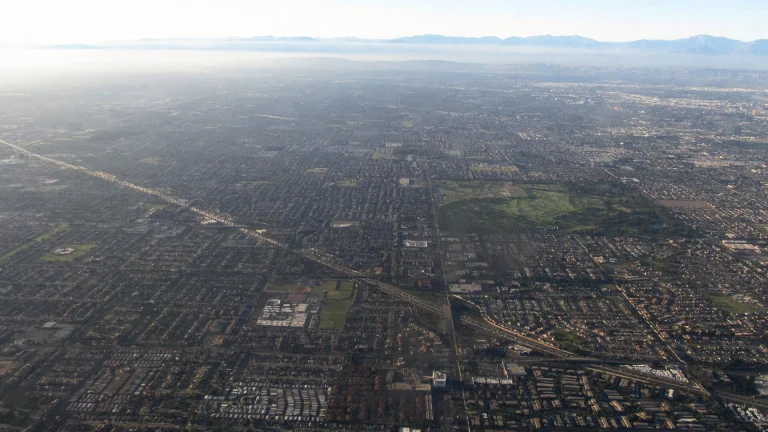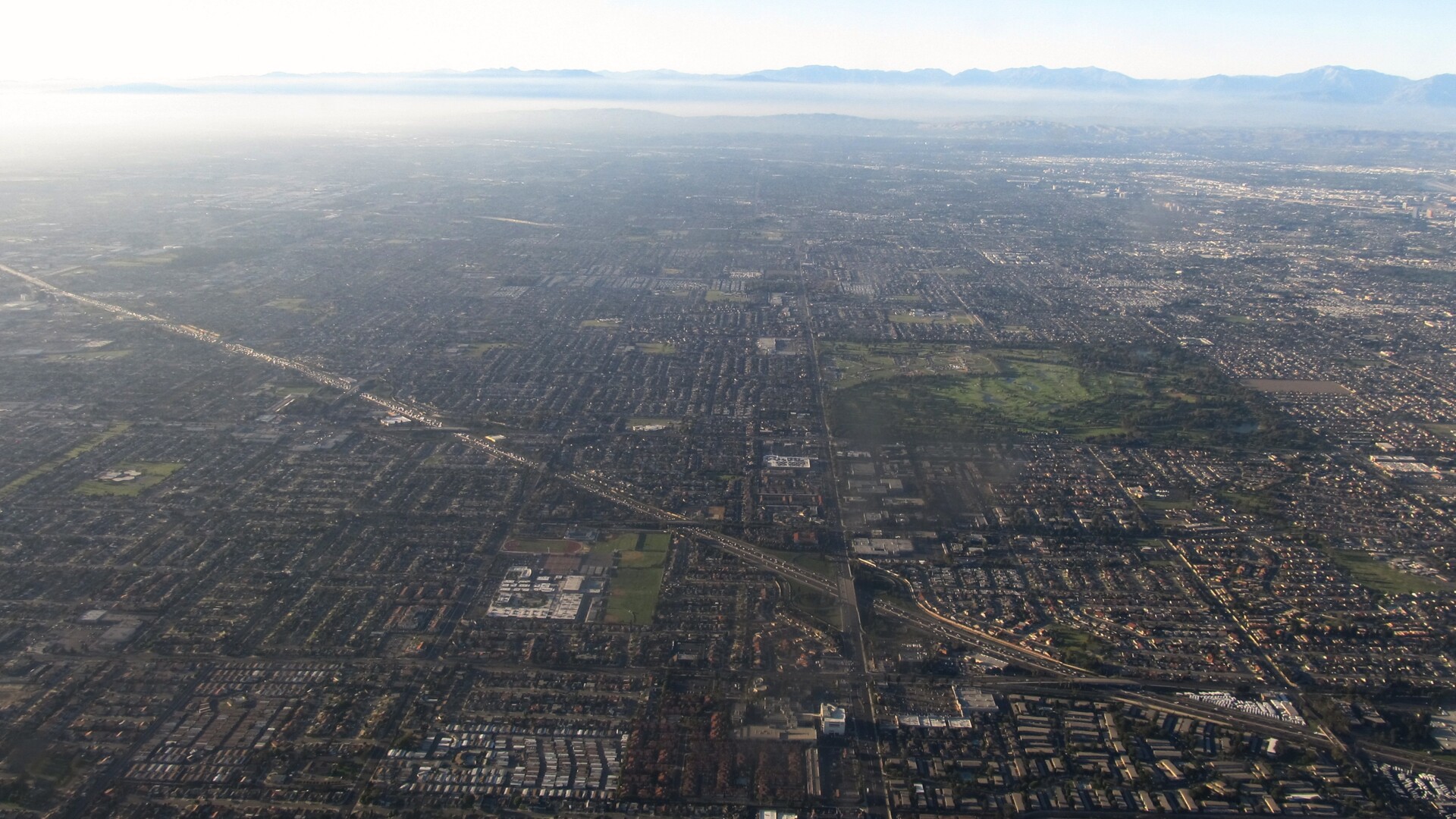
File photo: Interstate 405 through Fountain Valley and Westminster, California. Ken Lund / Wikimedia Commons, CC BY-SA 2.0
A Toyota pickup on California’s I-405 ended up with long, wrapped cargo running through its cab and a shattered windshield on Wednesday morning, Nov. 4, and the California Highway Patrol says only minor injuries were reported.
The CHP’s Westminster division posted photos of the aftermath, KTLA reported, showing what appeared to be long, wrapped construction materials protruding into the cab. The materials ran above the seats toward the dashboard, with broken glass around them on the front passenger side. According to KTLA, CHP did not immediately say where on the 405 it happened, how many vehicles were involved, or what caused the collision.
What CHP has said so far
CHP used the crash to make a point about loads. Per KTLA, the agency wrote on Instagram: “A crash this morning on the I-405 freeway serves as an important reminder of the dangers of improperly secured cargo.” It added that “a few extra minutes of preparation can prevent a serious crash and save lives.”
I could not pull the Instagram post itself, so the account here runs through KTLA’s report of it. Nothing in that report says whether the cargo came off another vehicle or was riding in the pickup, and no driver, cargo owner, citation or charge has been identified. Those answers decide who, if anyone, answers for the load.
What California’s load law requires
The rule is Vehicle Code section 23114. Subdivision (a) says a vehicle may not be driven or moved on any highway unless it is “so constructed, covered, or loaded as to prevent” its contents from “dropping, sifting, leaking, blowing, spilling, or otherwise escaping.” The wording is about prevention, so as written the question is whether the load was built to stay put, not only whether it left.
It also says “a vehicle,” with no commercial-truck carve-out in that subdivision. The listed exceptions are clear water, feathers from live birds, and a federal rule on hay and straw. A pickup hauling pipe or lumber falls under the same sentence as a dump truck. CHP’s Highway Patrol Manual chapter on cargo securement, revised February 2025, defines its own scope by reference to vehicles described in Vehicle Code section 34500, and the portion I read does not say whether private pickups are included. The same chapter cites section 2803(a) as authority to require an unsafe load to be reloaded or removed.
The rest of 23114 is aimed at dirt, sand, gravel and similar aggregate: it must ride in a cargo area with no holes or cracks and be covered. Section 23115(a) requires trash, recycling and refuse to be “totally covered.” Wrapped building materials aren’t in either list, so they fall back on the general language in 23114(a).
A question on the license test
California has put this on the written exam. AB 1925, by Assemblymember Choi, was signed July 18, 2018, and adds Vehicle Code section 1666.7. It directs the DMV to include at least one question, on a rotating basis, in at least 20 percent of license tests, so applicants understand that driving with “an unsafe, unsecured load” is a violation of law. The DMV driver handbook tells drivers to “not drive a vehicle with an unsecured load that is a safety hazard.”
What to watch next
CHP has not said whether anyone was cited. The Westminster division’s follow-up, or a CHP incident log entry, would show the location and which vehicle the cargo belonged to. Backfire News has covered what loose objects do on California freeways before, including a semi tire that wrecked a Tesla, and a burning Camry on I-215 that CHP officers were checking when it exploded. I did not find a fine amount in CHP’s statement as KTLA reported it, and I haven’t printed one I couldn’t source.
Should California drivers be cited for a load that could escape even if nothing has fallen, or only after something does?
About the Author