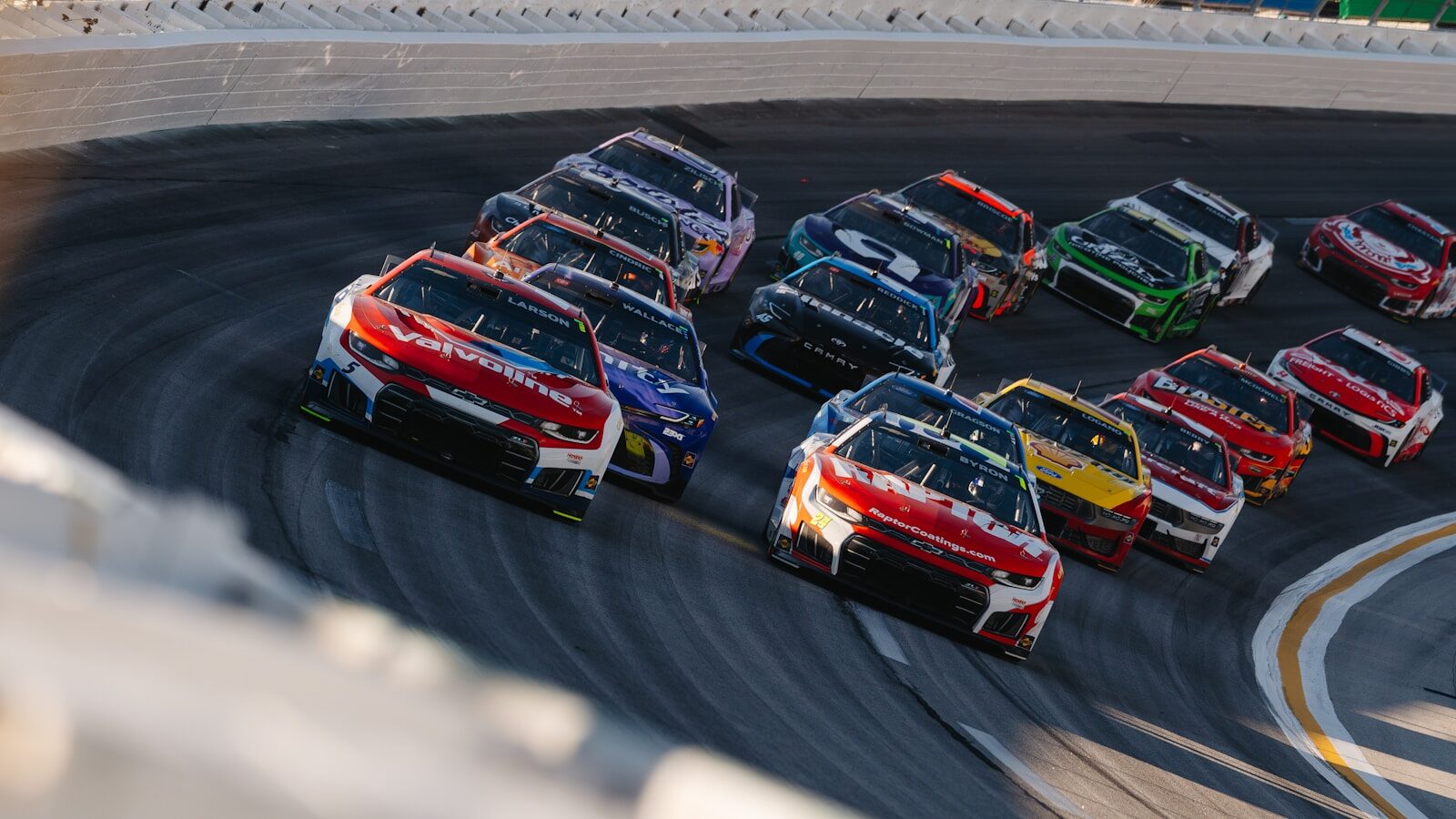
Corey Heim spent Sunday afternoon doing something most full-time Cup Series regulars still haven’t managed: winning one of NASCAR’s crown jewel races. The twist is that Heim isn’t even a full-time Cup driver. He’s running a partial schedule for 23XI Racing this season, and he used it to hold off Christopher Bell and Joey Logano over the final 34 green-flag laps to win the Brickyard 400 at Indianapolis Motor Speedway, his second Cup win in just 15 career starts.
The margin at the yard of bricks was 0.287 seconds, but the race was decided two laps earlier. A nine-car pileup triggered when Ryan Blaney turned into John Hunter Nemechek while protecting his spot in NASCAR’s $1 million In-Season Challenge set up a restart that ended up deciding the whole afternoon. Denny Hamlin, who happens to co-own the team paying Heim’s bills, chose the preferred bottom lane and had two Joe Gibbs Racing teammates lined up to shove him forward. Heim took the outside lane instead, got a full run from Logano, and cleared Hamlin by inches before shutting the door. Hamlin never saw the front of the field again.
That single restart mattered so much because passing at Indianapolis has become close to impossible under green. The track’s four corners carry only nine degrees of banking, among the shallowest on the Cup schedule, and the Next Gen car’s underbody-generated downforce needs clean, undisturbed air to function as designed. Once a leader builds even a small cushion, the cars behind are stuck fighting turbulence with no banking to help carry momentum back around a trailing car. NASCAR ran 200 laps around the 2.5-mile rectangle Sunday and produced essentially zero green-flag passes for the lead outside of restarts. It isn’t a new complaint about this car, but a flat track like Indy exposes it more than most.
Bell, Logano, Chase Briscoe and Hamlin rounded out the top five. Briscoe’s fourth-place run carried extra weight since Indianapolis sits about an hour from his hometown of Mitchell, Indiana, a solid follow-up to a season that included a costly detour when a speeding penalty on pit road complicated his playoff positioning back in March.
Reigning series champion Kyle Larson didn’t get the chance to test any of that theory. He cycled to the lead off an early pit stop, only to have his left-rear tire let go entering turn three, sending his Chevrolet into the outside wall and ending his day just 45 laps in. “I had no warning. When I lifted, I felt it drop and spun,” Larson said afterward. It was a rough coda to a week in which Larson had already agreed with IndyCar’s Scott Dixon that Cup races run too long — “I think three hours is too long,” he’d said days earlier — a line that reads a little differently now that his own race lasted barely one.
Pole-sitter Carson Hocevar supplied the other moment of the day, flipping off Heim as the No. 67 pitted from the lead late in the second stage. Heim didn’t even see it happen — he found out from TNT Sports’ broadcast crew after climbing out of the car in victory lane. “Handed him a big fat L,” he said once he heard. Hocevar, who recovered to finish ninth, shrugged it off afterward: “I’m just a fan, wanted to wave. He’s number one. He won.” The two have needled each other since their days racing trucks together, and Hocevar all but admitted he’s bracing for more of it now that Heim is proving how fast the equipment can be.
Logano offered the best line of the day when a reporter asked what it would actually take to make a green-flag pass for the lead at Indy. “Probably an Xfinity car,” he said. It’s a fair jab — NASCAR’s second-tier series runs a lower-downforce package that genuinely produces more side-by-side racing at flat tracks than the current Cup rules, which says plenty about where the sanctioning body’s aero package still needs work.
Buried under the headline result was a second race with real money on the line. Todd Gilliland beat Blaney for the $1 million winner-take-all prize in the Cup Series’ In-Season Challenge, a five-race elimination bracket run alongside the regular event. Gilliland only needed to out-finish Blaney, and Blaney’s own wreck did that job for him — Gilliland crossed 24th to Blaney’s 26th. For a Front Row Motorsports operation that only recently cashed in on the rising value of its charter, a guaranteed seven-figure check for a 24th-place run is the kind of subplot that moves the needle in the shop more than most of what happens up front.
Heim’s situation says as much about where NASCAR’s driver pipeline is headed as anything that happened on the track. He’s already a two-time Cup winner and hasn’t even signed on as a full-timer — that arrives in 2027, when he moves into the No. 35 Toyota for 23XI Racing. Running him on a partial schedule this year keeps his rookie eligibility intact for next season, a workaround NASCAR’s own rules practically invite: race enough to develop the talent and build sponsor interest, not so much that a Rookie of the Year campaign gets burned a year early. It’s cheaper insurance for the team, too — fewer laps in a seven-figure Next Gen chassis for a driver still learning ovals like Indianapolis, with two crown-jewel-caliber runs already suggesting the investment is paying off.
None of that will matter much to Hamlin, who watched his own driver beat him for the one crown jewel that has eluded his Hall of Fame-caliber career. NASCAR is off next weekend before heading to Iowa Speedway on August 9, and it’s a safe bet the garage will still be talking about what Heim pulled off at Indianapolis long before that green flag drops. For the rest of what went down across NASCAR, IndyCar and NHRA over the same stretch, our full weekend recap covers it all.
About the Author