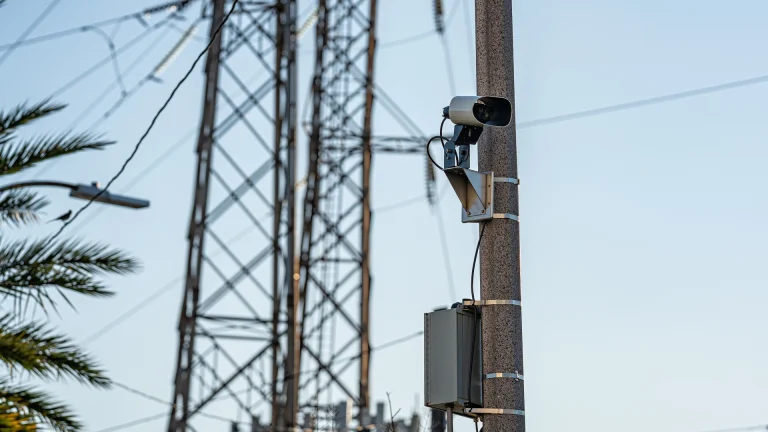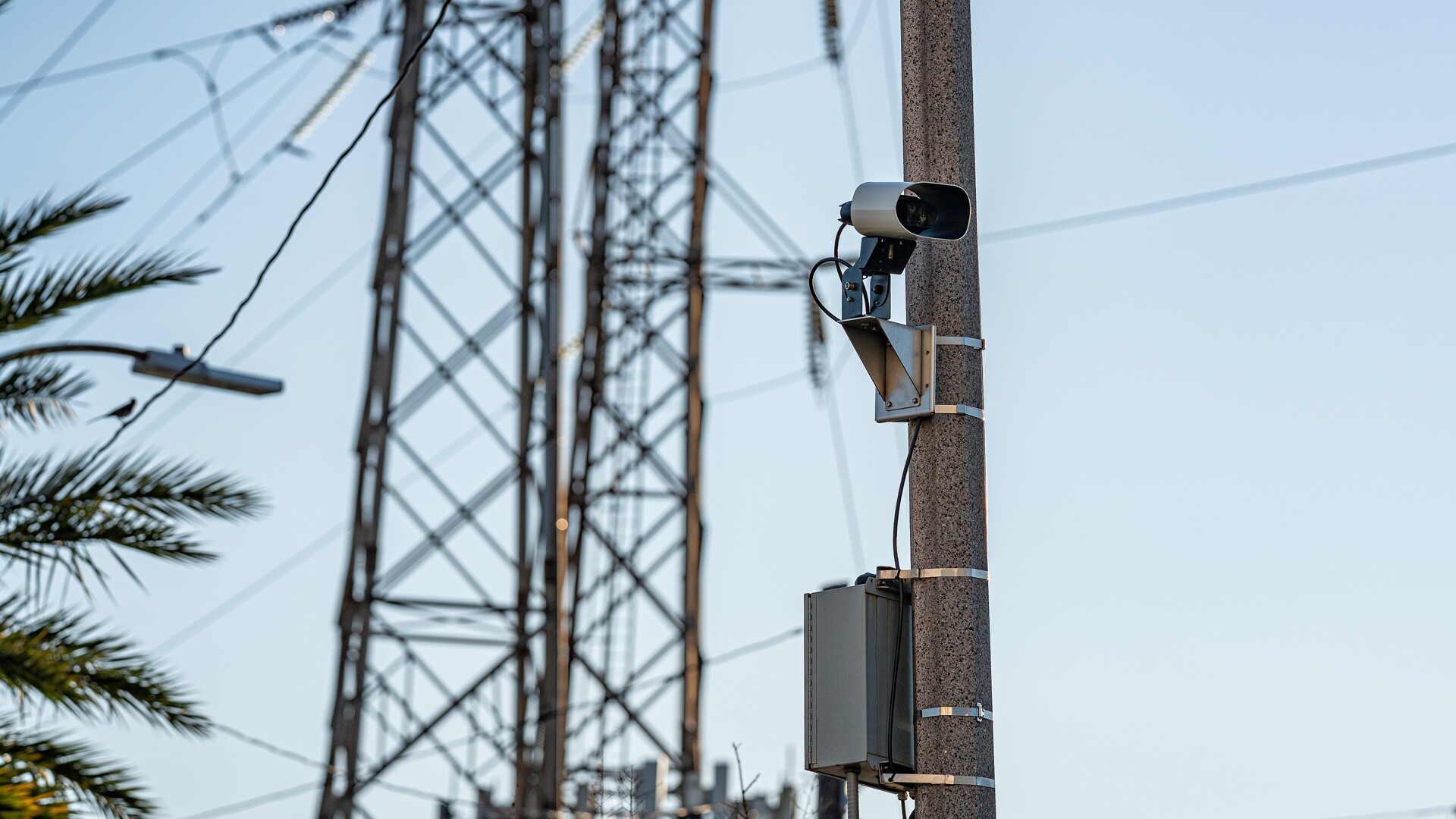
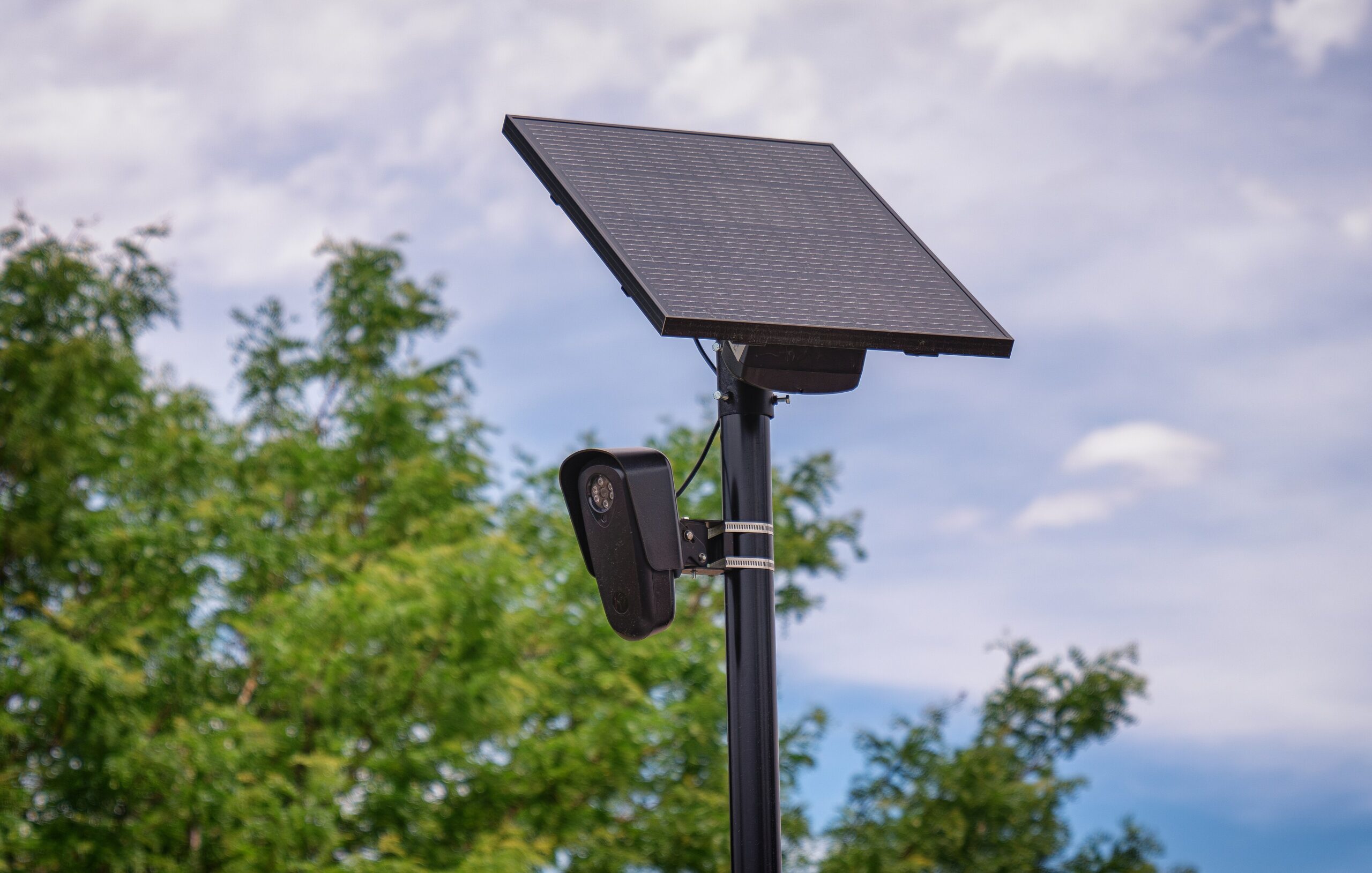
A New Orleans Police automated license plate reader camera at North Peters Street and Esplanade Avenue. Photo: Tony Webster / Wikimedia Commons, CC BY 2.0
A woman in her 20s from northern Virginia says an officer pulled her over in September 2025 as she drove out of New Orleans toward Florida, told her she had stayed in the left lane too long, and said he was “part of the FBI.” By her account, the lane was not the real reason. She recalls him saying, “when I scanned your plate I could see you had suspicious travel patterns.” Jay Stanley of the American Civil Liberties Union’s Speech, Privacy, and Technology Project published her account on Oct. 26.
She told the ACLU the officer asked where she was coming from and where she was going, then asked her to prove she had been in New Orleans. She handed him a pamphlet from a whiskey museum. He answered, she says, that he thought she was lying about New Orleans because his system showed no hits there. He asked her to get into his car and showed her a map of circles marking where her plate had been photographed; clicking a circle brought up the picture. When she asked how he could see her plate, she says he told her, “Well they’re just everywhere.” The post describes no arrest and does not say whether she received a ticket.
That is one driver’s recollection. The post does not name the officer, his agency or the state where the stop happened, and it cites no police report, citation or agency response, so the FBI claim rests on her account of what he said. It is also why I can’t say which state’s law applied on the shoulder.
A left-lane violation is all a stop needs
Left-lane laws are narrower than many drivers assume. Virginia’s § 46.2-804 requires a vehicle going slower than the normal speed of traffic to use the lane nearest the right edge when it is available, with exceptions for passing and left turns, and sets a $100 fine for a violation of the section. Florida’s § 316.081 bars a driver from staying in the furthermost left lane when the driver knows or should reasonably know a faster vehicle is overtaking from behind, and makes a violation a noncriminal moving infraction. Both rules depend on traffic conditions, so a driver in an empty left lane at a normal speed may not have broken either one. Her route crosses several states with their own versions, and the ACLU’s post does not say which the officer cited.
A stop with a real violation under it survives the officer’s motive. In Whren v. United States, decided June 10, 1996, the Supreme Court held unanimously that “Subjective intentions play no role in ordinary, probable-cause Fourth Amendment analysis.” Interdiction units lean on that rule. The consequence for a plate-reader tip is that it never has to appear in the paperwork; the citation only has to name the lane.
What an officer can do once the stop starts
Rodriguez v. United States, decided April 21, 2015, by a 6–3 vote, held that police cannot extend a traffic stop to wait for a dog sniff without reasonable suspicion. The Court described the stop’s mission as addressing the violation that warranted it, along with related safety concerns. Rodriguez does not bar every question; it asks whether the questioning adds time to the stop, and the ACLU’s post gives no clock for this one. If an officer wants more time than the ticket needs, the suspicion has to come from somewhere, and in this license plate reader traffic stop it came from the database.
Virginia’s plate-reader statute, § 2.2-5517, amended in 2025, speaks to that. Subsection M says a system notification alone does not establish reasonable suspicion for a stop: the officer must develop independent suspicion or confirm that the plate or vehicle matches the database entry. Evidence obtained in violation of that subsection is not admissible by the Commonwealth, and the statute orders plate data purged 21 days after capture unless it is tied to an investigation. Those limits bind Virginia agencies. I did not check whether the states on her route have anything similar.
What she describes is not a hit, which is a stolen plate or an outstanding warrant. By her account the officer treated the absence of hits in New Orleans as evidence that she lied, though a camera network shows only where its cameras happen to be. She had a museum pamphlet from the city. The database had nothing.
The same pattern shows up in Texas and at the border
In Texas, a federal jury in San Antonio found Bexar County liable on Sept. 28 in a stop that began with a claimed lane drift, and Backfire News reported an award of $76, one dollar for each minute the driver was held. The ACLU says dashcam video showed the claimed drift was false and that a federal fusion center had alerted local police to the driver’s travel; the Institute for Justice, which represented him, announced the verdict.
The ACLU’s post also points to an Associated Press report from November 2025 that Border Patrol monitors drivers nationwide for “suspicious” travel patterns. It describes a furniture-moving company driver stopped about 100 miles from the Mexican border after driving from South Carolina: police searched his truck, found nothing illegal, arrested him on suspicion of money laundering and seized the cash he carried. The ACLU speculates that her stop may have come out of a program like that; it does not establish it. Flock Safety’s own marketing, quoted in the ACLU’s July 2025 post, promised alerts “when suspect vehicles have been detected in multiple states” and pitched detecting “patterns of suspicious activity across cities and states.” I could not tell from the post which vendor’s system the officer used.
What happens next
The ACLU’s post reports no lawsuit or complaint over her stop. The nearest test is in Texas, where the county has indicated it may appeal and the plaintiff’s lawyers said they would ask a judge for an order against the practice, according to that reporting. In Congress, Rep. Keith Self’s PRIVACY Act, introduced in July, would require federal agencies to get a warrant before querying state and local surveillance data, plate readers included, but it would not limit what a local officer can pull up on a laptop. A recent Supreme Court phone-privacy ruling is the opening that critics of the cameras are now citing.
On the shoulder itself, the three statutes I read for this piece, Virginia’s and Florida’s left-lane laws and Virginia’s plate-reader law, contain no duty to prove where a driver has been. Requirements to hand over a license, registration and insurance come from separate statutes that differ by state.
Should police be allowed to use a plate-reader travel pattern as the reason to pull someone over for a minor lane violation, or should the databases be limited to confirming hits like stolen cars and warrants?
About the Author