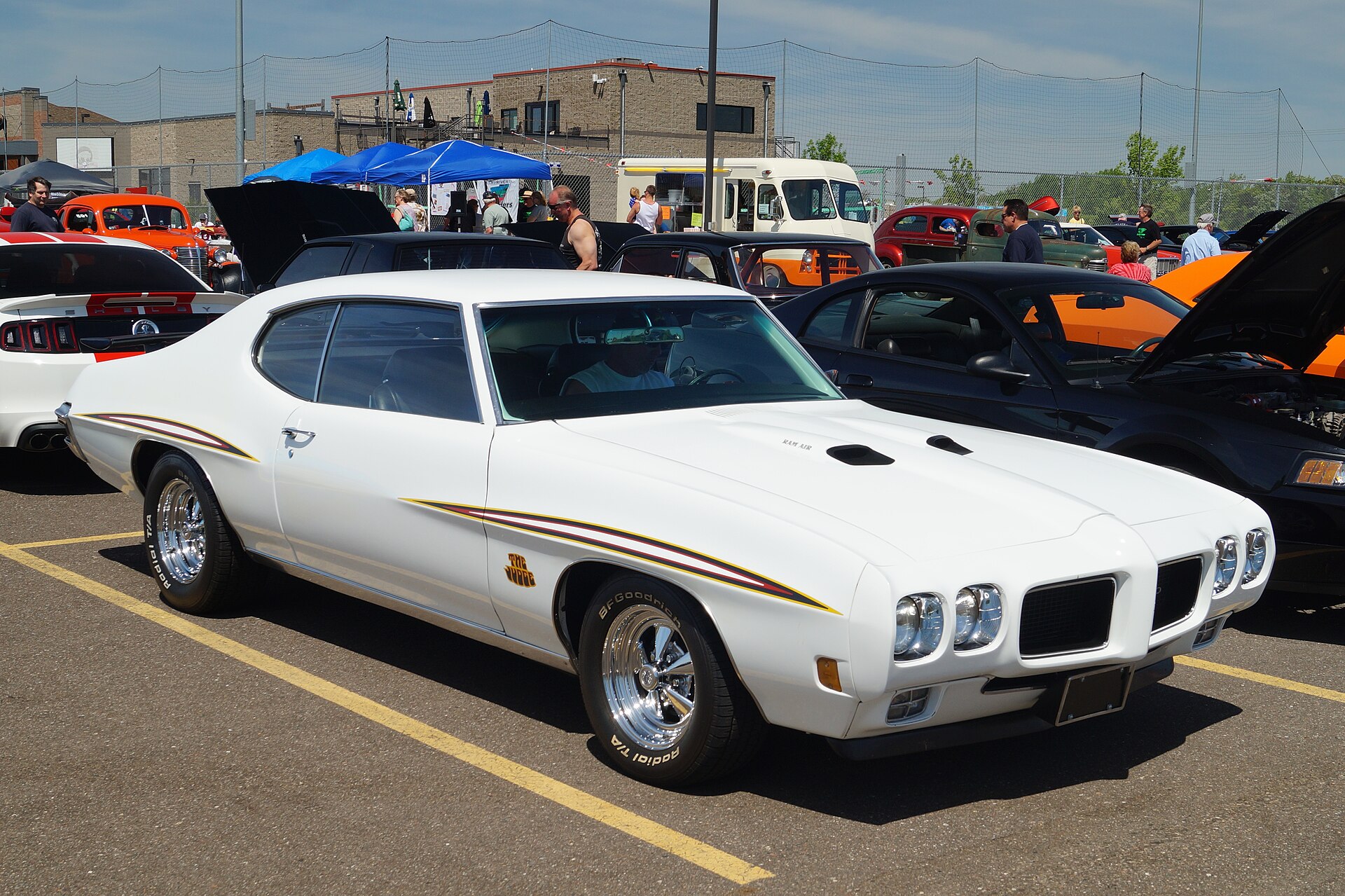
A 1970 Pontiac GTO Judge. Photo: Greg Gjerdingen via Wikimedia Commons (CC BY 2.0)
Somewhere in Dayton on Monday morning, a group of thieves drove off with a GMC Sierra Denali and the trailer hitched behind it. What they may or may not have known is that the trailer was carrying a 1970 Pontiac GTO Judge that its owners and police value at more than $400,000 — a car one family has held since the day it left the dealer’s lot 56 years ago.
The heist lasted about half a day. Dayton police detectives found the truck, the trailer and the Judge that same morning and handed all three back to their owners, who had come to town for a car show.
That’s a happy ending. It’s also a reminder that the most exposed moment in a collector car’s life usually isn’t on the road or on the show field. It’s the night before, parked in a lot, sealed inside a box that tells anyone watching exactly one thing: something worth hauling is in here.
What Dayton police say happened
According to the Dayton Police Department, officers were sent around 7 a.m. on Monday, Sept. 21, to the 2000 block of South Edwin C. Moses Boulevard on a report of a stolen vehicle. Police say multiple suspects took a GMC Sierra Denali with a trailer attached, and the trailer held the 1970 GTO Judge.
The department’s General Assignment Detectives located the vehicles at roughly 11:30 a.m. — about four and a half hours after officers were dispatched — and returned the truck, trailer and car to the owners. Police said the victims were visiting Dayton for a car show and that the GTO belonged to one victim’s father, who bought it new.
As of this writing, Dayton police have not publicly named any suspects or announced arrests. We’re not going to guess at motive, either. Whether the crew wanted the truck, the trailer or the car inside is a question only an investigation or a courtroom will answer.
Why a one-owner Judge is a nightmare to fence
If there’s a silver lining in stealing a car like this, it belongs to the owner. A 1970 Judge is about the least anonymous car you could pick. Pontiac built fewer than 4,000 Judges for 1970, and only a sliver of those were convertibles. The cars carry loud stripes, “The Judge” decals and a rear wing, and the hobby around them is small, obsessive and very good at recognizing individual cars.
Then there’s the paperwork. Pontiac Historic Services can pull a car’s original billing history — the build, the options, the selling dealer — for a documented Pontiac. A single-family car bought new in 1970 has a paper trail that runs straight back to the showroom. Try selling that at a swap meet without somebody asking questions. We’ve seen how quickly a hot-car case can crack once collector goods surface in public; the Dave Marcis burglary came apart at a flea market.
That doesn’t make high-dollar classics theft-proof. It makes them hard to cash out whole. The real risk is that a car like this gets parted out, stashed or damaged before anyone finds it. A four-and-a-half-hour recovery sidesteps all of that.
The Judge, briefly, for anyone who wasn’t there
Pontiac launched the Judge as a GTO option package for 1969, borrowing the name from the “Here come da judge” bit on TV’s Rowan & Martin’s Laugh-In. It was Pontiac’s answer to the budget muscle car craze: take the GTO, bolt on a performance-oriented package, dress it in graphics nobody could miss and sell it to young buyers who wanted the fastest-looking thing on the block.
For 1970, the Judge came standard with the Ram Air III 400 V8, with the high-strung Ram Air IV available for buyers who wanted more. Functional hood scoops, a rear spoiler and Rally II wheels completed the look. Pontiac was part of the General Motors empire Billy Durant built, and the Judge was one of the brand’s loudest statements before emissions rules and insurance surcharges strangled the muscle car era a few years later.
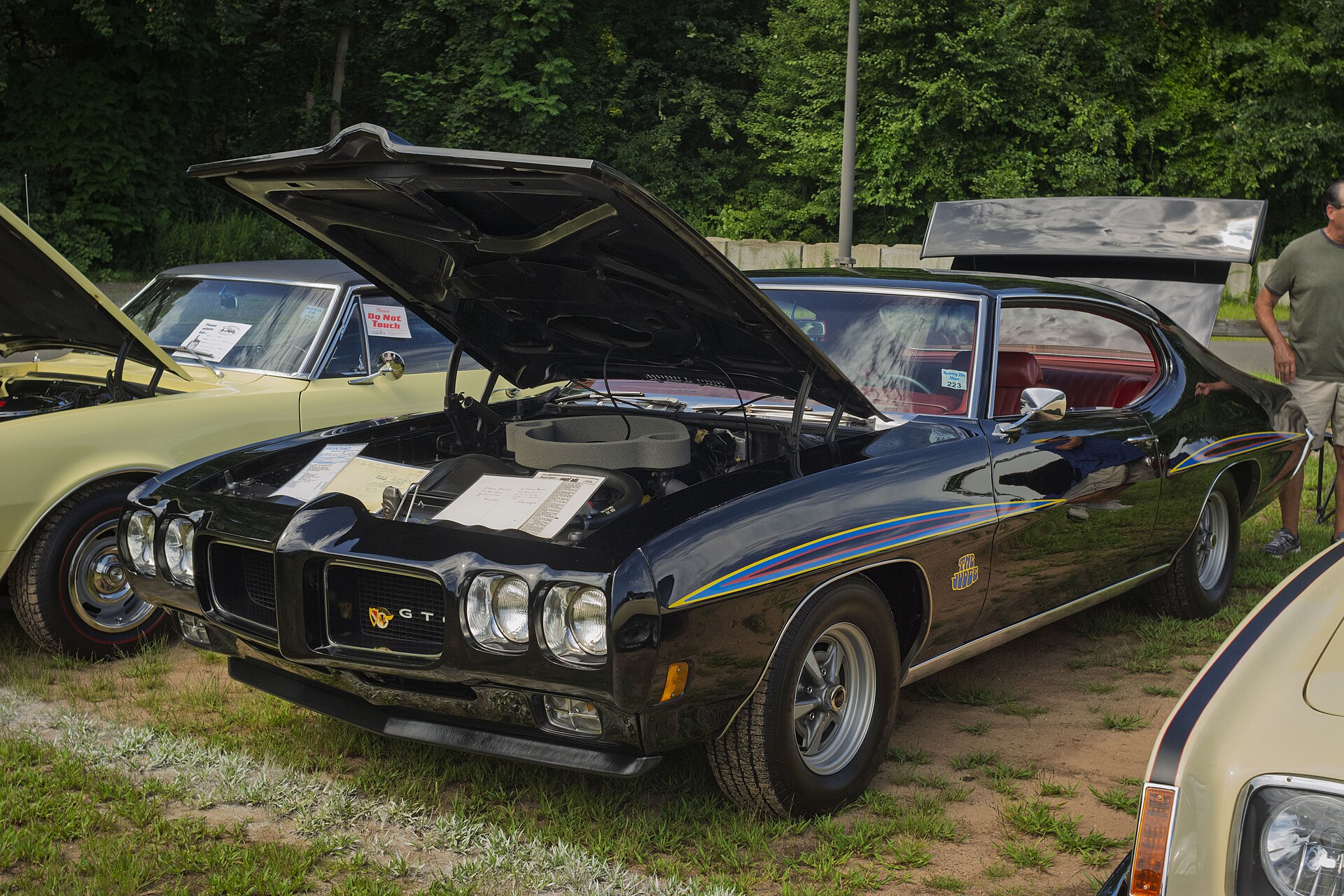
Why would one be worth $400,000? Police and the owners gave that figure, and we don’t have the car’s build sheet in hand. But in this corner of the market, the multipliers stack up fast: convertible body, Ram Air IV engine, original documentation, factory options and single-owner history can each move a Judge well past a typical hardtop. The same logic drives prices on other low-volume GM oddities, like the one-off Camaro Z28 convertible built for a Chevrolet boss.
What this could mean legally
No one has been charged publicly, so this is context, not a prediction. Under Ohio Revised Code 2913.02, theft is graded by value. Property worth $150,000 to under $750,000 falls into third-degree felony territory. Separately, stealing a motor vehicle is grand theft of a motor vehicle, a fourth-degree felony, regardless of the vehicle’s value. A single incident involving a late-model truck, a trailer and a six-figure classic can open the door to several counts if prosecutors get a case.
If you trailer a classic to shows, read this part twice
An enclosed trailer protects paint from rock chips and weather. It also hides the car from the people who would recognize it and lets a thief drive away without ever touching the vehicle that matters most. Hotel lots near event venues are prime hunting grounds because the rigs tend to be parked in one place overnight and their owners are asleep. A few habits make that job much harder:
- Lock the coupler and the wheels. A coupler lock stops someone from hooking the trailer to their own truck. A wheel boot or locking chock slows down anyone who takes the whole rig.
- Park defensively. Back the trailer’s door against a wall, pole or another trailer so it can’t open. Where possible, box the tow vehicle in so it can’t pull straight out.
- Track all three. Hide separate GPS trackers in the tow vehicle, the trailer and the car. Crews that know to rip out a truck’s factory telematics may miss a small tracker tucked inside a classic’s trunk or under a seat.
- Disable the classic. A hidden kill switch or battery disconnect means a thief who opens the trailer still can’t drive the car off it.
- Keep the paperwork off the rig. Carry photos, VIN and trim tag details, and documentation copies on your phone, not in the glovebox. Those make a stolen report more useful — and a car more recognizable — within minutes.
Visible deterrents such as a flashing alarm light or a camera pointed at the trailer help too. Our running list of car essentials that actually earn their keep covers dash cams and theft-prevention gear that do double duty on show weekends.
Check your insurance before the next trip
Here’s where a lot of owners get surprised. The collector car, the tow vehicle and the trailer are often insured under different terms, and sometimes on different policies. A standard auto policy might extend liability coverage to a trailer you’re towing without covering theft of the trailer itself. The classic inside is typically protected by its own policy’s comprehensive coverage, not the truck’s.
For a car like this, the valuation method matters as much as the coverage. An agreed-value collector policy sets the payout amount in advance. A stated-value or actual-cash-value policy can leave you arguing with an adjuster about what your car was really worth at the time of the loss. If your classic has gained value in the last few years — and many have, as the recent auction results keep showing — make sure your policy’s number has kept up.
Before you load up for the next show, call your agent and ask three things: Is the trailer covered for theft? Is the car covered while it’s in transit and inside the trailer? And if the car disappears tomorrow, what number will the check say?
The bottom line
A father bought a Pontiac GTO Judge new in 1970, his family kept it for more than half a century, and on Monday it spent a few hours in the hands of strangers. Dayton detectives got it back before lunch. Most stolen classics don’t get that kind of turnaround, which is the best reason for everyone who hauls a collector car to treat the trailer, and the parking lot, like part of the car.
Photo credits: Greg Gjerdingen and Ethan Long via Wikimedia Commons, used under Creative Commons licenses. Images show the same model year and are not the recovered car.
About the Author