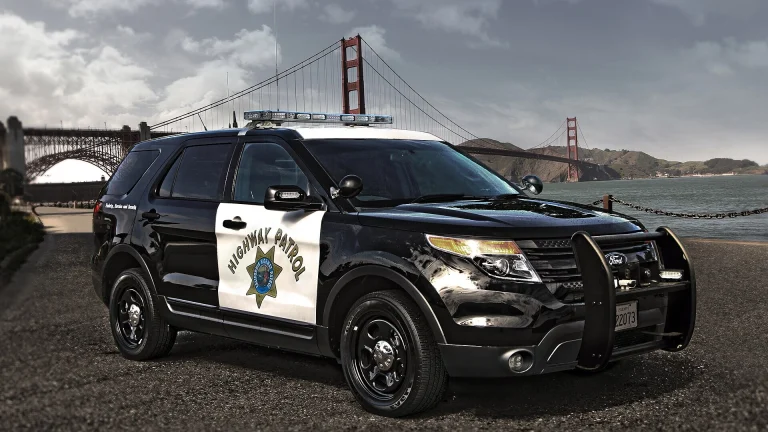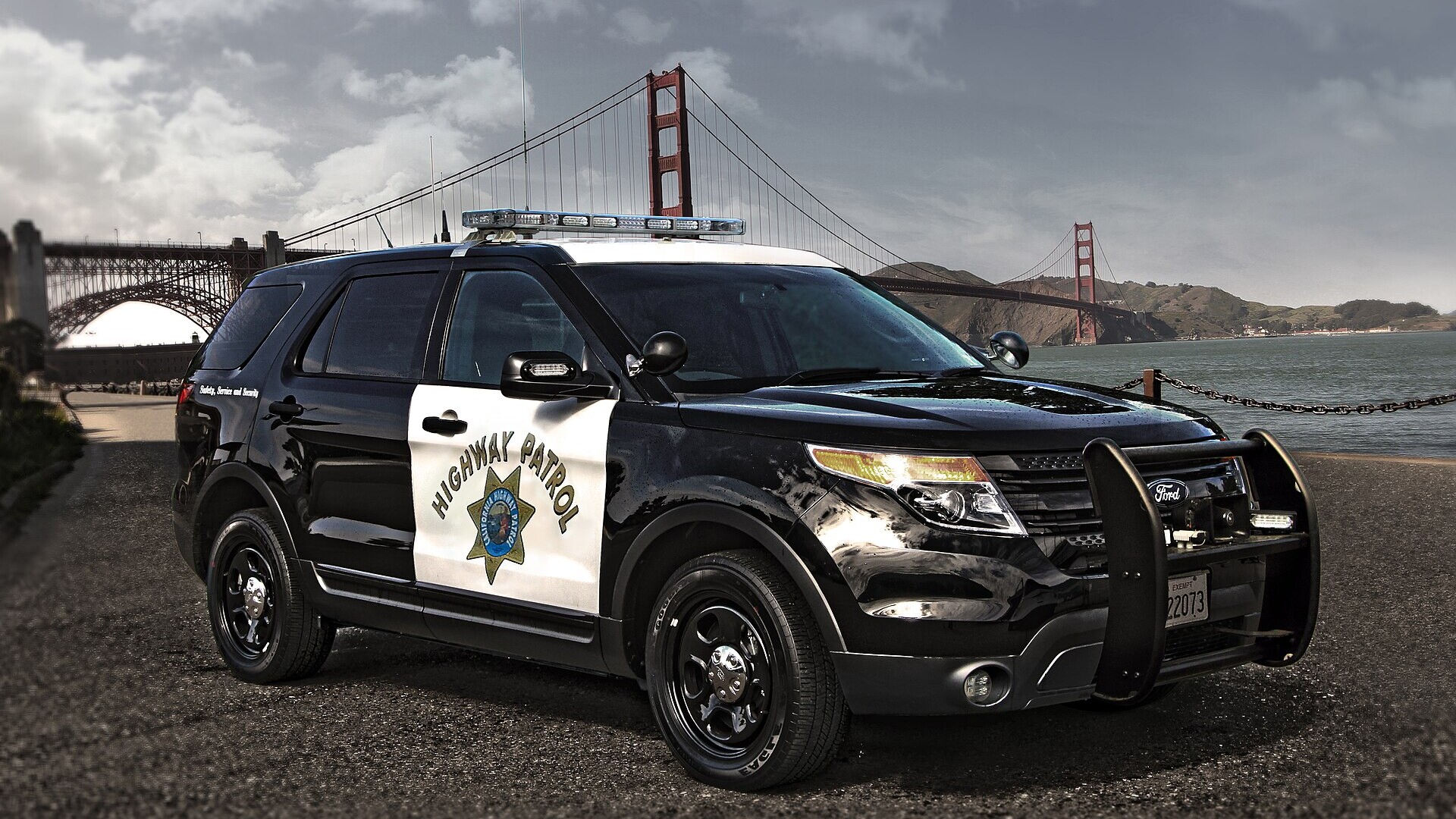
Representative image: a California Highway Patrol Ford Police Interceptor Utility, not the vehicles involved. Image credit: California Highway Patrol, public domain, via Wikimedia Commons.
CHP officers began chasing a red sedan on the westbound 10 Freeway near Azusa Avenue in Baldwin Park shortly after 4 a.m. on Saturday, Nov. 7, after seeing it go over 100 mph, tailgate and weave. Three of the four people inside died, according to ABC7 Los Angeles, which attributes the account to CHP.
A few minutes later, the driver tried to take the Francisquito Avenue off-ramp and hit a concrete barrier. CHP Lt. Saul Gomez said the driver was “unable to negotiate the curvature of the roadway.” The driver was pronounced dead at the scene. Two of the three passengers died at hospitals, and the third is in critical condition. ABC7 reports that the four were between 19 and 25 years old. It does not say who was which age, and names had not been released. A SigAlert was issued and canceled around noon.
What the reporting leaves out
The ABC7 account gives no speed at impact, only the 100-plus mph CHP says officers first saw. It gives no make or model for the sedan, no distance for the chase beyond “a few minutes,” and no count of how many CHP units were behind it. It does not say whether officers were still following when the car left the freeway, whether anyone was belted, or whether CHP suspects impairment. The story’s web address still reads “1 killed, 3 hospitalized”; the headline and text say three died.
What California law says about pursuits
Vehicle Code section 17004.7 sets the conditions for agency immunity. A public agency that employs peace officers is immune from civil damages for injury, death or property damage in a collision involving a pursued driver, if it has a written pursuit policy covering twelve minimum subjects. Those include when to initiate a pursuit, speed considerations, when to terminate and a post-pursuit analysis. Officers must certify in writing that they have read and understood the policy, and the agency must train on it every year. The section concerns the agency’s civil liability. It does not address the driver’s, and nothing in the ABC7 report says any claim has been filed.
CHP’s own manual puts a paper trail on every pursuit. Under chapter 7 of Highway Patrol Manual 100.86, a supervisor evaluates the incident and completes a pursuit report, as Vehicle Code section 14602.1(a) requires, and the report goes to the division within seven calendar days. The area commander reviews the associated video before approving it and can refer possible misconduct for investigation. The chapter points to HPM 70.6 and the Officer Safety Manual for the rules on starting and ending a pursuit. Those documents are not in the one we read.
CHP’s pursuit report covering 2018 is the most recent statewide tally we could open. It counts 2,546 pursuits involving CHP, 464 that ended in a collision, and 8 fatal collisions with 8 deaths. The Baldwin Park crash killed three people on its own.
Other states’ cases show where these end up. A Florida trooper’s PIT on a 15-year-old who hit 115 mph ended with a passenger’s death, as we reported in our Pasco County story. In West Virginia, a family is suing over a 120-mph chase that killed a strawberry farmer, and the suit says spike strips crossed live I-64 traffic.
Names have not been released. Under HPM 100.86, the pursuit report for this one is due to the division by Nov. 14. Should CHP chase a driver it has seen only speeding, tailgating and weaving, or let that driver go and keep the freeway clear?
Sources: ABC7 Los Angeles; California Vehicle Code section 17004.7; CHP Highway Patrol Manual 100.86, chapter 7; CHP pursuit report covering 2018.
About the Author