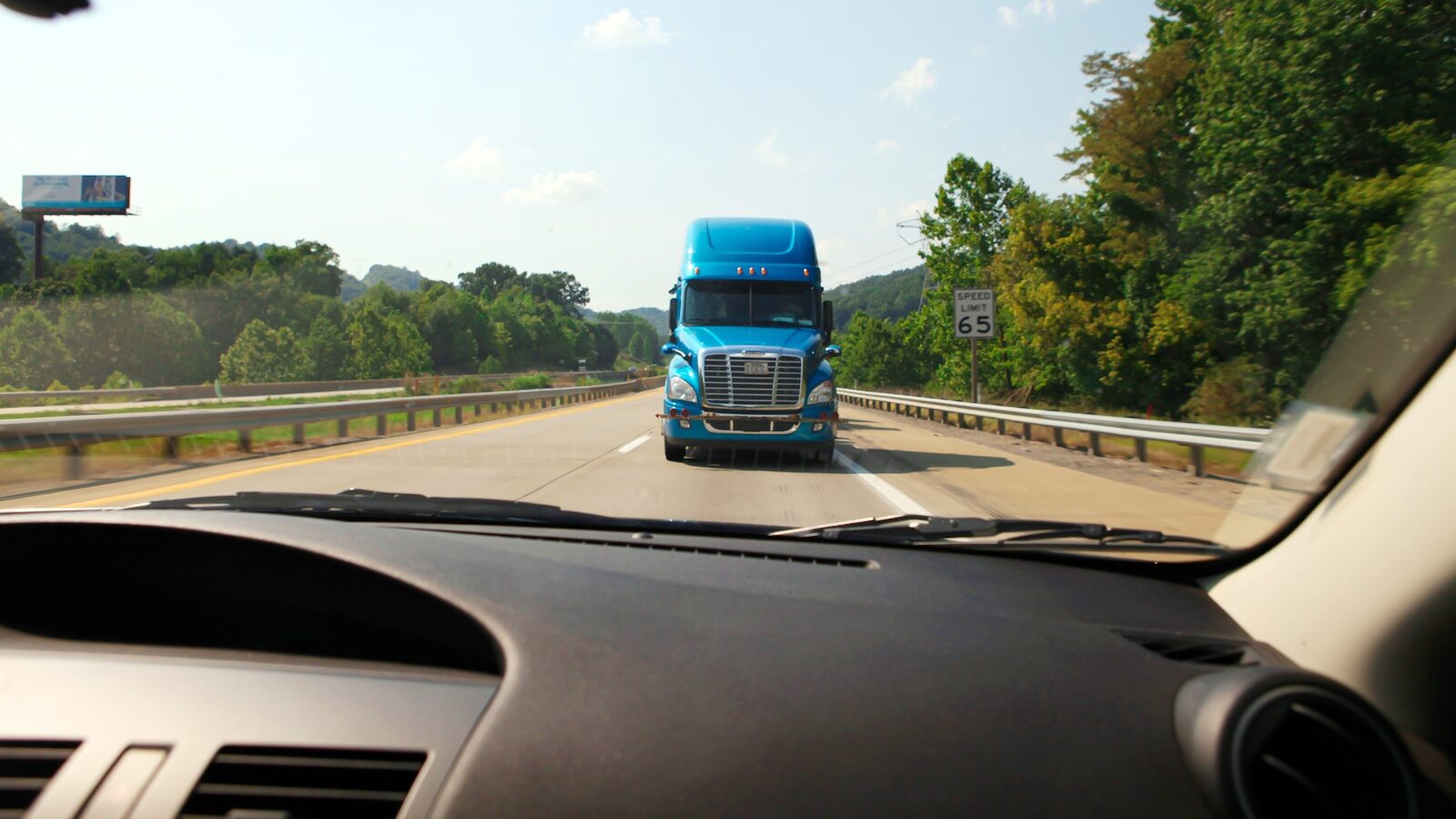
A driverless truck operating under California’s new autonomous vehicle rules won’t just be missing a person behind the wheel. It will be missing the one federal rule that governs every human trucker regardless of skill, experience, or how much freight is waiting: the eleven-hour driving limit. Pull the driver out of the cab, and the Federal Motor Carrier Safety Administration’s Hours-of-Service rules, the fatigue rules that force even the best driver to stop, simply stop applying. Almost nobody in the current fight over these regulations is talking about that part. It’s also the real reason this dispute deserves far more attention than the $5.8 million price tag California put on it.
Teamsters California sued the state Department of Motor Vehicles on August 5 in Alameda County Superior Court, seeking to void regulations the DMV finalized in April that, for the first time in roughly a decade, let companies apply for permits to test and deploy autonomous trucks weighing more than 10,001 pounds on California roads. According to the DMV’s own release, manufacturers must progress through a safety-driver testing phase and then a fully driverless phase, logging 500,000 miles at each stage for heavy-duty vehicles before they can even apply to go commercial, backed by a documented safety case covering hardware, software, and operations. The same rulemaking package also gives police the authority to cite AV companies directly for moving violations and lets local emergency officials geofence autonomous vehicles out of active disaster zones.
None of that is what the union is actually suing over. Teamsters California argues the DMV skipped a legally required deeper economic review, a standardized regulatory impact assessment, that California law demands once a regulation’s projected cost clears roughly $50 million in its first year. The DMV’s own estimate came in at $5.8 million, built largely around companies’ data-reporting costs. The union’s estimate, laid out in its complaint, is nearly $288 million in direct costs and $576 million once indirect effects are folded in, because the DMV’s math left out what it actually costs a company to enter California’s freight market: trucks, terminals, testing programs, and staff. That’s not a rounding error. It’s two competing definitions of what counts as an impact, and the difference decides whether the public gets a mandatory economic review before the rule takes effect, or doesn’t.
Here’s the detail that should bother people who couldn’t care less about truck driver jobs. The Teamsters’ complaint alleges the DMV advanced the heavy-truck authorization “under the guise of amending existing light-duty autonomous testing regulations” already written for robotaxis. The policy that opens California’s freeways to 80,000-pound driverless rigs traveled through the same regulatory door built years earlier for much smaller robotaxis. Whatever a judge decides about the dollar figures, that’s a fair structural question on its own: should a change this large ride through on paperwork built for something else entirely?
The eleven-hour issue is bigger than a technicality. In February, Aurora Innovation reported that one of its driverless trucks ran a 1,000-mile route between Fort Worth and Phoenix in roughly 15 hours straight, with no rest stop, no sleeper berth, and no second crew, something no legally operating human driver could do without blowing through federal hours-of-service limits. That isn’t simply automation swapping out for a paycheck. It’s a freight product built on different physics: the same load, the same lane, less elapsed time, no motel bill, no logbook, no fatigue to plan around. That gap is exactly why the Teamsters’ economic estimate balloons past the DMV’s. Companies don’t spend hundreds of millions of dollars entering a new state to replace drivers one for one. They spend it because the underlying arithmetic of trucking just changed.
There’s an irony buried in California’s decade of caution. The state’s earlier ban on heavy-duty autonomous vehicles didn’t stop the technology. It relocated it. Companies built and proved their driverless freight networks in states with no such prohibition, including Texas, where Bot Auto ran a truck the length of two states with nobody in the cab and no one minding it remotely, either. That maturity gap matters: while trucking automation was racking up commercial miles elsewhere, Rivian was busy getting sued by its own customers over self-driving pickup features that were promised and never delivered. By the time California reopened its market this spring, the industry didn’t need the state’s permission to prove any of this could work commercially. It already had, across hundreds of thousands of miles, largely outside any California regulator’s view. A decade of prohibition never stopped driverless trucking. It just made sure California wasn’t the state collecting the data, the tax base, or the regulatory know-how while the technology grew up somewhere else.
California’s DMV has spent much of this year building enforcement tools to address problems autonomous vehicles already caused, rather than getting ahead of them. Robotaxis have blocked fire trucks at active emergency scenes, and Waymo’s own robotaxis have repeatedly gotten stuck in San Francisco intersections, incidents that ultimately pushed Washington state to legislate away the informal practice of officers manually shoving stuck robotaxis out of the way. The new California rules’ 30-second first-responder response requirement and two-minute evacuation window for geofenced zones exist because incidents like those already happened first. Truckers, meanwhile, are watching a separate regulatory fight over their own industry play out at the federal level, where the EPA is already trying to rewrite a 2027 diesel truck emissions rule before a single compliant engine has shipped. Regulation is not struggling to keep up with one corner of trucking. It’s struggling to keep up with all of it at once.
If the new rules survive, companies like Aurora, Kodiak, and Waabi gain access to the country’s largest freight state, ports of Los Angeles and Long Beach included, without having to prove anything they haven’t already proven in Texas and Arizona. Truck drivers and the businesses that orbit them, truck stops, corridor motels, shops that service owner-operators, absorb the risk if deployment scales anywhere close to what the Teamsters project. Less discussed is what happens to liability itself. When a crash involves a driverless truck, the driver becomes a remote operations center governed by new DMV licensing standards, not a CDL holder behind the wheel, and that changes how insurers, plaintiffs’ attorneys, and crash investigators assign fault, well before any court has fully tested the theory.
Whatever an Alameda County judge decides, this lawsuit is a template. It’s likely the first of several challenges nationally arguing a state undercounted the cost of legalizing autonomous freight specifically to dodge the review that would have slowed it down. That fight will outlast this case. The eleven-hour rule was never really about trucking. It was about the limits of being human behind the wheel. California just found out a regulation can’t negotiate around a body it no longer has to account for. It can only decide who gets to make that argument in court first.
About the Author