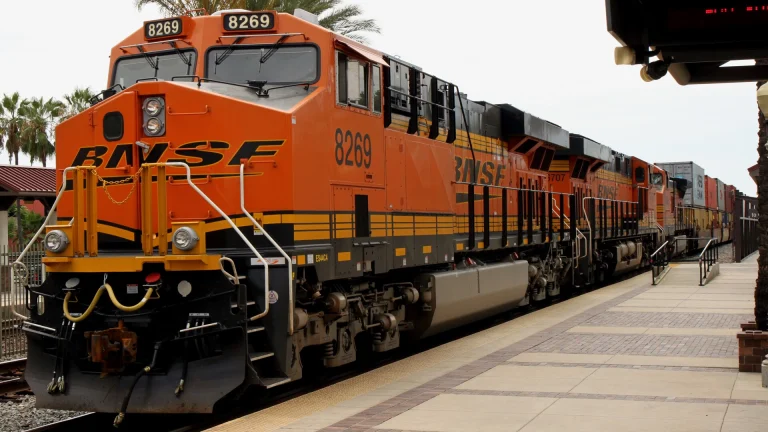
There’s something almost comedic about regulators amending a rule for engines that don’t exist yet. The heavy-duty NOx standards finalized back in December 2022 don’t even take effect until model year 2027, and EPA is already moving to soften them. On July 9, Administrator Lee Zeldin announced a proposal the agency says will save American truckers roughly $12 billion, with per-vehicle savings reaching up to $6,000 on new truck purchases if the rewrite is finalized.
Garage-worthy EDC gear, on sale this week.
If you own a diesel pickup, run a fleet, or just like knowing how the sausage gets made in Washington, this one is worth understanding beyond the press release headline. It isn’t a full repeal. It’s a renegotiation of the terms before the deadline even arrives, and the details reveal a lot about how emissions rules actually get built and unbuilt.
Four Specific Things Are Changing
The proposal targets four pieces of the 2023 rule specifically. First, EPA wants to eliminate deratements entirely for newly built highway engines and nonroad equipment, including agricultural machinery. Instead of a truck automatically losing speed or power when its Diesel Exhaust Fluid system throws a fault, operators would get a dashboard alert and keep driving until they can address it. EPA is also taking public comment on whether to extend that same fix to engines already in service.
Second, the agency wants to scale back the emissions warranty requirements that it identifies as the single largest cost driver in the 2023 rule. Third, it’s proposing extra lead time before the longer useful life requirements, meaning the mileage and years a truck’s emissions hardware has to keep performing, take effect. Fourth, and most technically interesting, EPA wants to bring back nonconformance penalties, letting manufacturers keep selling engines that miss the new NOx targets in exchange for a per unit fine rather than being locked out of the market entirely.
EPA maintains none of this touches the underlying NOx targets, and says roughly 90 percent of the reduction the 2023 rule was designed to achieve stays intact.
Why Trucks Derate In The First Place
For anyone who hasn’t wrenched on a modern diesel, the deratement fight makes more sense once you understand what’s actually failing. Selective catalytic reduction systems inject Diesel Exhaust Fluid, a urea-water solution, into the exhaust stream to chemically convert NOx into nitrogen and water vapor before it exits the tailpipe. Sensors monitor DEF quality, tank levels, and dosing accuracy, and when something looks wrong, the engine computer treats it as a compliance failure and cuts power or speed as a fail-safe.
The problem operators have flagged for years is that those sensors are frequently wrong, especially in extreme cold, and a false fault code can leave a loaded truck crawling at reduced speed on a highway shoulder instead of in a shop bay. EPA’s own proposal describes exactly that scenario as unacceptable for safety and productivity, a notable admission from the same agency that wrote the sensor-dependent rule in the first place.
The Rule Being Softened Was Only Finalized In 2022
Context matters here. The standards being revised were finalized under Administrator Michael Regan in December 2022 as part of the Clean Trucks Plan, and they represented the first update to heavy-duty NOx limits in more than two decades, more than 80 percent stronger than the rules they replaced. EPA’s own modeling at the time projected the rule would prevent thousands of premature deaths annually and deliver close to $29 billion in annual net benefits by 2045, projections built on assumptions about how long emissions hardware would keep functioning as designed, which is exactly why the original rule paired tougher NOx limits with warranty coverage roughly three to four times longer than before and useful-life requirements extended by one and a half to two and a half times.
Softening the warranty and useful-life provisions doesn’t just save manufacturers money on paper. It changes the assumptions the entire health-benefit case was built on.
A Nonconformance Penalty Is A Pressure Valve, Not A Loophole
Nonconformance penalties are a long-standing Clean Air Act tool, not a new invention created for this rewrite. The mechanism exists because regulators have repeatedly found that emissions targets can outrun what hardware can reliably deliver on a manufacturer’s production timeline. Rather than halting sales of engines that miss a new standard by a small margin, the agency lets manufacturers keep building and selling them while paying a penalty scaled to how far short they land.
Reviving that mechanism for the 2027 NOx standard is a quiet acknowledgment that the compliance timeline manufacturers, dealers, and fleets warned EPA about turned out to be a real engineering problem, not just industry griping about cost.
Who Actually Absorbs The Warranty Cut
Here’s the part that should matter most to anyone shopping for a heavy-duty truck in the next few years. Shortening emissions warranty coverage doesn’t make SCR systems, DEF injectors, or NOx sensors any more durable. It just moves the financial risk of a failure from the manufacturer’s balance sheet to the owner-operator’s. Those components aren’t cheap; a failed SCR catalyst or dosing module on a Class 8 truck can run well into four figures once labor is included, and that’s before factoring in downtime for a working truck. A cheaper sticker price on a new model year 2027 truck doesn’t necessarily mean a cheaper five-year ownership cost if the warranty window covering that hardware just got shorter.
Anyone cross-shopping a new heavy-duty diesel once this rule is finalized should ask specifically what the emissions warranty covers and for how long, not just what the truck costs to drive off the lot.
Part Of A Bigger Deregulatory Push
This proposal doesn’t exist in isolation. It follows an August 2025 EPA guidance push telling manufacturers to revise DEF software to curb false deratements, a February 2026 data demand sent to the fourteen manufacturers representing more than 80 percent of DEF system components, and a March 2026 guidance change letting manufacturers substitute NOx sensors for DEF sensors.
It’s also landing in the same year federal regulators forced John Deere to loosen its grip on repair software and diagnostic tools, and the same year EPA signed off on SEMA’s aftermarket emissions certification framework as a workaround to California’s rules. Add in an ongoing crackdown that has pulled more than 17,000 truckers off the road for compliance failures, and the picture is an agency tightening enforcement on drivers while loosening technical requirements on manufacturers at the same time.
Nothing Is Final Yet
EPA has opened a 45-day public comment period and will hold a public hearing before any of this becomes binding, and the agency has been explicit that the core NOx reduction targets aren’t up for negotiation, only the mechanics of how manufacturers get there. For fleet buyers and owner-operators planning purchases around the 2027 model year, that comment period is the window to actually weigh in, and it’s worth watching whether the final rule keeps the warranty and useful-life rollbacks as written or trims them back after industry and public health groups make their case on the record.
About the Author