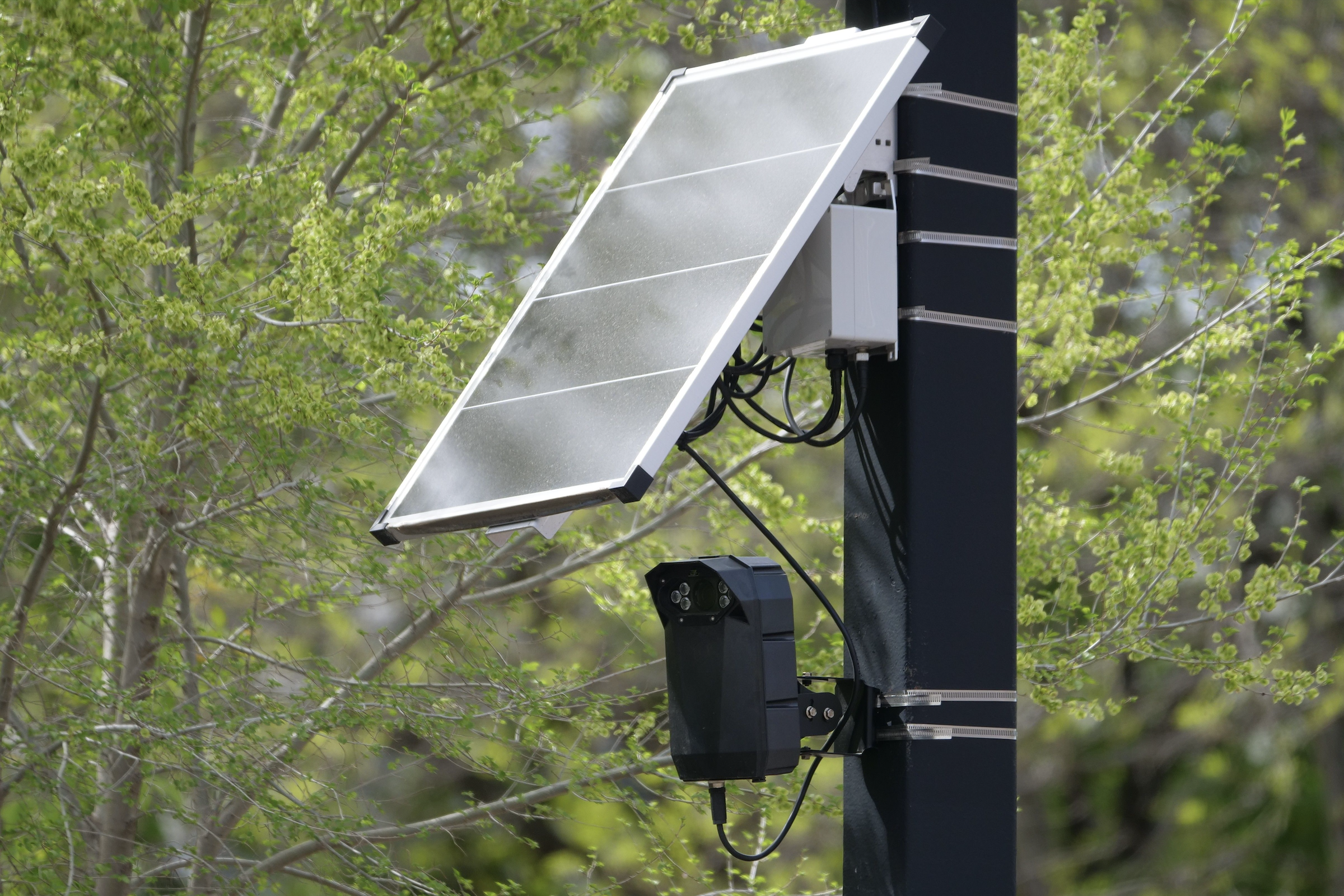
Barrow County, Georgia, sits roughly an hour northeast of Atlanta, and its sheriff’s office just used Facebook to deliver a warning that has nothing to do with fender benders or speed traps. The message: the solar-powered cameras bolted to poles around the county are government property, they’re watching for stolen cars and crime suspects, and anyone who decides to take a hammer, spray can, or tire iron to one is looking at a felony record, not a citation.
The department’s post, labeled a “PSA,” lays out the stakes plainly. Knocking one of these units offline isn’t filed under simple vandalism: department officials say “it is a felony offense under Georgia law,” and the people responsible can expect criminal charges, fines, and restitution on top of whatever a judge decides to add. The office also extended an olive branch of sorts, inviting residents with privacy questions to reach out directly rather than take matters into their own hands.
The cameras in question are almost certainly Flock Safety units, a fast-growing brand of automated license plate readers that now blankets thousands of neighborhoods, HOAs, and municipalities nationwide. Each pole-mounted unit runs on solar power and a cellular connection, snapping a photo of every passing vehicle and logging the plate number, paint color, visible damage, roof racks, bumper stickers, and other identifying details into a searchable database. Unlike a traditional speed or red-light camera, Flock’s system isn’t built to write anyone a ticket. It exists to build a timestamped, searchable trail of who drove where, and that trail can be shared across the thousands of agencies subscribed to Flock’s network, well beyond the county line where a given camera physically sits.
That last part is exactly why these cameras keep getting torn down, spray-painted, or set on fire in communities across the country. Critics argue the network amounts to dragnet surveillance of everyone, not just suspects, since a camera has no way of knowing whether it just photographed a wanted felon or a parent doing the school run. Sheriffs and police chiefs counter that the same database has cracked cases, from stolen vehicles to Amber Alerts, in minutes rather than days. Both things can be true at once, and Barrow County’s PSA is really just the legal side of that argument: however you feel about the surveillance question, the camera itself is county property, and Georgia’s criminal damage laws don’t care about your motive.
That distinction matters more than most people realize. Georgia treats criminal damage to property as a felony once the loss crosses a fairly modest dollar threshold, and a Flock camera, complete with its solar panel, cellular modem, mounting hardware, and the labor to install it, isn’t cheap to replace. A conviction can carry actual prison time, not just a fine, plus restitution billed straight back to the person who did the damage. That’s a felony record trailing someone into job applications, firearm purchases, and professional licensing for years to come, over a piece of hardware the county will simply replace and insure against anyway.
Barrow County isn’t the only Georgia sheriff’s office leaning harder on technology and public warnings lately. Another local sheriff overlooking Blood Mountain recently promised jail time and towed cars for reckless drivers after a fatal crash there, and that same pattern, using both hardware and public messaging to change driver behavior instead of just writing more tickets after the fact, shows up here too.
The bigger, more uncomfortable question these cameras raise isn’t whether damaging one is illegal, because it clearly is, but who gets to look at the footage and why. A Milwaukee police officer’s resignation earlier this year, after he was caught running a woman’s plate 179 times, is the cautionary tale here: license plate data is only as trustworthy as the person holding the login credentials, and abuse of that access doesn’t require a hacker, just an employee with poor judgment and nobody checking the audit logs. Add in a new federal rule that could put driver-monitoring cameras inside every 2027 car, and the amount of automotive surveillance the average driver generates during a single commute is only heading in one direction.
None of that is an argument for grabbing a can of spray paint. If Barrow County residents have real concerns about how long footage is stored, who can access it, or whether the data gets shared outside the county, the productive move is a public records request or a call to a county commissioner, not property destruction that hands the county a free felony conviction and a restitution bill. The camera doesn’t care about the principle of the thing, and neither will the district attorney’s office.
About the Author