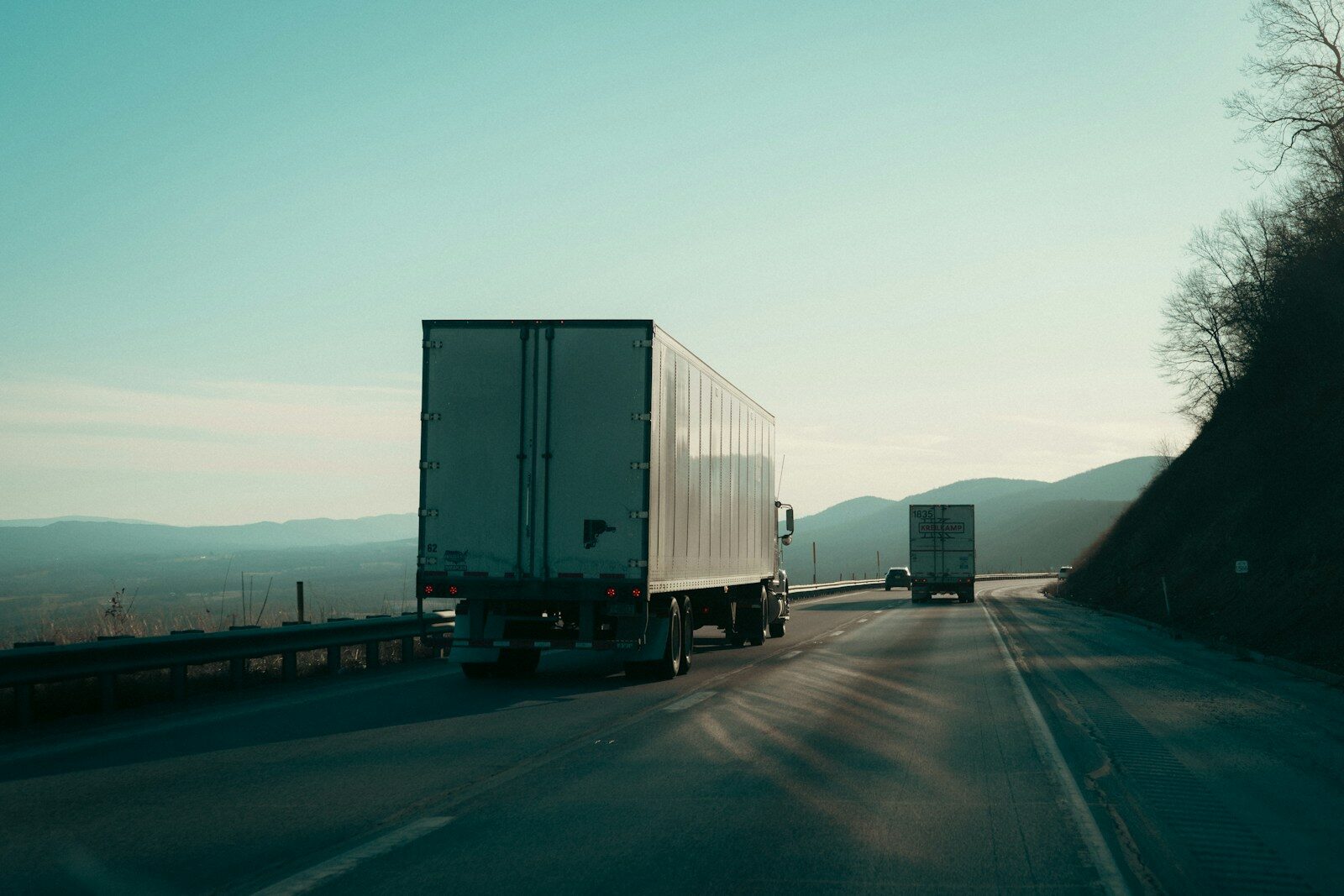
Kodiak AI picked up a California autonomous vehicle testing permit on August 13, and the Mountain View company’s own framing — “the first phase of scaling autonomous trucking coast-to-coast” — is doing some serious heavy lifting. What the DMV actually issued is a drivered permit. Every Kodiak tractor operating under it carries a human being in the left seat, belted in, hands near the wheel, doing exactly the job California spent a decade insisting somebody had to do.
That is not a shot at Kodiak. It is the only tier that exists right now. But the gap between the headline and the paperwork is where the interesting engineering, legal, and freight-market story lives.
The 10,001-Pound Line California Finally Erased
California’s autonomous vehicle rules were built around a weight ceiling: 10,001 pounds gross vehicle weight rating. Anything heavier was simply outside the permitting system. That covered robotaxis and sidewalk-adjacent delivery pods just fine, and it locked out essentially everything a freight carrier owns — your Class 3 box trucks on up through Class 8 sleepers.
On April 28, 2026, the Office of Administrative Law signed off on regulations that lift the ceiling for freight. Heavy-duty passenger transport is still broadly off the table, with a carve-out letting medium-duty transit vehicles up to 14,001 pounds GVWR run under public agencies and universities. Reporting obligations under the new framework kicked in July 1.
Kodiak’s permit is the first rung of a three-rung ladder: drivered testing, then driverless testing, then driverless commercial deployment. Each rung is a separate application, and you do not get to skip one because your technology worked somewhere else.
The Million-Mile Homework Assignment
Here is the number that actually governs the timeline. Before a heavy-duty developer can run driverless freight commercially in California, it needs roughly 500,000 miles logged in the safety-driver phase and another 500,000 in the driverless phase, with about 200,000 of the total accumulated inside California. Light-duty developers clear their equivalent gate at 50,000 miles. Heavy-duty is an order of magnitude harder, which is a reasonable read on what a 40-ton vehicle does when it gets something wrong.
Do the arithmetic and it is less daunting than it sounds. A single long-haul tractor covers 500,000 miles in maybe five years of hard duty. A test fleet of 20 trucks running 500 miles a day clears the same distance in about seven weeks. The bottleneck is not odometer readings. It is the structured safety case the DMV wants on top of them — documented hardware, software, and operational reasoning about why the thing is safe, not just evidence that it has not crashed yet.
Kodiak Learned to Drive in the Oil Patch
The company spent its formative driverless years about 1,300 miles east of its own headquarters. Working with Atlas Energy Solutions in the Permian Basin, Kodiak had 28 driverless trucks running as of March 31, 2026, across 15 routes, hauling frac sand between load-out points in Texas and New Mexico roughly 90 minutes apart. The program has moved something on the order of 7,000 loads and more than 450,000 tons of sand, logged over 23,500 driverless hours in the first quarter of 2026 alone, and hit 176 loads in a single day on July 20. It has also run triple-trailer combinations with a loaded weight north of 135 tons. Atlas and Kodiak are targeting 100 trucks by mid-2027.
Every mile of that ran predominantly on private lease roads. It is real operational data and it is genuinely impressive, but California does not accept it as credit. The regulatory clock in Sacramento started at zero this week, with a person in the seat.
The Enforcement Teeth Nobody Is Talking About
This is the part worth reading closely if you share a lane with these things. The new framework does not just permit heavy-duty AVs. It builds a compliance apparatus around them that has no analog in ordinary trucking:
- Law enforcement can issue a notice of noncompliance for a violation the vehicle commits, and the manufacturer has 72 hours to respond.
- Companies must answer first responder requests within 30 seconds.
- Local emergency officials can push an electronic geofence directive, and the fleet has two minutes to clear out of the area.
- Remote operations personnel — the humans watching from a desk — now face licensing and training standards.
- Required reporting covers driving-task system failures, vehicle immobilizations, hard braking events, collisions, and vehicle miles traveled.
Think about how that inverts the usual liability math. When a human driver runs a red light, the citation lands on a CDL, gets scored against a safety record, and eventually shows up in an insurance premium. The deterrent is personal. When an autonomous truck does it, there is no license to hang it on, so California hangs it on the permit instead. The consequence is corporate and it is existential — a pattern of violations threatens the authorization to operate at all. California tested that idea on robotaxi operators first, and the two-minute geofence rule reads like a direct response to the emergency-scene standoffs that made driverless cars a firefighter punchline in San Francisco.
There Is a Lawsuit in the Mirror
Kodiak’s permit arrives eight days after Teamsters California went to Alameda County Superior Court to challenge the regulations it was issued under. The union’s argument is procedural rather than philosophical: California requires a deeper economic analysis when a rule carries first-year costs above roughly $50 million, the DMV pegged the impact at $5.8 million by focusing on data-reporting burden, and the Teamsters put the figure at $288 million in direct costs and $576 million counting indirect effects. We broke down the numbers behind that filing here.
Nobody should expect a court to yank an active permit next month. But a successful procedural challenge would send the rulemaking back for redo, and every mile Kodiak logs in the meantime sits on a foundation that has not been fully litigated. That is a real line item for anyone underwriting an autonomous freight operation in this state.
How California Spent Ten Years Getting Here
The legislature repeatedly tried to write a human-operator requirement into statute, and the governor repeatedly declined. In his September 27, 2024 veto of AB 2286, Newsom noted that the DMV was already drafting what he called the nation’s most comprehensive heavy-duty AV standards, and that California was the only state actively prohibiting these vehicles while 35 other jurisdictions permitted heavy-duty autonomous testing. The regulations approved this spring are the end of that argument, or at least the current chapter of it.
What It Actually Means
Practically: if you drive I-5, I-10, or the 99 corridor, you will start seeing Class 8 tractors with sensor pods and a very attentive person behind the wheel. Nothing about your commute changes yet. The trucks are legally conventional — a licensed driver is operating a commercial vehicle, and that driver is responsible in the moment.
Commercially, the interesting question is whether the supply chain can keep pace with the permits. Building autonomy-ready trucks is a manufacturing problem as much as a software one, which is why contract builders are already retooling for driverless semi production at volume. Regulatory permission is cheap compared to steel.
For drivers holding a CDL, the honest read is that the timeline just became legible rather than hypothetical. A million miles and a safety case is a lot of runway, but it is a finite number with a checkbox at the end. Watch for the second permit — the driverless testing tier. That is the one that will actually mean something.
About the Author