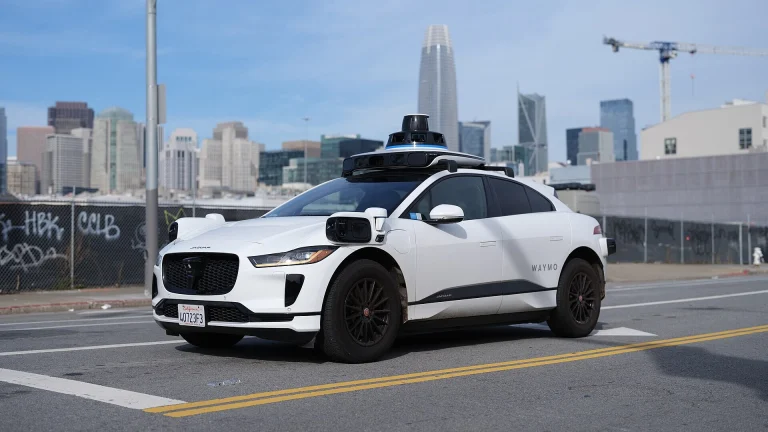
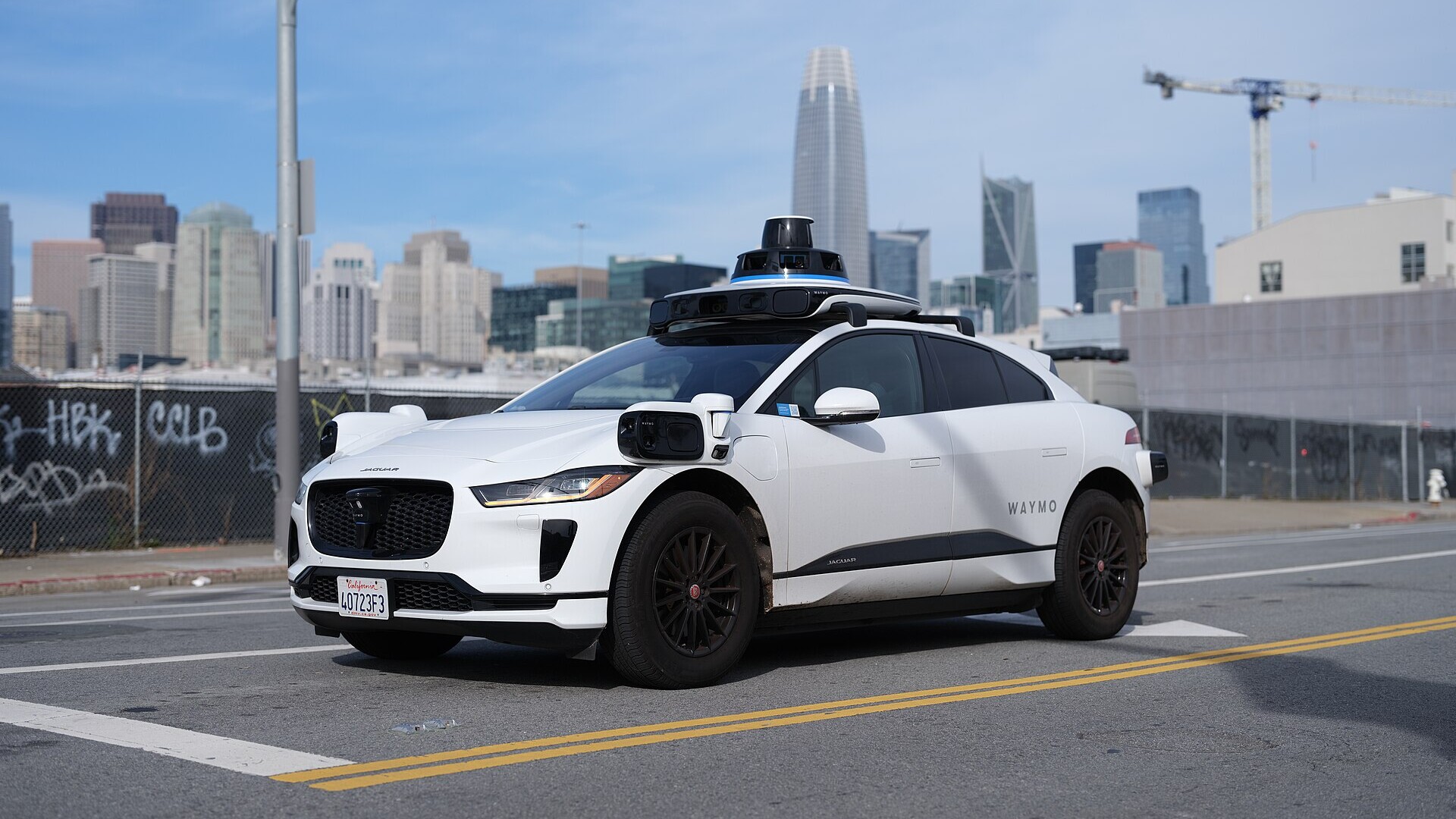
A Waymo Jaguar I-Pace operating without a driver in San Francisco, November 2023. Photo: Daniel Lu (dllu), Wikimedia Commons, CC BY 4.0
Seven of the nine animal strikes Waymo has reported to federal regulators since June 2025 happened between 8 p.m. and a few minutes past 3 a.m., close to the scenario Elon Musk described on Saturday when he called Waymo’s robotaxis “pet destroyers.”
Musk said it during an interview streamed by the Tesla Owners of Silicon Valley club, whose X Takeover event ran at Giga Texas on Oct. 10. In a clip of the interview posted to X, he said: “We also want to not run over pets and things. So maybe what a lot of people don’t know is that Waymos are like pet destroyers.” He allowed that “maybe Waymo’s made some improvements on that front, but they do run over a lot of pets.”
He then described Tesla’s version of the problem as “gray kittens on a gray tarmac with tar seams at night in low visibility” and added, “So that we actually did solve that, by the way.” Tesla has published no test results, disengagement figures or software notes showing how.
The crash counts in this story come from NHTSA’s Standing General Order, which requires companies running automated driving systems on public roads to report crashes. We downloaded the agency’s current file of automated-driving reports (submissions from June 16, 2025 onward, last updated Aug. 17, 2026) and pulled every report where the crash partner is coded “Animal.”
Waymo’s nine reports
Six of Waymo’s nine animal reports involve a dog, a cat or what the company calls a “domestic animal,” in San Francisco, Los Angeles and Austin. In five of the six, Waymo’s narrative states that the animal sustained injuries. Five of the six happened after dark; the exception was a 1:15 p.m. crash in Los Angeles in May 2026.
The other three were wildlife or unidentified: two geese hit at 63 mph on a South San Francisco highway in July 2026, an animal hit at 48 mph in Burlingame at 1:03 a.m., and another at 49 mph in Del Valle, outside Austin, at 3:02 a.m.
The narratives follow a pattern. An animal comes off a curb or out from between parked cars, the Waymo brakes, and contact follows. In a June 2026 San Francisco report, timed at 11:18 p.m., Waymo says its car was doing 16 mph when a dog crossed from between two parked cars; the car slowed and steered left, the dog struck its right front corner, and the dog’s leash ended up lodged under the front right tire.
The single cat report is dated October 2025, 11:40 p.m., in San Francisco. Waymo writes that its car was stopped at the curb for a passenger pickup when a cat came off the sidewalk and sat in the road partially under the vehicle; the form codes the car as moving straight at 5 mph. Those details line up with the death of KitKat, the gray tabby that lived at Randa’s Market on 16th Street in the Mission. KTVU reported on Oct. 30, 2025, that Waymo said the cat ran under the car as it pulled away, and that the company would donate to a local animal rights organization in his honor.
Tesla’s one report
Tesla filed 26 reports in the same file. One is coded “Animal”: a 2026 Model Y, with its automated driving system listed as “verified engaged,” hit a dog at an Austin intersection at 1:08 p.m. in September 2025, about three months after Tesla began robotaxi rides in the city. A safety monitor was aboard; there were no passengers.
Tesla’s original filing redacted the narrative as confidential business information. A March 2026 update removed the redaction, and the account reads a lot like Waymo’s. The dog ran into the intersection from the right as the Tesla approached a green light. The car slowed and steered left, then “biased left in lane” as the dog kept coming. The dog hit the bottom of the front right bumper and was pushed into the path of an oncoming van. Tesla says the dog then appeared behind the van, ran away from the street, and turned back toward it.
The same form lists the Model Y’s pre-crash movement as “stopped” and its pre-crash speed as 27 mph. The narrative describes a car proceeding straight. Tesla’s update says it made no “material changes to the factual record,” and both fields still read the same.
What the counts can’t show
NHTSA tells readers of this data to “use caution” comparing companies. It doesn’t collect fleet size or miles driven, and an operator with better telemetry will learn about, and report, more of its own crashes. We’ve written before about what this dataset leaves out.
Waymo publishes its own mileage: 271.3 million rider-only miles through June 2026. Its nine animal crashes sit among 1,211 Waymo reports in the current file. Tesla’s one sits among 26. Neither company’s animal count is large enough to say much about rate.
Waymo isn’t the only other name in the animal data. Zoox reported hitting a dog in San Francisco at 13 mph in July 2025; its report says the owner didn’t mention injuries at the scene, then later emailed the company alleging abrasions. Avride reported an animal strike in Austin in March 2026.
The school-zone petition
Musk’s comments came a day after NHTSA’s Office of Defects Investigation opened Defect Petition DP26010 on Oct. 9. The petition, received Sept. 23, alleges that 2026 Tesla Robotaxis, both Model Y and Cybercab, “exceed posted speed limits in active school zones” with the automated driving system engaged. NHTSA estimates the affected population at 1,000 vehicles.

The petitioner backed the claim with three links to video. NHTSA’s summary lists no crashes, injuries or deaths and does not name the cities, the schools, the speeds or the petitioner.
A defect petition is a request, not an investigation. ODI’s job now is to decide whether to grant it, which would open a formal probe, or deny it. Federal law (49 U.S.C. 30162) gives the agency 120 days from filing, which puts the deadline around Jan. 21, 2027.
The next update to NHTSA’s crash file will show whether Waymo’s animal count keeps climbing, and whether Tesla adds a second one to its own. So who would you rather have driving past your unleashed dog at midnight: Waymo, with nine reported animal strikes in a year and the miles to put them in context, or Tesla, with one strike and a CEO who says the problem is already solved?
Sources: NHTSA Standing General Order 2021-01 ADS incident reports (data as of Aug. 17, 2026); NHTSA ODI resume, Defect Petition DP26010; Waymo Safety Impact data hub; video clip of Elon Musk’s Oct. 10 interview with Tesla Owners of Silicon Valley; KTVU.
About the Author