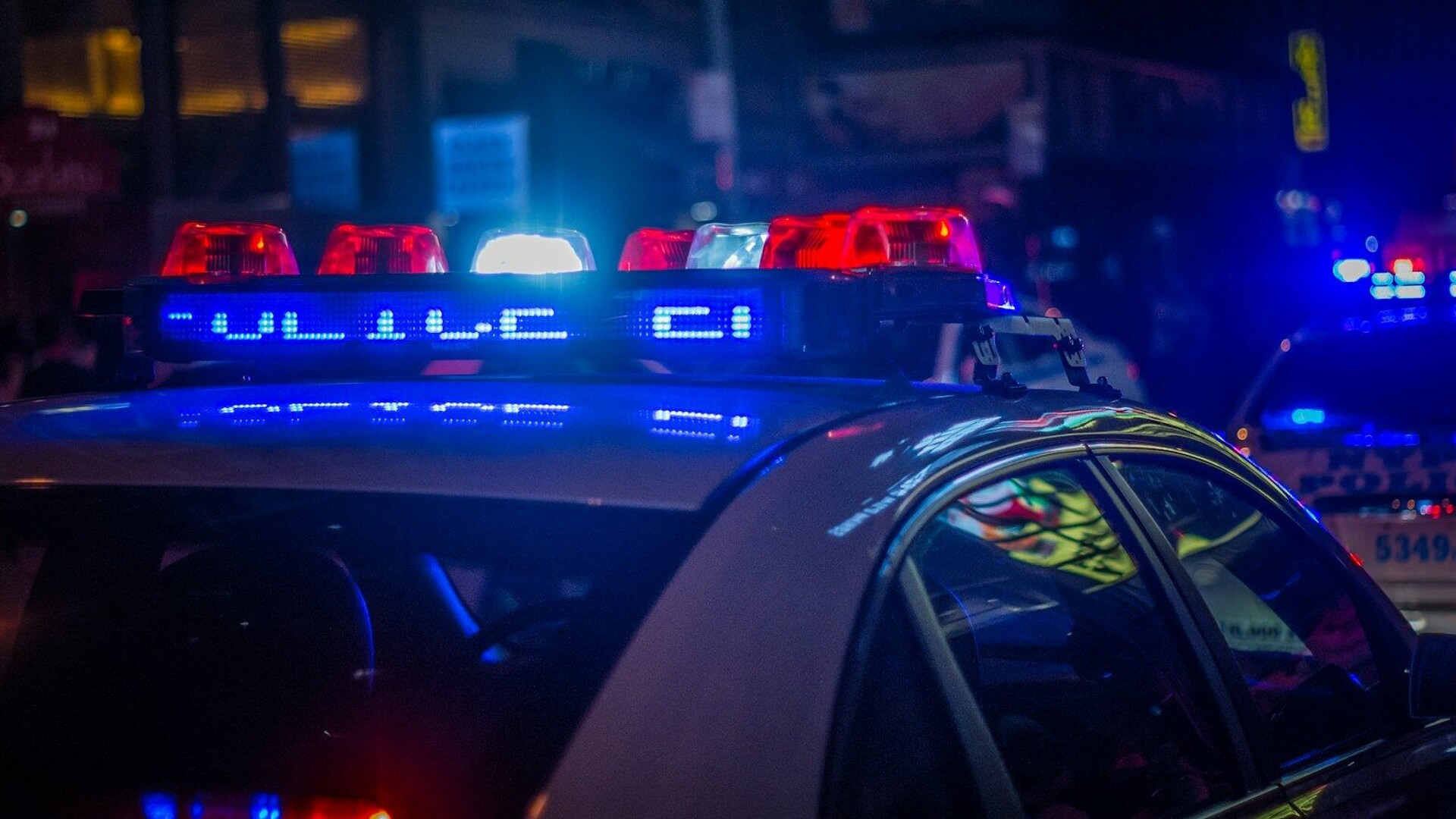
A Chevrolet Corvette ran from New York State Police at about 154 mph on Route 9 in Saratoga County Monday night, and roughly 40 minutes later responders found it on fire on a residential street in Clifton Park with no one at the wheel. State Police said both the driver’s identity and the cause of the fire remain under investigation, and no arrests have been made.
That leaves troopers with a burned car and no defendant. It also leaves a question most drivers never think about: what New York law does to someone who runs from police at more than twice the highest speed limit the state allows. The criminal charge is lighter than the number suggests. The license penalty is not.
A 40-minute run from Route 9 to Montgomery Way
The timeline comes from State Police statements given to Albany stations WRGB, NEWS10 and WNYT. At about 10:20 p.m. on October 12, troopers tried to stop the Corvette as it headed south on Route 9 at about 154 mph. Police said the driver kept going, turned onto Ushers Road and got on I-87 southbound.
Related Articles
- London’s Phantom No. 7 Bus Never Existed. The Corner It Supposedly Haunted Really Did Kill People
- Universal’s Miami Vice ’85 Is Set in the Era When Crockett’s Ferrari Was a Corvette in a Costume
Troopers got a tire deflation device under the car just south of Exit 9 on the Northway but then lost track of it. The State Police Aviation Unit joined the search, and around 11 p.m. emergency responders found the Corvette burning near Southbury Road and Montgomery Way in Clifton Park. Troopers confirmed it was the car from the pursuit; the driver was gone. The Saratoga County Office of Emergency Management Fire Investigation Unit is helping determine how the fire started.
Residents told NEWS10 that helicopters circled and officers searched the neighborhood that night, and that they were told to stay indoors. WNYT reported skid marks still visible on the road the next day where the car stopped, and neighbors described police walking through yards during the search.
None of the State Police statements those stations reported say what year the Corvette was, whether it had been reported stolen, whether anyone saw the driver leave, or what started the fire. Those are the facts the case will turn on.
New York’s fleeing law tops out at a misdemeanor unless someone gets hurt
New York’s base charge for running from police is Penal Law § 270.25. It applies when a driver who knows a uniformed officer or marked police car has signaled a stop with lights, or lights and siren, tries to get away by driving 25 mph or more over the limit or by driving recklessly. It is a class A misdemeanor. Under § 70.15, the jail term for a class A misdemeanor cannot exceed 364 days.
The statute sets a floor of 25 over and no ceiling. A driver who flees at 90 in a 65 and one who flees at 154 land in the same charge. The next step up, § 270.30, becomes a class E felony only when the flight causes serious physical injury to a police officer or someone else. Speed alone never gets there.
State Police use the same classification in their own releases. A June 2026 Troop G release on a multi-county chase listed the fleeing count as a class A misdemeanor, beside a felony charge of menacing a police officer. A July 2026 release on a pursuit that began in Malta did the same, putting the fleeing count among misdemeanors beneath drug and evidence-tampering felonies.
Prosecutors who want a felony for a high-speed run without an injury usually reach for reckless endangerment in the first degree. That class D felony requires proof that the driver created a grave risk of death to another person under circumstances showing depraved indifference to human life. It is a harder case to make than a radar reading. In an earlier Orange County case, CBS New York reported that troopers charged an 18-year-old with felony reckless endangerment, reckless driving and fleeing after he hit 148 mph near Goshen, and wrote him 43 tickets.CBS News
One 154 mph conviction reaches the suspension line by itself
The heavier hit comes from the DMV. Under Vehicle and Traffic Law § 1180-a, no road in New York can carry a limit above 65 mph. At 154 mph, the Corvette was at least 89 mph over the highest limit posted anywhere in the state.
The DMV’s point table assigns 11 points for driving more than 40 mph over the posted limit, and a license may be suspended at 11 points within 24 months. One ticket does it. That 24-month window used to be 18 months; the DMV lengthened it for violations starting February 16, 2026. DMV Commissioner Mark J.F. Schroeder said at the time that reckless drivers “do not deserve to be behind the wheel, period.”
The points also come with a bill. Six points within 18 months triggers a Driver Responsibility Assessment of $100 a year for three years, plus $25 a year for every point beyond six, all on top of court fines and surcharges. By our math, an 11-point conviction works out to $225 a year, or $675 total. The DMV also notes that insurers keep their own point systems and can raise premiums based on a driver’s record.
The catch for investigators: points go on a record only after a conviction, and a conviction needs a named driver.
Troop G has broken off chases on Ushers Road before
This stretch of Saratoga County has a record of pursuits that end in pieces. In November 2024, troopers chasing a driver from Malta called off the pursuit near Ushers Road in Clifton Park because he was driving recklessly. They later spotted him stopped at a red light at Route 9 and Fire Road in Halfmoon; he fled again, troopers ended that chase on Route 146 in Mechanicville, and he crashed and overturned on Route 4 right after. State Police charged him with three counts of unlawful fleeing in the third degree among other offenses, and the Halfmoon Town Court released him on his own recognizance.
In the June 2026 case, Troop G members ended a chase over public safety concerns as the vehicle got onto the Thruway, and Thruway troopers picked it up again in Albany County, where the driver went through an active construction zone at more than 100 mph.
Related Articles
- Liam Neeson Is a Mongoose Driving a Super Snake, and on Paper That’s the Best Part of His New Chase Movie
- NASCAR’s 80-Car Days of Thunder 2 Build Comes From One WSJ Newsletter Line. NASCAR Isn’t Quoted Saying It
Spike strips have a mixed record against Corvettes. In Nebraska, a trooper clocked a Corvette at 168 mph, another trooper slowed it with stop sticks, and the driver shut off his lights and parked on a side street in Minden, where a deputy found him quickly. The Clifton Park driver ditched the car too. This one is still unaccounted for.
What the burned Corvette can still tell investigators
The car is the case. Registration and title records tie it to an owner, which names a registered owner, not a driver. The county fire investigators will decide whether the fire came from the crash or was set. State Police have not said which, and the documents don’t support a guess.
If someone is charged, the path is predictable from Troop G’s past cases: arraignment in a local town court, a fleeing count that caps at 364 days, possible felony counts depending on what the investigation finds about the fire and the risk to others, and an 11-point speeding conviction that alone can cost a license. State Police have asked anyone with information to contact them.
For any driver who sees lights in the mirror while doing well over the limit, the law draws its line at the moment of not stopping. A 154 mph stop is a traffic ticket and an 11-point license problem. Running turns it into a crime.
When a car is running at more than 150 mph, should troopers keep chasing it, or back off and try to find the driver later?
Sources: WRGB, NEWS10, WNYT and CBS6 Albany reports on the State Police statements; New York Penal Law §§ 270.25, 70.15 and 270.30; Vehicle and Traffic Law § 1180-a; New York DMV driver point system; Nebraska State Patrol.
About the Author