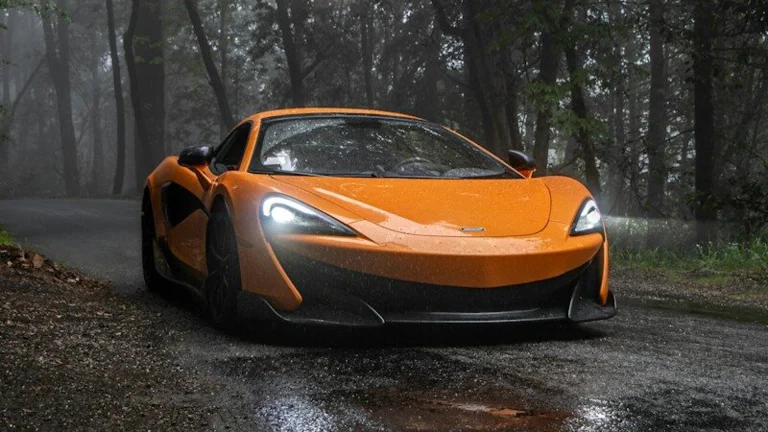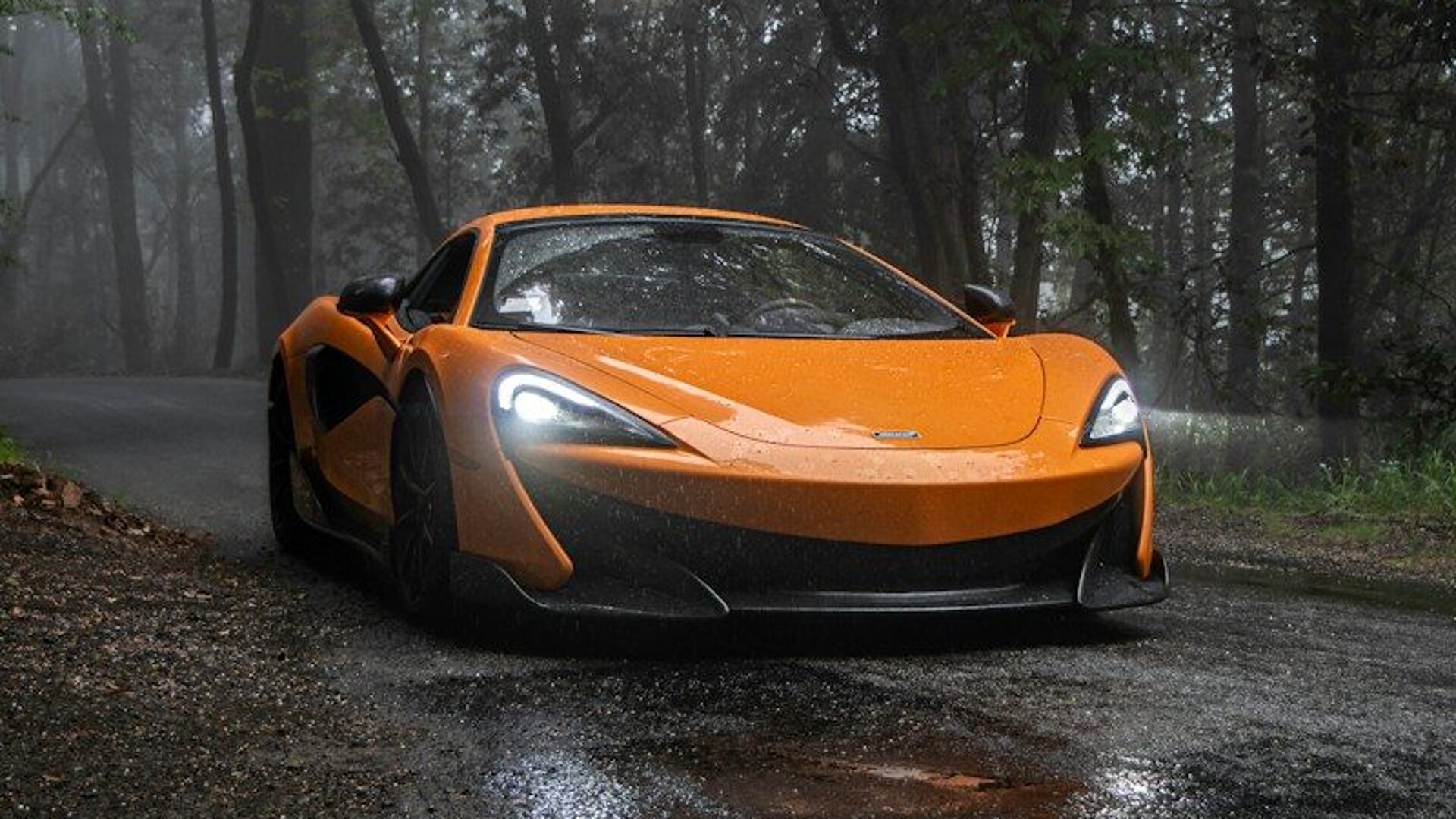
McLaren is shutting down its longest-running supercar architecture. The Woking company’s October 8 announcement confirms that final orders for the 750S are open and that production ends in 2027. That closes a run that started when the 720S arrived in 2017, which is a long time to keep one formula in a segment that usually turns over every few years.
McLaren hasn’t said exactly when the order window closes. If you want one, don’t count on the deadline being far off.
What’s actually going away
The 750S is a heavily reworked 720S. McLaren’s 750S press kit says about 30 percent of the car’s parts are new or changed. The headline numbers:
- Engine: the M840T 4.0-liter twin-turbo V8, rated at 750 PS (740 hp in the US) and 800 Nm of torque
- Weight: 1,277 kg dry for the coupe in its lightest spec, about 30 kg lighter than the 720S at DIN weight
- Gearbox: a seven-speed with revised ratios and a shorter final drive
- Pace: 0–100 km/h in 2.8 seconds and 0–200 km/h in 7.2 seconds
Skip the spec sheet. Two things make this car odd, and both involve hydraulic fluid.
Related Articles
- A Bexar County Deputy Held a Houston-Area Man 76 Minutes and Searched His Truck for 40, Then a Federal Jury Awarded Him $76
- Hasselhoff’s Tour K.I.T.T. Was Stolen, Had Its Electronics Wrecked, and Is Now Heading to Auction in Zürich
The first is steering. The 750S uses electro-hydraulic power steering, with a faster ratio and a new pump. Most rivals have moved to fully electric assistance, which saves weight and makes lane-keeping and parking features easier to add, but usually filters out some road feel. McLaren kept it on purpose.
The second is suspension. Proactive Chassis Control III links the dampers through a hydraulic roll circuit and does away with traditional anti-roll bars. It’s how McLaren gets a 740-horsepower car to ride softly and still stay flat in a corner. It’s also a lot of pressurized plumbing that has to keep working.
Repairs and the warranty question
That suspension is the main ownership issue for anyone thinking long term. Hydraulic lines and accumulators age like anything else, and McLaren’s independent-shop network is thin next to Porsche’s or Ferrari’s. Ask for the service history on the suspension, not just the engine.
The good news is in the paperwork. The press kit lists a three-year, unlimited-mileage factory warranty and a three-year maintenance plan with service every year or 10,000 miles. It also offers 12- or 24-month extended warranties that can be renewed until the car is 15 years old. That last detail matters most to used buyers. A 750S that can still be covered in 2038 is a much safer bet than a supercar whose coverage ends when its factory warranty does. Before you buy any used example, check whether the car is still eligible and what inspection McLaren requires to restart coverage.
Check recall history too. Transport Canada logged a safety recall covering some 2024 750S and 2021 765LT cars whose rear brake lines may not have been properly connected to the control module, which can affect ABS and stability control. The fix is an inspection and correction. Make sure any car you’re considering has had it done, whatever market it came from.
Insurance and pricing
Expect insurers to price the 750S based on what happens after a crash. The car is built around carbon-fiber structure, so even moderate impacts can mean factory-approved body shops, long waits for parts and estimates that make the sticker look polite. If you’re ordering one of the last cars, get an agreed-value quote before you commit to the deposit, especially if you’re adding expensive McLaren Special Operations (MSO) paint or trim.
A new 2026 750S coupe was recently listed at $408,400 at a New York dealer. A run-out announcement won’t make that number smaller.
Does “last of” mean it’s worth more later?
Not automatically. “Final production year” isn’t the same as “limited edition.” McLaren will keep building 750S cars through the end of production, so there won’t be a shortage of the standard car.
The cars that hold their value will have low miles and a thick service file. The run-out matters less. Spec yours for the next owner, not for the dealer’s showroom.
Related Articles
- BREAKING: Dodge Returns to NASCAR’s Cup Series at the 2027 Daytona 500
- Virginia Beach Dealer Co-Owner Pleaded Guilty to Straw-Buyer Scheme on 61 Navy Federal Loans, Got 74 Months and Owes $980,541.43
The bigger issue is what replaces it. The 750S’s combination of a twin-turbo V8 with no hybrid system, hydraulic steering and hydraulic roll control is becoming hard to find from any manufacturer. If McLaren’s next V8 car goes the way the rest of the industry is going, with more electrification, more software and more weight, the 750S could end up as the last McLaren of its kind. That’s a better reason to buy one than any badge McLaren might add to the final cars.
Ordering new? Get the cutoff date in writing. “2027” isn’t a deadline you can plan around. Buying used? Confirm warranty eligibility and recall completion before you talk price.
If McLaren’s next V8 comes with a battery and a software-update schedule, will you wish you’d ordered the 750S?
About the Author