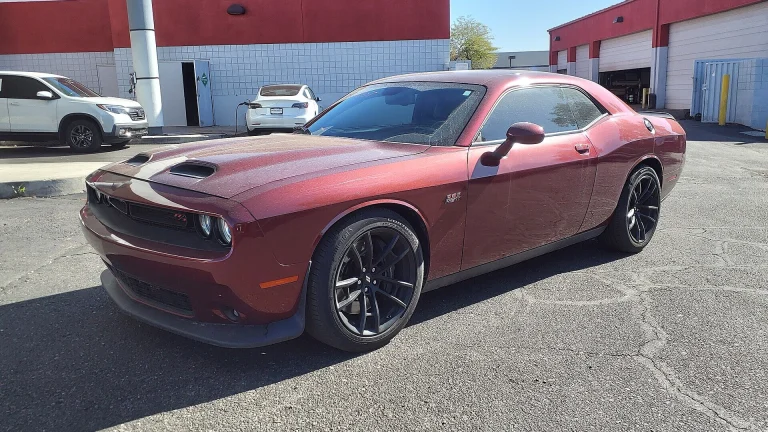
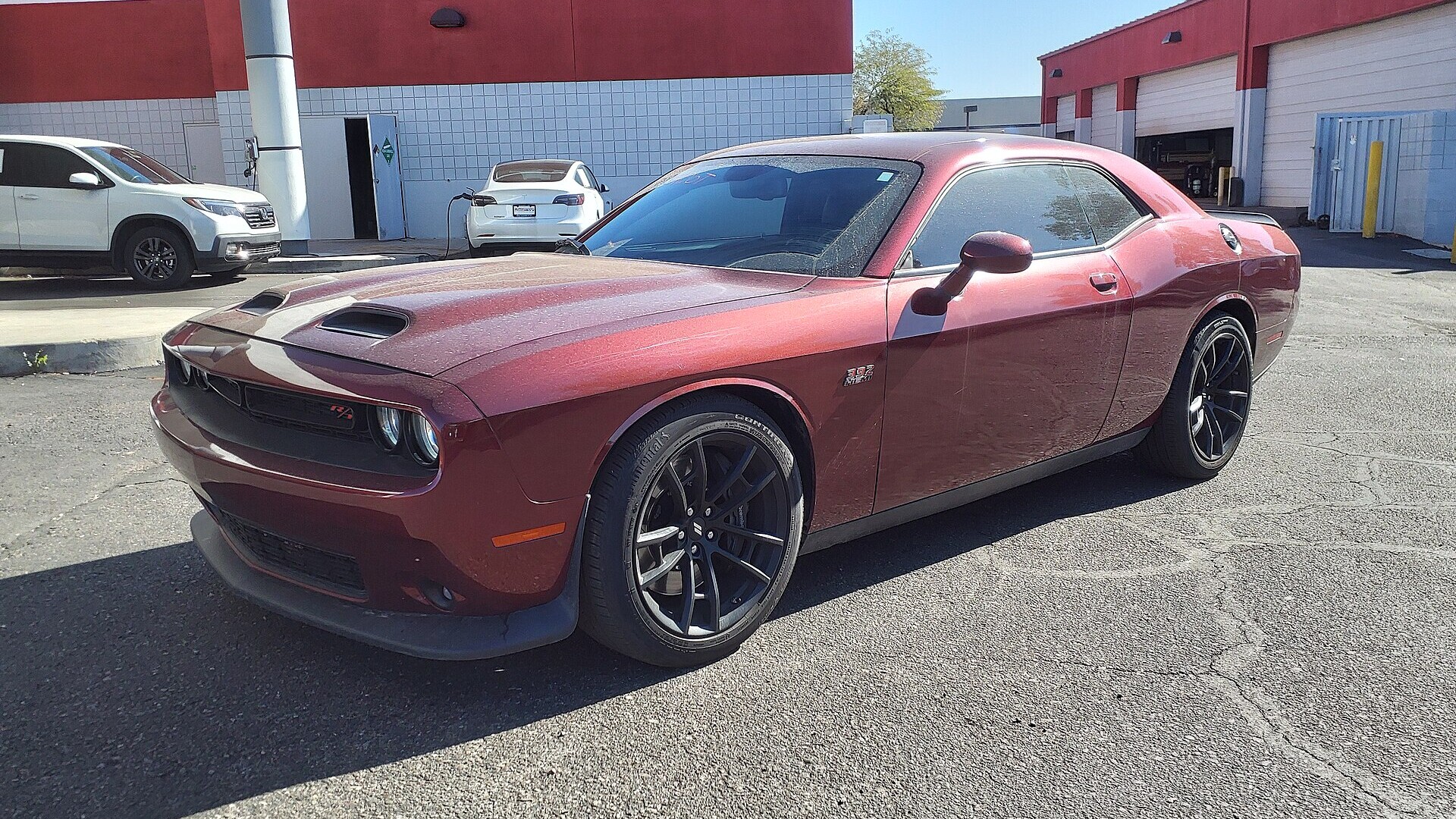
Representative image: a Dodge Challenger R/T Scat Pack. Photo: HJUdall via Wikimedia Commons (CC0).
Back in 2016, a co-owner of the Car Store, a used-car dealership in Virginia Beach, Va., was sentenced to 74 months in federal prison and ordered to pay $980,541.43 in restitution after pleading guilty to conspiracy to commit financial institution fraud and filing a false tax return, the U.S. Attorney’s Office for the Eastern District of Virginia announced on July 20, 2016. The conspiracy ran 61 car loans totaling $1,168,904.97 through Navy Federal Credit Union in the names of straw buyers. Most of them defaulted, and the credit union’s loss was about $867,448.43.
How the Navy Federal loans were built
The straw buyers were there because the people who wanted the cars could not qualify. According to the Justice Department, the co-owner submitted false applications backed by false documents, impersonated buyers on calls to the credit union, and gave Navy Federal employer phone numbers that he answered himself when the lender called to verify jobs and wages. He also inflated the vehicles’ purchase prices and split the extra money with the buyers.
The restitution order is two debts added together. The release puts the tax loss from his false returns at $113,093, and $867,448.43 plus $113,093 comes to $980,541.43, which is Backfire News’s arithmetic rather than a breakdown the Justice Department printed.
A straw purchase is the subject of a TikTok clip posted Oct. 22 from a car-sales comedy account. Its on-screen text describes a woman attempting a “Straw Purchase for her brother on a SCAT” and a salesman threatening to call the police. The account tags its videos #funny and #comedy, the clip does not identify a dealership, a city or the customers, and Backfire News could not verify that it depicts a real sale. The federal cases are real, and they show where the paper trail leads: to the person who signs.
What the statutes say about the signer
Federal law has three tools for this. The bank fraud statute, 18 U.S.C. § 1344, covers a scheme to defraud a financial institution or to obtain its money by false pretenses, and carries up to $1,000,000 in fines or 30 years in prison. The false-statements statute, 18 U.S.C. § 1014, reaches a knowingly false statement made to influence a loan, with the same ceiling, when the lender is an FDIC-insured bank or a federal or insured state credit union, among others. A lender outside that list is still covered by the wire fraud statute, whose base maximum is 20 years and rises to 30 when the fraud affects a financial institution. Those are ceilings, not sentences; the Justice Department’s own releases note that actual sentences turn on the seriousness of the offense and the defendant’s record.
Straw borrowers get charged, not only the people who arrange the deals. In Illinois, the Northern District’s December 2014 release said eight straw borrowers were charged in August 2013 and all eight had pleaded guilty and been sentenced or were awaiting sentencing. Between them they had obtained just under 200 loans totaling more than $44.58 million, mostly for RVs that generally did not exist, and the release said they “did not actually purchase the vehicles.”
The arrangement does not need to involve a fake vehicle. In Erie, Pa., the Western District of Pennsylvania said two straw purchasers bought vehicles in their own names at a Buick GMC dealership while the vehicles stayed in another man’s possession. Applications were falsified to make the buyers look more creditworthy, and the buyers’ simultaneous purchases were not disclosed. The man who kept the vehicles pleaded guilty in October 2017 to conspiracy to commit wire fraud and wire fraud, with a stated maximum total sentence of 340 years across the larger case.
The warning cosigners get
A cosigner gets a federal warning before signing. Under 16 CFR 444.3, a lender must hand the cosigner a separate notice that begins, “You are being asked to guarantee this debt. Think carefully before you do.” It goes on to say the cosigner may have to pay the full amount, plus late fees and collection costs, and that the creditor can sue and garnish wages without first going after the borrower. A straw buyer signs as the primary borrower, so the lender sees the buyer, not a guarantor, and the notice written for guarantors is not what is in front of them. The contract names the signer, and so does the credit file. Falsified income documents are the usual ingredient; Backfire News has also covered forged pay stubs and car loans when a dealer wants its keys back.
The Virginia Beach release says what the loans cost the credit union, not what happened to the people whose names were on the 61 contracts.
A woman at your desk says she’s buying the car for her brother. Do you quietly pass on the deal, or call the police?
About the Author