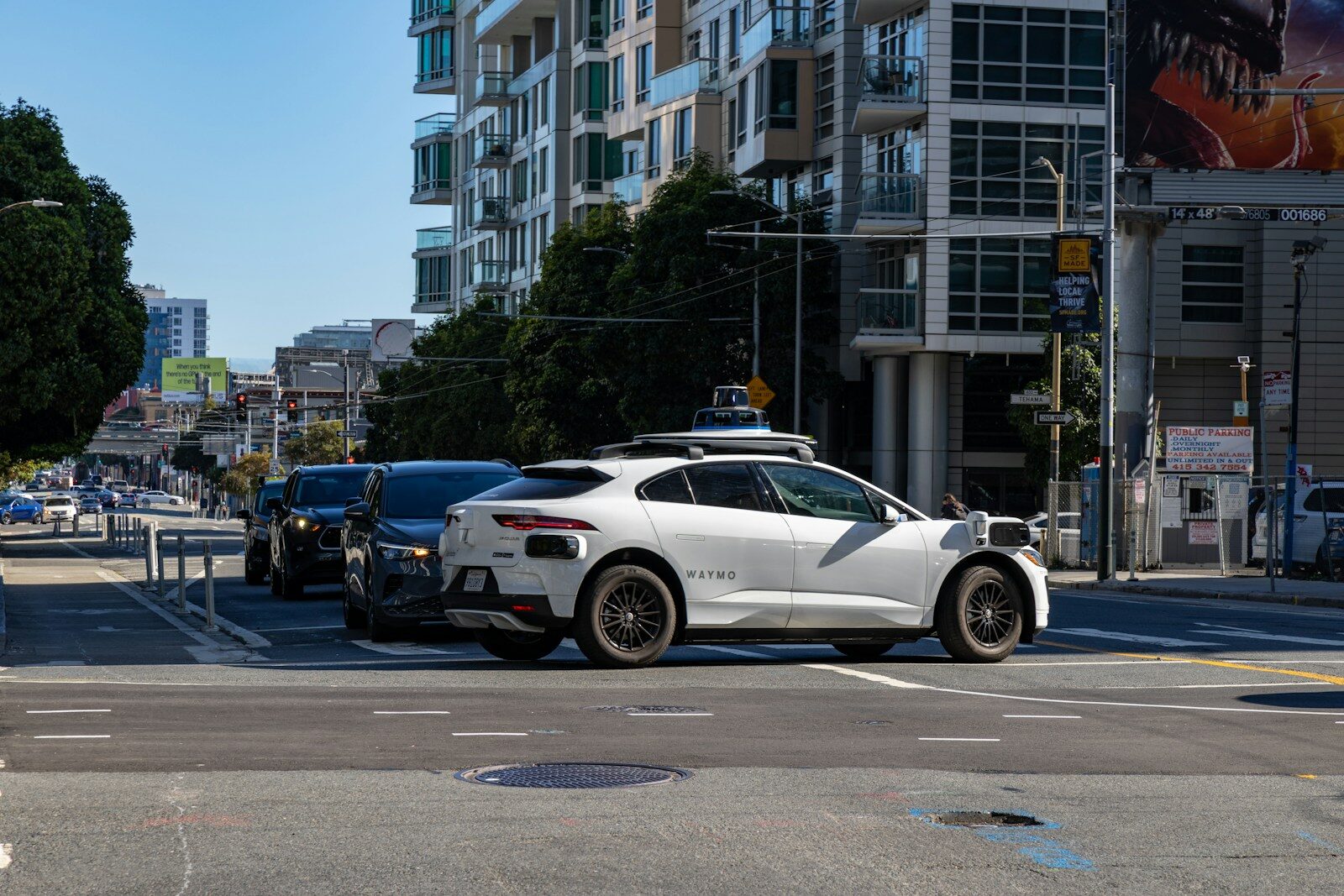
Here’s a regulatory quirk worth understanding before you read another word about autonomous vehicle safety statistics: if a robotaxi slams on the brakes hard enough to hurt the person sitting in it, and nothing touches anything, the federal government that regulates the vehicle never hears about it.
NHTSA’s Standing General Order is the mechanism that produces most of the public crash data on automated driving systems. The agency’s own summary of the program spells out the threshold: an ADS incident is reportable if the system was in use within 30 seconds of the crash and the crash resulted in property damage or injury. The operative word is crash. A violent, unprovoked stop in clear traffic with no contact is a driving-quality problem, not a crash, and the General Order doesn’t reach it.
That’s not a loophole anyone snuck in. It’s a reporting regime designed around collisions, applied to a failure mode that doesn’t need one.
So where does it show up?
Occupational injury records, mostly — and only recently.
OSHA has collected Form 300A summary data since 2016, but starting in 2024 it began requiring establishments with 100 or more employees in industries listed in Appendix B of 29 CFR 1904 Subpart E to also submit case-level detail from Forms 300 and 301. OSHA publishes that ITA data as downloadable CSVs, and it now includes five narrative fields per case, which the agency has begun auto-coding with the Bureau of Labor Statistics’ injury classification system.
Translation: for the first time, the free-text description of what actually happened to a worker — not just a tally — is a public federal record.
Related Articles
- IndyCar D.C. Ratings Record: What the 3.28 Million Number Actually Proves
- What the ‘Cars’ 20th Anniversary Re-Release Gets Right About Real Automotive History
OSHA attaches its own warnings to that data, and they’re worth repeating. Recording an injury doesn’t mean the employer was at fault, that any rule was violated, or that the case is compensable. The agency doesn’t validate employer-reported counts. And submission requirements are keyed to industry code and headcount, so coverage is partial by design.
Still, the structural point stands. When a vehicle operator gets hurt inside a test vehicle, the paperwork trail runs through the Department of Labor, not the Department of Transportation. Two agencies, two datasets, no bridge.
What the federal record does confirm
NHTSA’s defect files are unambiguous that unexpected hard braking has been a real, identified defect in this sector.
In March 2025, Zoox filed recall 25E-019 covering 258 units of ADS software running on both retrofitted test vehicles and purpose-built robotaxis operated on public roads between February 2023 and November 2024. The filing describes two distinct software faults. In the first, a bicyclist in or near an adjacent crosswalk at a freshly green light could cause the system to react overcautiously and brake “unnecessarily hard,” even though the cyclist sat behind the vehicle’s leading edge. In the second, a vulnerable road user closing fast on the vehicle’s rear could cause the software to incorrectly anticipate a collision — and brake hard in response to something behind it.
Read that second one again. The system braked because something was approaching from behind. There is no version of vehicle dynamics in which decelerating helps you avoid being rear-ended.
Zoox’s stated safety risk was increased chance of a rear-end collision. The remedy was software version 24.32, pushed in November 2024.
Two months later came a May 2025 filing covering 270 units, this one describing an over-40-mph scenario where a vehicle creeping out of a perpendicular driveway and then stopping could trigger an “inaccurately confident prediction” that it would keep coming. In 2026, Zoox filed again over ADS software that could fail to detect heavy smoke and drive into an active emergency scene.
Waymo’s filings show the scale involved. Its May 2026 flooded-roadway recall covered 3,791 fifth- and sixth-generation ADS units.
The recall letter that goes nowhere
Buried in the Zoox braking recall is a sentence with real implications: because Zoox solely owns, operates, and controls the affected fleet, and the equipment was never offered for sale, there are no owners or dealers to notify under 49 CFR Parts 573 or 577.
The entire consumer-protection architecture of a safety recall — the letter in your mailbox, the free remedy at a dealer, the follow-up notification — presumes a private owner on the other end. Delete the owner and what’s left is a filing on a government server and an over-the-air push nobody outside the company observes. The remedy in Zoox’s braking case had already been deployed four months before the recall was even filed.
That’s efficient. It’s also a system where the only party with standing to be notified is the party that wrote the software.
Why a hard stop hurts more than you’d think
The intuition that a sub-crash deceleration can’t injure anyone is wrong, and the reason is jerk — the rate of change of acceleration, measured in meters per second cubed. Peak g gets quoted; jerk does the damage. A human driver braking hard telegraphs it: you feel the throttle lift, you see the nose dip, you’ve been watching brake lights ahead for a second and a half. Your neck muscles pre-tension without you deciding to. An automated system can go from cruise to near-maximum deceleration in a few tens of milliseconds with zero anticipatory cue, and the occupant’s cervical muscles are still relaxed when the belt loads up.
Seat design doesn’t help here. FMVSS 202a exists specifically to reduce neck injury in rear-end and other collisions — head restraints manage rearward head excursion. A violent forward stop loads the opposite vector, where the head restraint is behind you doing nothing and the belt is doing all the work. And in a no-contact event, crash sensing thresholds generally aren’t met, so pyrotechnic pretensioners and load limiters — the hardware that actually manages occupant excursion — stay asleep. You get the deceleration with none of the restraint system’s crash-mode help.
Related Articles
- Acura’s Nexera Vision Concept and the Federal Rule That Will Shape Its Headlights
- New Bajaj Pulsar 125 and 150: What the Frame, Shock and ISG Changes Really Mean
That’s the mechanism behind sprains, strains, and cervical soft-tissue complaints at speeds no crash investigator would look twice at.
Practical takeaways
If you ride motorcycles: the two incidents that opened NHTSA’s Zoox braking investigation involved riders hitting the back of these vehicles. An ADS can brake for something you cannot see, for something that isn’t there, or — per Zoox’s own filing — for you. Extend your following distance behind any driverless vehicle and stop assuming brake lights correlate with a reason.
If you ride in one: sit back against the seatback with your head near the restraint. Leaning forward to look at a screen puts your neck in the worst possible geometry for an unannounced stop.
On the liability side: an injured vehicle operator is generally in workers’ compensation, where the exclusive-remedy doctrine limits recovery against the employer and the claim never becomes an auto liability matter. A paying passenger injured the same way is in an entirely different legal posture. Same physics, same software, radically different outcome depending on who signed what.
The larger issue is that we are scaling a technology whose most common failure mode — braking when it shouldn’t — produces injuries that fall outside the reporting system built to catch them. Fixing that doesn’t require new technology. It requires someone deciding that a stop violent enough to hurt a person counts as a safety event even when the paint stays unscratched.
About the Author