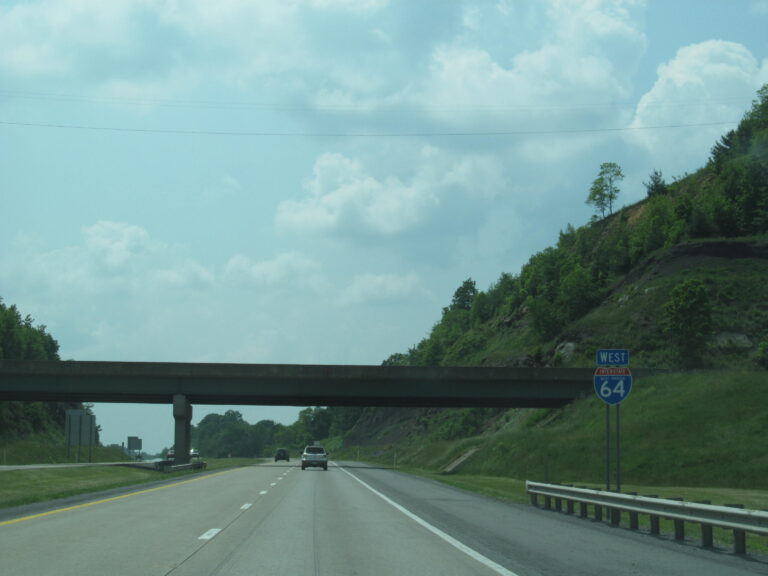
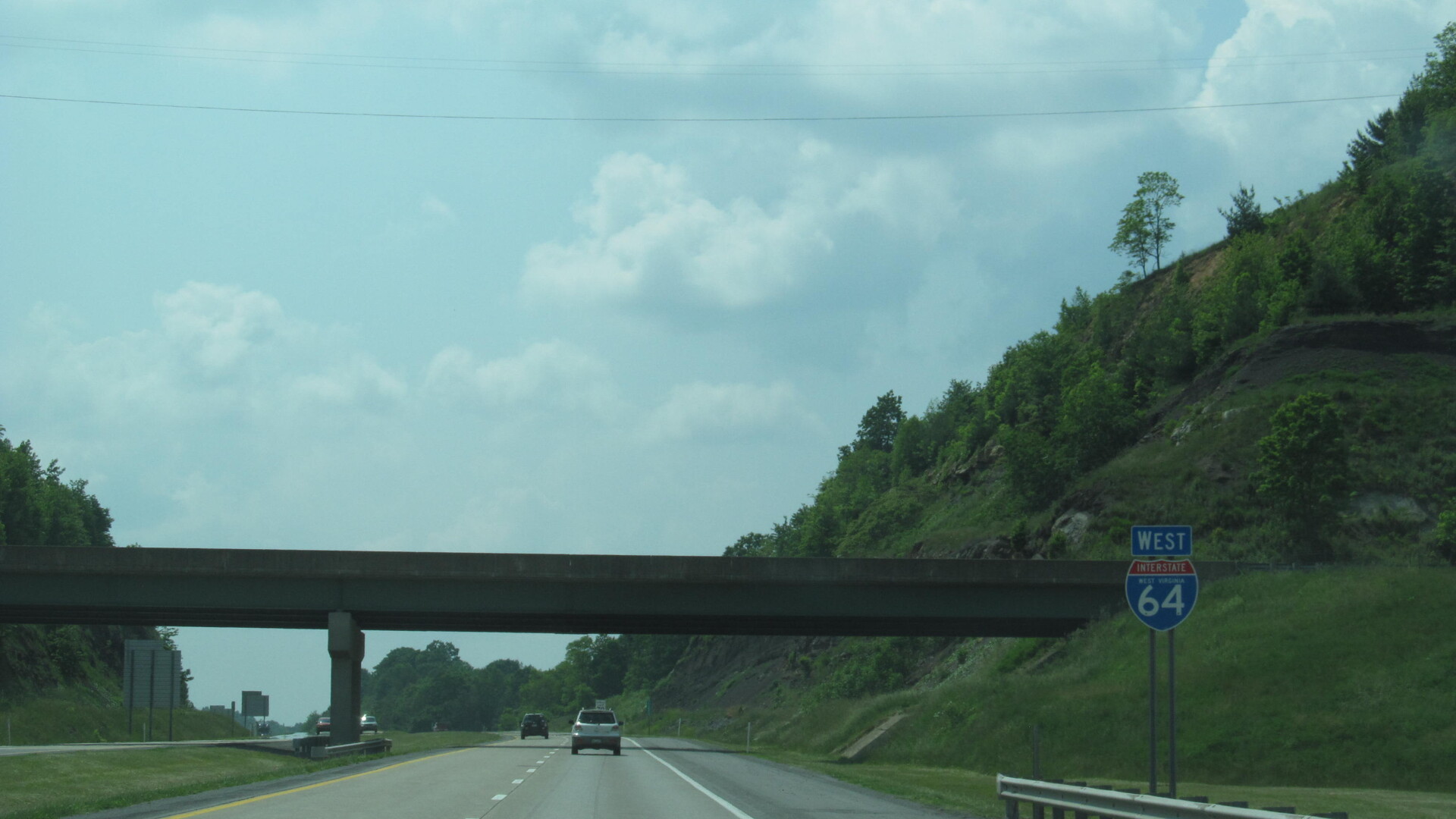
Interstate 64 in West Virginia. Photo: Dougtone via Wikimedia Commons, CC BY-SA 2.0
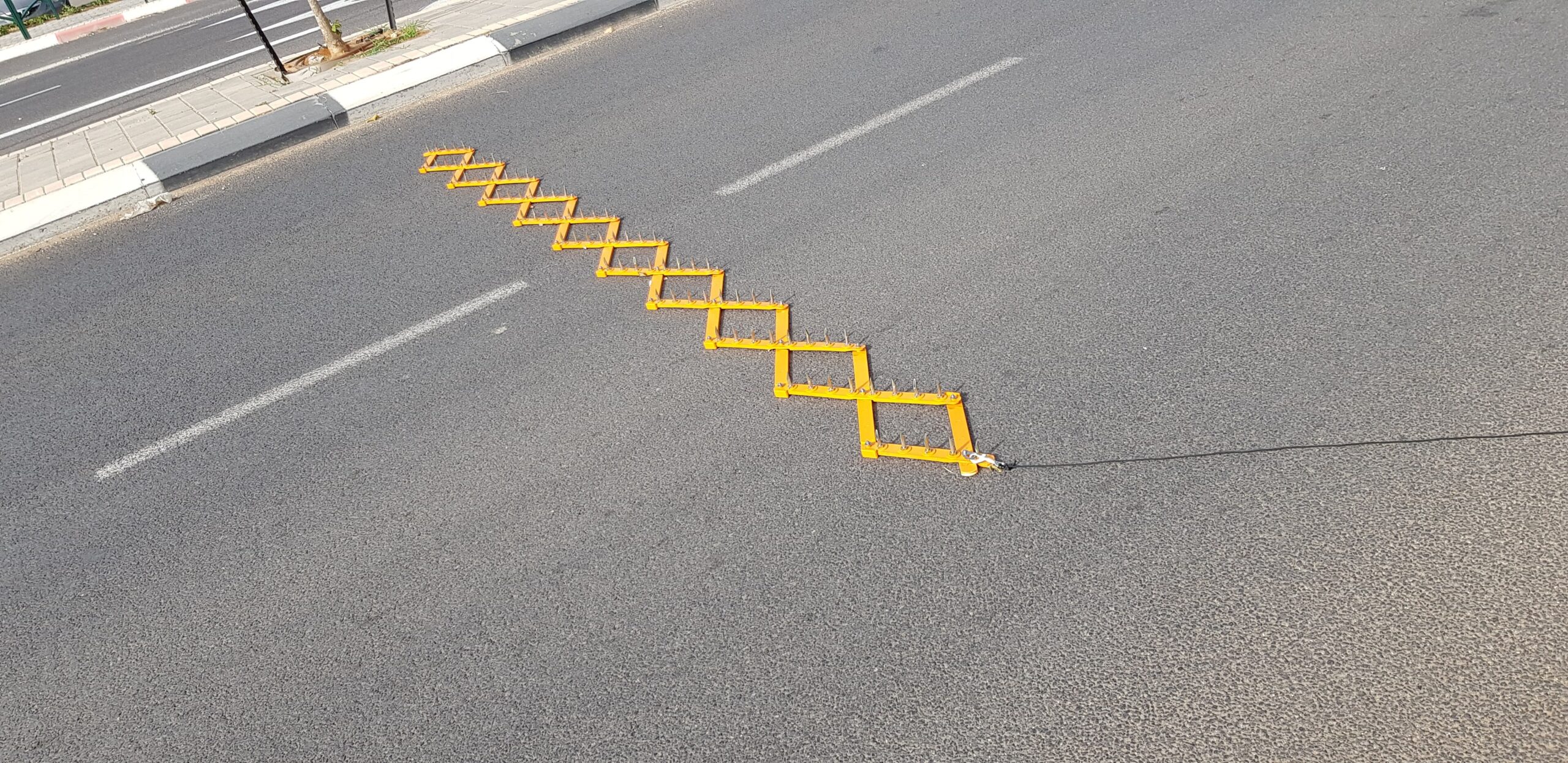
Angela Born was driving east on Interstate 64 near the Hurricane exit in Putnam County, West Virginia, on the afternoon of March 5 when Hurricane police laid spike strips across the highway near mile marker 34 to stop a red 2025 Jeep Cherokee Sport that sheriff’s deputies were chasing. According to the criminal complaint, the Jeep kept going after it hit the strips and struck Born’s car from behind. Her car caught fire. Born, 52, a Kanawha County mother of six who ran a strawberry farm and bed-and-breakfast near Clendenin with her husband, died at the scene.
Seven months later her death is being argued in two courts. In Putnam County, the man deputies arrested, Joseph Ryan Elswick of Hurricane, faces felony charges that carry up to 15 years in prison. In federal court in Huntington, Born’s husband is suing the City of Hurricane, the Putnam County Commission and the officers involved. The city’s answer leans on a West Virginia statute that shields local governments from claims over “the method of providing” police protection, and where an officer puts a spike strip may fall inside that phrase. The criminal case will settle what Elswick owes. The civil case asks whether anyone who chose how and where to stop him owes anything, and West Virginia law tilts that answer hard toward no.
From Trace Creek to Mile Marker 34
The call came in shortly after 2:30 p.m. Elswick’s grandmother reported that he had stolen her Jeep and her purse and that he might have a gun, according to the complaint as reported by WSAZ. At 2:48 p.m., deputies spotted the Jeep on Trace Creek and tried to stop it. The complaint says the driver fled, hit speeds up to 120 mph and swerved into oncoming traffic. The chase ran from Trace Creek to Johns Creek, crossed briefly into Cabell County, and got onto I-64 eastbound at the Milton entrance, headed back toward Hurricane.
The crash closed the eastbound lanes for more than six hours. The West Virginia State Police crash reconstruction team assisted, and deputies got a search warrant for a blood test to check for impairment. Results have not been made public.
Elswick was charged with aggravated vehicular homicide, fleeing causing death, fleeing with reckless indifference, grand larceny and other counts. Bail was set at $500,000, cash only, and at his first appearance he tried to plead guilty and was told he could not at that stage, MetroNews reported. The charges are accusations, and he has not been convicted. West Virginia’s circuit court records are not online, and Backfire News found no public report of a plea or trial date as of this writing.
The fleeing charge is the one with weight. Under W. Va. Code §61-5-17(i), fleeing an officer in a vehicle and causing a death carries five to 15 years, with no parole for at least three. Aggravated vehicular homicide, which requires driving “in deliberate disregard for the safety of others,” tops out at five years and a $20,000 fine. The fleeing count carries three times the maximum prison term of the homicide count.
Putnam County’s Sheriff Puts the Blame on the Driver
Within days, people were asking why officers put spikes down on I-64 in weekday afternoon traffic. Putnam County Sheriff Bobby Eggleton answered them. “This is just one incident that went horribly wrong, but not due to procedure, not to the actions of the police, but to the actions of Joseph Elswick,” he told WCHS. “That’s where this blame lies.”
He listed his reasons: “His erratic driving, his possibility of having a firearm, the stolen vehicle, the dangerous way he was acting dictated the spike strips.” He added, “At 45 mph, there’s only so many ways you can stop a vehicle without the person complying. What do people want us to do?” Eggleton also said the deputies on that shift asked him to tell Born’s family they were sorry.
The Born Family’s Federal Lawsuit
Born’s husband, as administrator of her estate, filed suit in April in U.S. District Court in Huntington against the City of Hurricane, the Putnam County Commission, Putnam County deputy C. Ford and unnamed officers from both agencies, according to the Hurricane Breeze and MetroNews. The suit alleges officers negligently violated Born’s civil rights by chasing a fleeing driver onto a crowded interstate and deploying spike strips in heavy traffic. Its account of the last few seconds also differs from the criminal complaint’s: the lawsuit says Elswick weaved through traffic to get around the strips before he hit Born. Her family’s attorneys, Dante diTrapano and Jesse Forbes, said officers should have known better than to let the chase run onto the highway.
The City of Hurricane moved in May to dismiss four of the suit’s nine counts, WCHS reported. The motion argues that the training and supervision claims don’t say which training was missing or how it caused the crash, that no city vehicle struck Born’s car, and that nothing in the complaint alleges city officers meant to harm Born, Elswick or anyone else, according to The Herald-Dispatch. The family’s lawyers called their claims well founded. The May motion is the last step in the case that has been reported publicly; Backfire News could not confirm from the federal docket whether the judge has ruled on it.
How West Virginia’s Tort Claims Act Protects the City
Each of those defense points is aimed at a specific section of the law. West Virginia’s Governmental Tort Claims and Insurance Reform Act makes cities and counties liable for “the negligent operation of any vehicle by their employees” under §29-12A-4(c)(1). That is how most suits over crashes involving police get into court: a cruiser runs a light, hits someone, and the town pays. A spike strip is not a vehicle, though, and the city points out that none of its cars touched Born’s.
That leaves the family arguing that officers were negligent in other ways, and those claims run into §29-12A-5(a)(5), which makes a political subdivision immune from any loss caused by “the failure to provide, or the method of providing, police, law enforcement or fire protection.” Choosing to keep chasing, choosing a tool to end the chase and choosing a spot on I-64 to use it are, in the city’s reading, all methods of providing police protection.
The federal civil-rights counts face their own wall. In County of Sacramento v. Lewis (1998), the U.S. Supreme Court held that high-speed chases with no intent to harm a suspect physically or to worsen his legal situation don’t violate the 14th Amendment’s due-process clause. A reckless chase isn’t enough; the plaintiff has to show a purpose to cause harm. That is why Hurricane’s motion stresses that no one alleges officers meant to hurt anybody. To hold the city itself liable, the family would also have to tie Born’s death to a city policy or custom, which is why the city says the complaint never names the training that was missing.
Even if some of the claims get past those defenses, the money is limited. §29-12A-7 caps noneconomic damages against a political subdivision at $500,000 per person and bars punitive damages. Economic losses, such as the income a working farm and inn would have earned, aren’t capped, but they have to be proven line by line.
Chase Deaths, and Officers Killed Laying Spikes
Born’s death fits a national count that has been rising. University of Virginia surgeons who reviewed federal crash data reported in JAMA Network Open in April that police pursuits killed 6,352 people in 5,425 fatal crashes from 2009 through 2023. Working from NHTSA’s Fatality Analysis Reporting System, they found deaths rose about 2% a year after adjusting for population and overall crash counts.
Spike strips are also dangerous for the people who put them down. A National Law Enforcement Officers Memorial Fund study counted 17 officers struck and killed while deploying tire-deflation devices from 2013 through 2022, and 42 since 1996. Its recommendations include supervisor approval for every deployment, deployment sites picked in advance with cover for the officer, and a flat rule that officers must not enter the roadway. Those rules are written mainly to protect the officer. How close bystander traffic can be when the strips go down is the question Born’s family has put in front of a federal judge.
Backfire News has covered a Baltimore chase in which police say a stolen Elantra hit a city bus, the Grappler bumper that nets a fleeing car’s wheel rather than spinning it, and our first report on the I-64 crash in March.
What Comes Next in Putnam County and Huntington
Two decisions come next: the federal judge’s ruling on Hurricane’s motion, which will decide how much of the Born suit survives, and the Putnam County prosecutor’s handling of the fleeing-causing-death charge. If the court reads “method of providing” police protection to cover where spikes go, most of the negligence claims against the city end there, and families in Born’s position are left with claims against the fleeing driver.
For other drivers, the practical exposure is insurance. A claim against someone driving a car its owner reported stolen can run into the owner’s policy terms on drivers who didn’t have permission. That pushes the loss onto the victim’s own coverage. West Virginia’s §33-6-31 requires every auto policy to include uninsured-motorist coverage at least at the state minimum, which under §17D-4-2 is $25,000 per person. Insurers must offer underinsured coverage up to the limits a driver buys for liability. A policy’s declarations page lists both limits.
When a driver police say is in a stolen car is running at triple-digit speeds, should officers be allowed to put spike strips down on a busy interstate, or should departments have to call off the chase once it reaches the highway?
About the Author