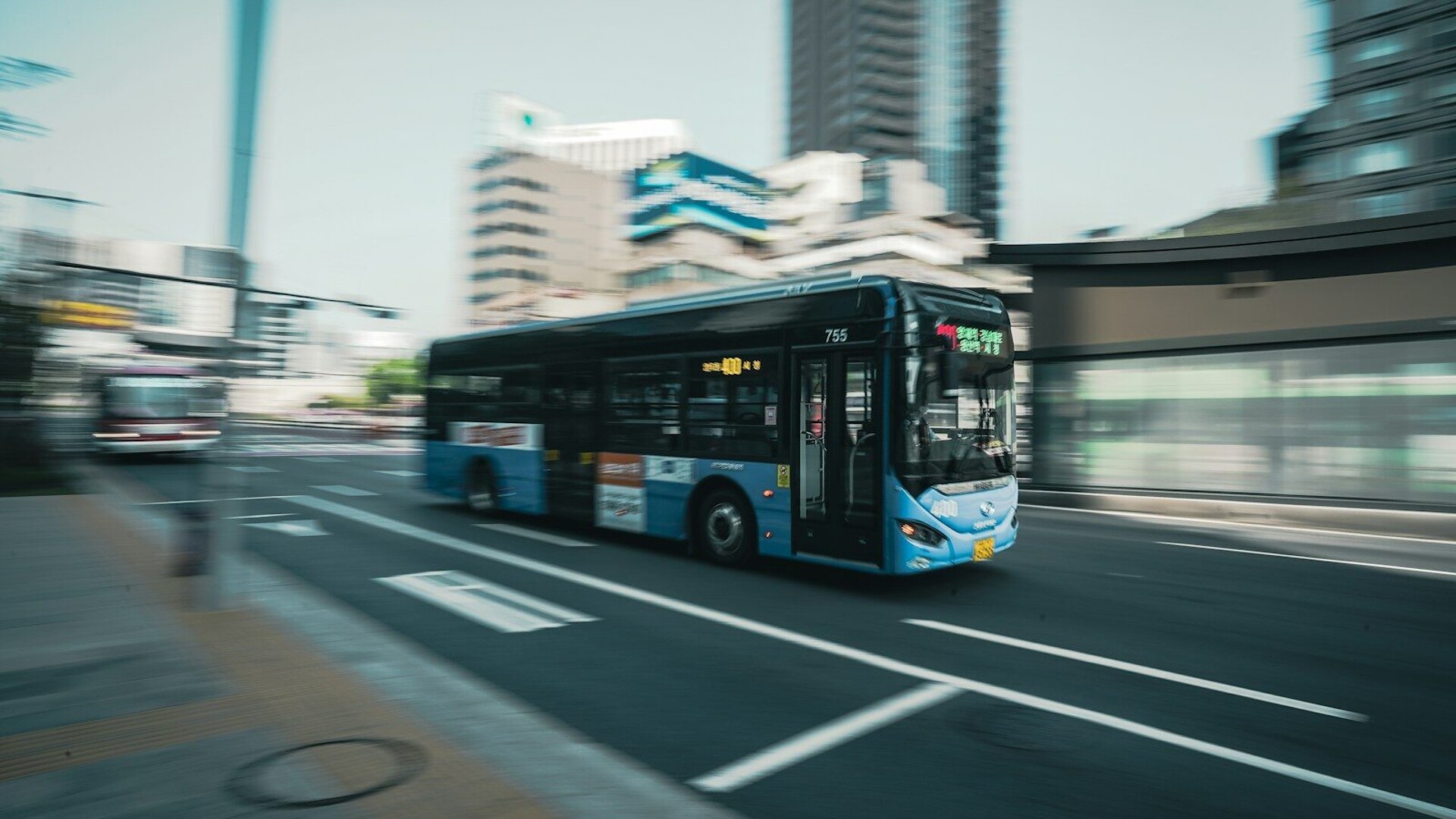
A compact sedan and a city transit bus met at an East Baltimore intersection on Thursday, September 24, and the result was exactly what the weight difference predicts: the car spun, the bus left the road, and 16 people went to the hospital. The sedan, Baltimore police said, was stolen, the four people inside it were juveniles, and the intersection sits in a school zone.
The crash happened around 12:45 p.m. at E. Oliver Street and N. Wolfe Street, near Collington Square Park in the Broadway East neighborhood, WJZ-TV (CBS Baltimore) reported. Police said the injuries to riders on the Maryland Transit Administration bus, who ranged in age from 2 to 78, were not life-threatening. Two of the juveniles in the car were in critical condition as of Friday, the station reported.
How it unfolded, according to police
Baltimore Police Commissioner Richard Worley laid out the sequence at the scene. Officers got an alert on a stolen vehicle and tried to stop it; the car fled, and officers called in Foxtrot, the department’s aviation unit, to help track it. “Shortly afterward, officers observed the vehicle collide with an MTA bus at this intersection,” Worley told reporters.
Dispatch traffic cited by the station puts the start of the pursuit near North Avenue and N. Gay Street before the car ran through Broadway East. It was headed east on Oliver Street when it hit the Gold Route bus, which was southbound on Wolfe Street. The impact spun the sedan almost a full rotation and sent the bus into trees.
Scene photos show the bus off the pavement in a grassy area and a red Hyundai Elantra with heavy damage. That’s about as far as the images go. Police haven’t publicly said how fast either vehicle was traveling, how the Elantra was stolen, or what model year it is, and we’re not going to guess.
Mass-casualty mode, in practice
Baltimore Fire Chief James Wallace said crews quickly declared a mass casualty incident, a designation that changes how a scene runs: triage first, then transport spread across multiple hospitals so no single ER gets swamped. Fourteen medic units responded and took 16 patients to area hospitals. Wallace said every bus rider but one got out on their own and was sitting outside by the time firefighters arrived.
Investigators are now reviewing video from officers and from cameras on the bus. Transit buses typically record multiple angles, inside and out, which makes these crashes among the better-documented collisions a reconstruction team will ever get.
Why a bus crash hurts people differently
A full-size transit bus typically weighs roughly ten times what a compact sedan does. In a collision like this, physics is brutally one-sided: the lighter vehicle absorbs most of the change in velocity, which is why the car rotated and why its occupants took the worst of it.
Bus riders face a different problem. Federal safety standards don’t require passenger seatbelts on large city transit buses, and many riders stand. So even when the bus structure barely notices a car, a sudden jolt or an off-road excursion into trees can throw people into poles, seatbacks and each other.
Who pays when the car was stolen?
These crashes get messy for victims. Auto liability policies generally cover drivers the owner allowed to use the car, not someone who took it without permission, so the stolen car’s owner’s policy typically won’t be the pot of money injured riders draw from. The owner’s comprehensive coverage, if they carry it, generally handles damage to their own car.
Injured passengers often end up looking to their own coverage instead, such as personal injury protection or uninsured motorist benefits, where they have it. Any claim involving a state agency like the MTA runs through Maryland’s own rules for suing the state, which carry notice requirements and damage caps that differ from an ordinary fender-bender claim. Anyone hurt should get advice from a Maryland attorney rather than rely on generalities. We’ve dug into how insurers treat timing and coverage before, including the driver who tried to buy a policy from the back of a patrol car.
The pursuit question, and the political one
Police chases that end in crashes with bystanders always raise the same debate: when to follow and when to let air support take over. Here, police said the helicopter had been called in before the collision. Whether ground units were still actively pursuing at the moment of impact is something the officer and bus video should answer, and police haven’t publicly detailed it yet. For more on how officers end chases on purpose, see our breakdown of what a PIT maneuver actually does, and our look at a fleeing sedan that kept going on three wheels.
The crash also landed squarely in Baltimore’s argument over juvenile accountability. “I’m always concerned when everything involves juveniles, but we keep locking them up, and they keep ending up getting out,” Worley said. Mayor Brandon Scott said the crash “did not have to happen if our system was functioning in a much better way,” WJZ reported. Gov. Wes Moore said on social media his team was monitoring the situation. No charges had been announced in the station’s reporting, and the juveniles haven’t been identified.
What we know and what we don’t
- Confirmed by officials: the car was reported stolen; four juveniles were inside; it fled an attempted stop; 16 patients were transported; bus riders’ injuries were non-life-threatening.
- Shown in scene photos: a heavily damaged red Hyundai Elantra and the bus off the roadway in a grassy area.
- Still unknown: speeds, how the car was stolen, its model year, whether officers were still pursuing at impact, and any charges.
Anyone with information is asked to call Baltimore police investigators at 410-396-2606 or Metro Crime Stoppers at 1-866-7LOCKUP. For another chase that ended somewhere nobody planned, read about the Lake Geneva stop that finished in Lake Como.
Where do you stand: should police keep chasing stolen cars through city neighborhoods, or back off and let the helicopter track them once the pursuit enters a school zone? Tell us in the comments.
About the Author