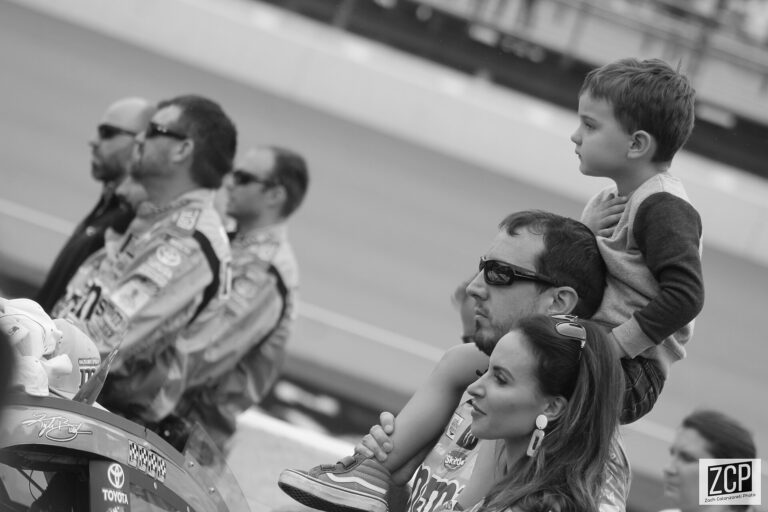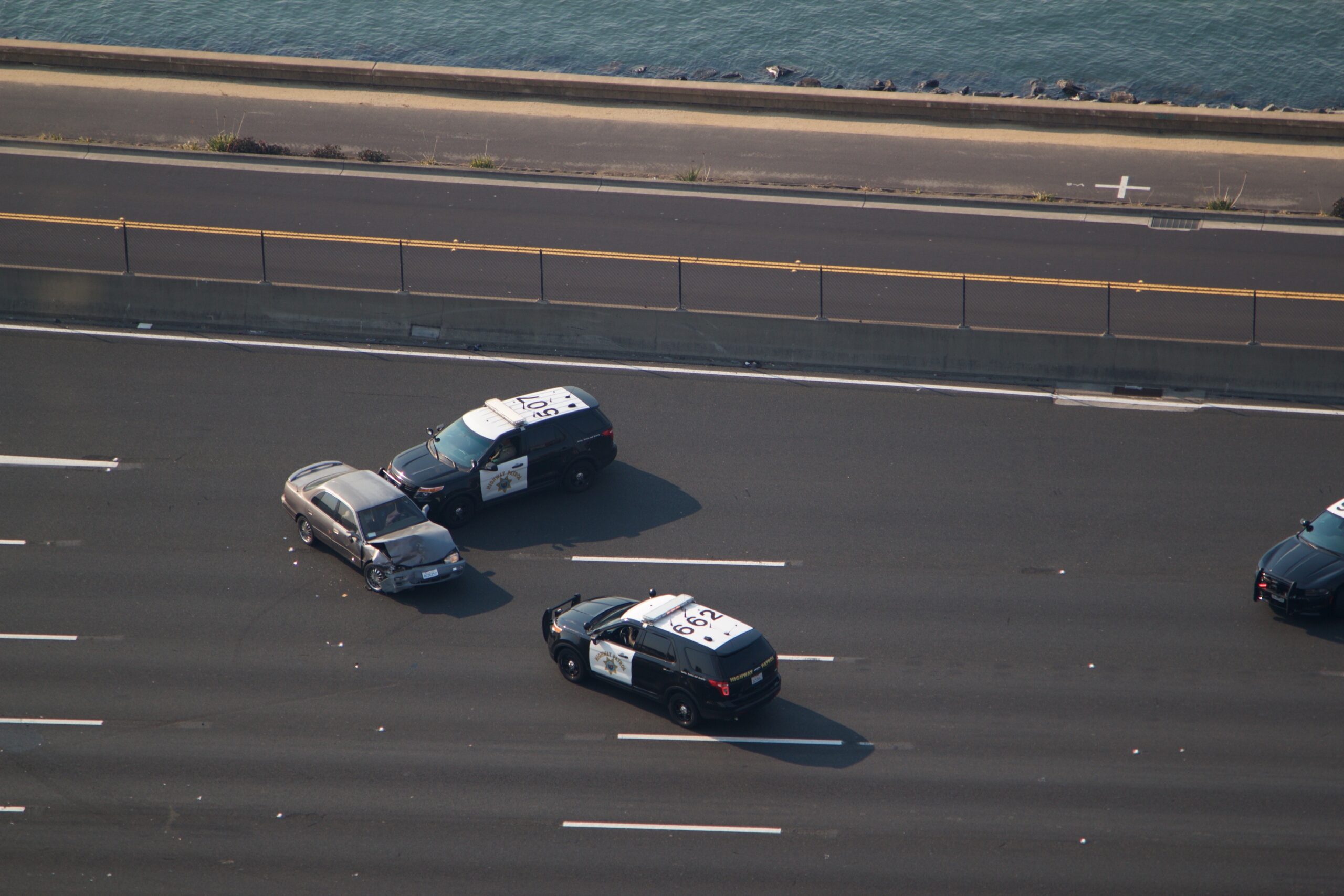
File photo: A California Highway Patrol unit ends a pursuit with a PIT on I-80 in 2018. This is not the Sandy Springs incident. Photo: Jose Camões Silva via Wikimedia Commons, CC BY 2.0
Police departments rarely post pursuit video as comedy. Sandy Springs did, tagging a late-August stop as the “slowest PIT in Sandy Springs” and letting the dashcam carry the joke. It lands because nothing about the ending is grim: no injuries were reported, and one driver went into custody without a fight. But the gag also buries a useful point about the Pursuit Intervention Technique. Slow isn’t the embarrassing version of a PIT. It’s the version everybody should be rooting for.
What police say happened
The chase happened on Aug. 22, WSB-TV reported. The Sandy Springs Police Department posted the dashcam clip to its Facebook page on Saturday, Sept. 19, and the Sandy Springs Record reported it had passed 63,000 views by the next day.
According to police, officers stopped a white Mazda near Sandy Springs Circle for a traffic violation. The driver, whom police identified as Peter Wetche, stopped briefly, then drove off. Officers followed until they reached a stretch of road they judged safe, then performed the PIT on Roswell Road near Sandy Springs Circle. The car spun to a stop, and Wetche was arrested without incident, police said.
He is charged with fleeing or attempting to elude police and failure to obey a traffic control device. Those are allegations, not convictions, and no court date had been announced when the Record published.
Just as important is what hasn’t been released. Police haven’t given a speed for the pursuit, and the reports don’t identify the Mazda’s model or year or describe any damage to either car. We’re not going to fill those gaps with guesses from a phone-sized video.
Why a slow PIT is a good PIT
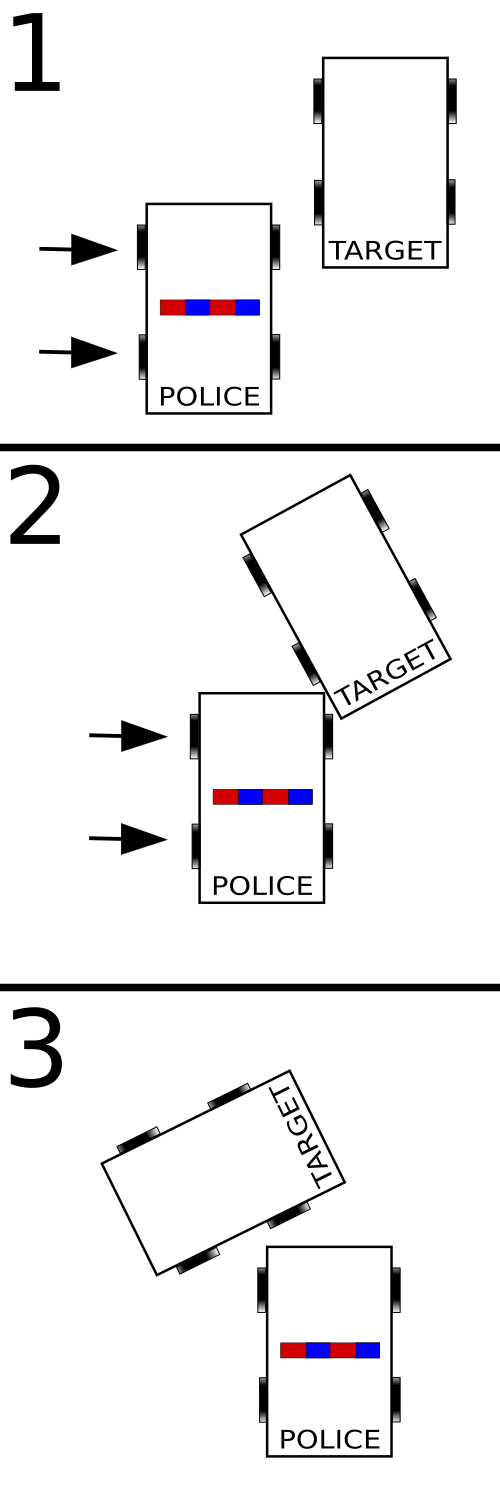
The move itself is simple to describe and hard to do well. The pursuing officer pulls alongside so the patrol car’s front corner sits just behind the fleeing car’s rear wheel, matches speed, then steers into it. Shoving the tail sideways overwhelms the rear tires’ grip, and the car pivots around its front wheels, typically ending up sideways or backward and, ideally, stalled.
The catch is physics. Kinetic energy rises with the square of speed, so doubling speed roughly quadruples the energy that has to go somewhere once a car is rotating sideways: into a curb, a utility pole, another lane of traffic, or a rollover if the tires catch. At low speed, the fleeing car mostly just spins and stops. At highway speed, the same nudge can turn a traffic case into a fatal crash.
The other variable is location, and police said that’s exactly what officers waited for here: a spot they considered safe before making contact. That judgment call, plus the low speed, is the difference between a punchline and a headline nobody wants. It’s also why some agencies are shopping for tools that stop a car without spinning it, like the Grappler bumper, which nets a rear wheel instead. And a PIT only works as a controlled tactic in trained hands; when a driver tries it on police, things go sideways fast, as this Florida chase showed.
The part that isn’t a joke: how often Sandy Springs chases
Sandy Springs pursues far more often than its neighbors. Using open records, Appen Media counted at least 41 Sandy Springs pursuits in 2024, compared with 10 in Roswell, five in Alpharetta and two in Dunwoody.
The gap comes down to policy. Appen reported that a 2024 change lets Sandy Springs officers pursue based on reasonable suspicion of a crime under a “totality of circumstances” standard, while Alpharetta, Roswell and Dunwoody prohibit pursuits based solely on traffic violations. This chase, by police’s own account, started with a traffic stop. Supporters of the looser approach argue that drivers are less likely to run if they expect a chase; critics point out that every pursuit adds risk for people who never did anything wrong. This one ended about as cleanly as a pursuit can. The policy question doesn’t go away just because the video is funny.
What running from a traffic stop costs in Georgia
Here’s where the joke stops being funny for the driver. Under O.C.G.A. § 40-6-395, a first conviction for fleeing or attempting to elude carries a fine of $1,000 to $5,000 and 30 days to 12 months in jail, with anything beyond 30 days eligible for suspension at the judge’s discretion.
The same law turns fleeing into a felony, with $5,000 to $10,000 in fines and one to 10 years in prison, when certain aggravating factors are present, such as running 20 mph or more over the limit, striking another vehicle or a pedestrian, causing a crash, or leaving the state. Nothing in the police account of this chase describes any of those factors.
Then there’s the license. O.C.G.A. § 40-5-54 lists using a vehicle to flee or elude an officer among the convictions that trigger a mandatory license suspension, with the length set by the Department of Driver Services. For anyone who needs a car to get to work, that alone can cost more than the fine. We walked through a similar math problem after a Tennessee drag race stacked up nine charges.
The takeaway
Pulling away from a traffic stop turns a ticket into a criminal case, puts your license on the line if you’re convicted and, in Sandy Springs specifically, carries a real chance that officers will follow you. The department got its laugh because this chase stayed slow and ended quietly. The legal consequences don’t scale down with the speed.
Featured image: File photo of a California Highway Patrol PIT on I-80, not the Sandy Springs incident. Photo by Jose Camões Silva via Wikimedia Commons, CC BY 2.0. PIT diagram by Captain538 and Power piglet via Wikimedia Commons, CC BY-SA 3.0.
About the Author