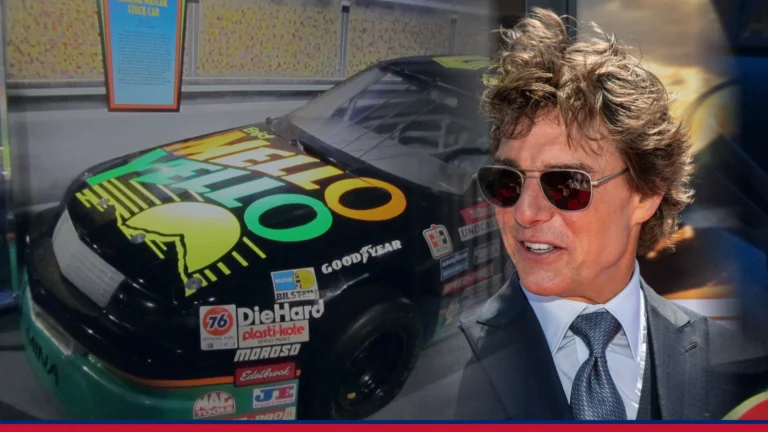
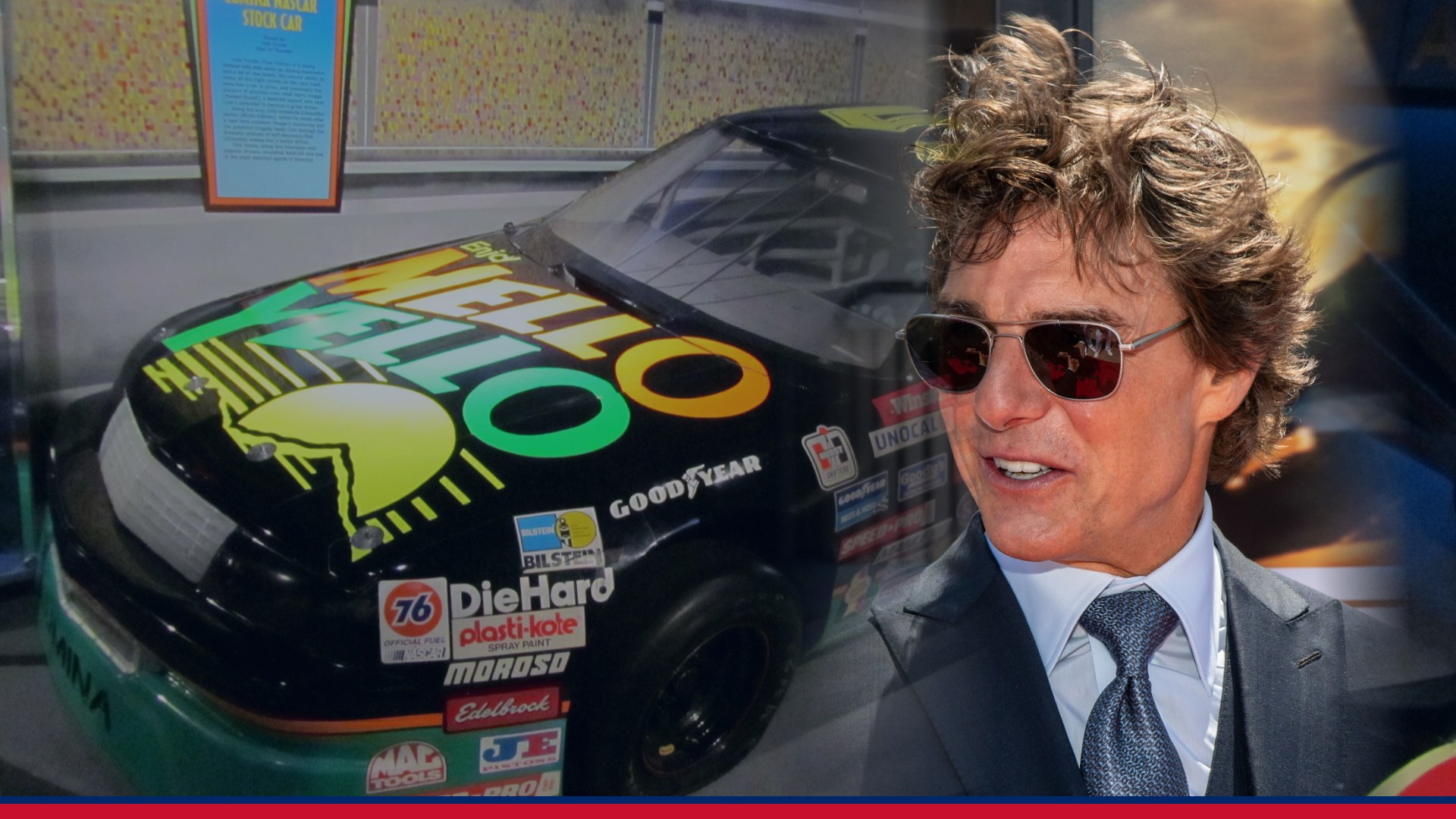
Tom Cruise (U.S. Navy photo, public domain) and the 1990 Chevrolet Lumina stock car driven in Days of Thunder (photo by Todd Fowler, CC BY-SA 2.0). Composite by Backfire News.
Paramount has put Days of Thunder 2 on the calendar for June 2, 2028. Tom Cruise is back as Cole Trickle, Anne Hathaway plays a NASCAR team owner and engineer, Jonathan Levine directs a Will Staples script, and Cruise, Jerry Bruckheimer and Tommy Harper produce. Cruise broke the news in a teaser shot at Daytona International Speedway during Coke Zero Sugar 400 weekend, and the film is being shot for IMAX. We already covered what the teaser car gave away and how Cruise crashed a drivers meeting to announce it.
Here’s the part the teaser skipped: what kind of sport is Cole Trickle coming back to? The first movie hit theaters June 27, 1990, and the sport it filmed has been rebuilt almost from the frame rails up since then.
The car: carburetor, H-pattern and five lugs vs. fuel injection and one nut
Cole Trickle’s Mello Yello Chevrolet Lumina was a steel tube-frame car with a carbureted V8, a four-speed manual with an H-pattern shifter, a solid rear axle, and 15-inch steel wheels held on by five lug nuts each. One of the film’s Luminas has been displayed at the Hollywood Star Cars Museum in Gatlinburg, Tennessee, and a current Cup crew would barely recognize it. Other movie cars have had a rougher time: a batch of them were dumped in the woods.
Today’s Next Gen car still runs a 358-cubic-inch pushrod V8, but it breathes through electronic fuel injection, which NASCAR adopted in 2012. The shifter is a five-speed sequential you push and pull, the wheels are 18-inch aluminum BBS units with a single center-locking nut, the rear suspension is independent, and the body panels are composite instead of hand-bent sheet metal. Minimum weight with driver and fuel is 3,400 pounds. Much of the car comes from single-source suppliers, which is why a used Cup Camry can end up on Bring a Trailer with the engine detuned on purpose.
| Part | 1990 (Days of Thunder) | Now (Next Gen) |
|---|---|---|
| Fuel delivery | Carburetor | Electronic fuel injection (since 2012) |
| Gearbox | Four-speed, H-pattern | Five-speed sequential |
| Wheels | 15-inch steel, five lugs | 18-inch aluminum, one center nut |
| Rear suspension | Solid axle | Independent |
| Body | Sheet metal | Composite panels |
| Parts | Team-built | Mostly single-source suppliers |
Safety: the movie crashes happened before most of the rules
NASCAR drivers weren’t required to wear a HANS device in 1990. Pit road speed limits did not exist yet either; NASCAR brought them in during 1991, after a pit crew member was killed at Atlanta in November 1990. The HANS became mandatory in 2001 after Dale Earnhardt died at Daytona, SAFER barriers started going up in 2002, and the Car of Tomorrow arrived in 2007 with a reinforced cage and a taller roof. The Next Gen car isn’t a finished story either: after drivers complained that its stiff structure made hits hurt more, NASCAR changed the rear bumper and chassis clips for 2023.
That matters for a sequel, because the first film’s crash scenes were built on a sport where a driver who walked away from a wreck was mostly lucky. Whatever Levine shoots, a modern wreck looks different, and a modern Cole Trickle will be wearing the gear to survive it.
The garage: a crew chief with a notebook vs. an owner with a charter
In 1990, Harry Hogge (Robert Duvall) was the garage. The character was patterned on real crew chief Harry Hyde, and Duvall’s most quoted line still comes up every time two cars trade paint. Cruise’s own road to the film started in January 1987, when he and Paul Newman tested cars for Hendrick Motorsports at Daytona. Even the dealership on Trickle’s hood, City Chevrolet, was Rick Hendrick’s real one.
Hathaway’s character is an owner and an engineer, which is a very different job now. Since 2016, NASCAR’s charter system has given teams a guaranteed starting spot, so a team is a franchise as much as a race shop. And with chassis, bodies and many components bought from the same suppliers as everyone else, the engineering edge that Hogge hunted for with a wrench has moved to setup, data and pit strategy. That is the gap the story can play with. Studio plot details haven’t been released, so how it does that is anyone’s guess.
What stays the same
The sport still runs on personalities. The first film worked partly because Richard Petty, Rusty Wallace, Neil Bonnett and Harry Gant appeared as themselves, and the garage already wants in on the sequel. Dale Earnhardt Jr. has reportedly been coaching the writer for almost a year, and Cruise patted Kyle Busch’s empty chair at Daytona. The 1990 film made $157.9 million worldwide on a $60 million budget. Paramount is betting the sport’s culture still sells tickets.
So here’s the call: NASCAR traded carburetors, hand-built cars and a lot of danger for spec parts, sequential shifters and drivers who walk away. Fair trade, or did the 1990 version have something the Next Gen car can’t get back?
Image credit: Tom Cruise photo by U.S. Navy Mass Communication Specialist 2nd Class Keenan Daniels (public domain). 1990 Chevrolet Lumina stock car driven by Cruise in Days of Thunder, photo by Todd Fowler via Wikimedia Commons (CC BY-SA 2.0). Composite by Backfire News.
About the Author