Robert Duvall has passed away at 95, and while his filmography spans decades of essential American cinema, from The Godfather to Lonesome Dove to Apocalypse Now, there’s one line from a single supporting role that still gets repeated in garages, infield campsites, and short-track grandstands three and a half decades later.
The Line That Outran the Movie
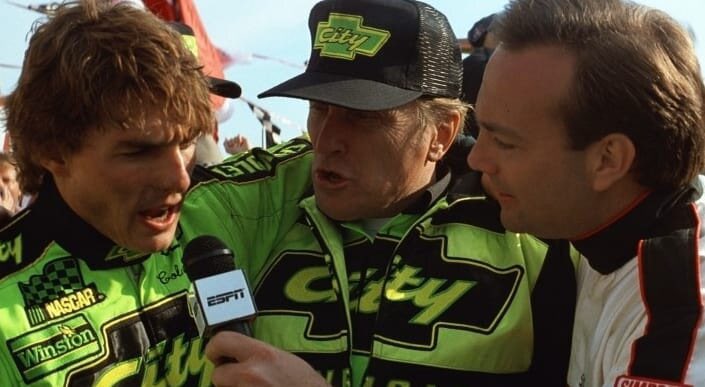
Released in 1990, “Days of Thunder” followed Cole Trickle, a raw, ambitious driver played by Tom Cruise trying to break into NASCAR’s top ranks, with Duvall playing his veteran crew chief, Harry Hogge. In the scene that cemented his place in racing culture, Trickle storms into the garage convinced a rival “slammed” him on track. Hogge calmly corrects him: “Rubbin’, son, is racin’.”
The line worked because it wasn’t written or delivered like a punchline. It sounded like something an actual crew chief would say leaning against a fender after a long practice session, not a screenwriter’s idea of Southern charm. That authenticity is exactly why it stuck.
Why It Still Gets Quoted at 200 MPH
NASCAR remains one of the only major sports where contact isn’t just tolerated, it’s expected. Short tracks run on rubbing fenders as part of the basic ecosystem of the racing, and superspeedway drafting inherently involves cars trading paint at triple-digit speeds. Plenty of sports movies try to manufacture a catchphrase; almost none actually embed one into the real culture of the sport they’re depicting. This one did. Today, when two drivers lean on each other through a corner, or tempers flare after a last-lap bump, or a rookie complains about an aggressive veteran, the same five words show up on broadcasts and social media without fail.
Duvall Made It Believable
The writing gets credit, but Duvall is why it worked. He didn’t play Harry Hogge as a caricature, there’s no exaggerated Southern drawl or over-the-top theatrics, just restraint and quiet authority that made the character feel lived-in. When he tells Trickle he got “rubbed” rather than slammed, there’s an almost fatherly patience to it. He isn’t dismissing the frustration; he’s reframing it, telling a young driver that surviving at the top level means toughening up rather than complaining. That single exchange captures something true about the sport itself.
Why It Still Matters in 2026
Modern NASCAR looks a lot different than it did when the film debuted. The Next Gen car changed competition dynamics, safety standards are far stronger, and corporate polish covers more of the sport than it used to. But contact remains part of the DNA. Short tracks still breed friction, superspeedways still produce drafting wars, and playoff races still end in bump-and-run finishes. In an era when a lot of major sports are getting sanitized and over-produced, NASCAR still tolerates, and in some ways still celebrates, a level of controlled chaos that Duvall’s line captured perfectly decades before the Next Gen car ever existed.
A Legacy That Crossed Industries
Duvall’s career will rightly be remembered for reshaping American cinema far beyond one racing movie, with characters ranging from war officers to Texas Rangers to mob consiglieres. But for a specific corner of the motorsports world, he’ll always be Harry Hogge, the crew chief who taught a fictional driver, and a generation of real fans, that you don’t whine when the fenders touch. You adapt. You survive. You race. That’s a remarkable cultural footprint for a supporting role in a 1990 sports drama, and it’s why, even after Duvall’s passing, that line will keep echoing every time two cars trade paint and someone in the stands mutters it under their breath.
About the Author