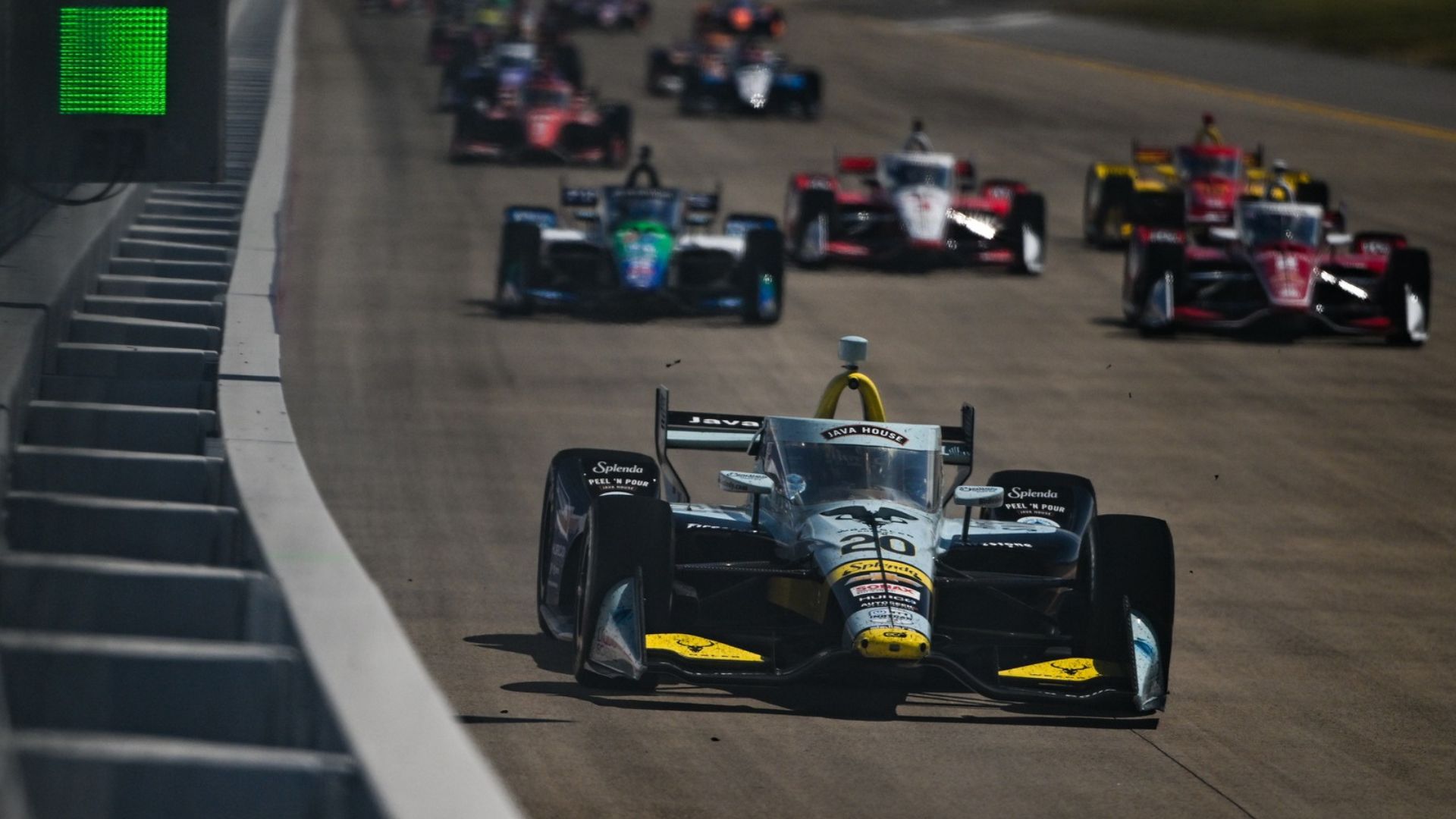
Image via NTT IndyCar Series
INDYCAR just found a math problem baked into its own marketing. The Freedom 250 Grand Prix, the series’ first-ever race through the streets of Washington, D.C., was originally scheduled for 125 laps around the new 1.7-mile street circuit. Multiply that out and the number is 212.5 miles, a perfectly solid street race that happens to be nowhere near the “250” printed on every banner and ticket. On Aug. 3, INDYCAR officials closed the gap the only way a race series knows how, tacking on 22 laps to make the Aug. 23 race an honest 147-lap, 250-mile event.
Bud Denker, chairman of the Freedom 250 Grand Prix, tied the change to the country’s semiquincentennial, describing the reworked event as a true 250-mile race. It reads like branding because it is branding, but it also happens to be accurate now, and it was not three weeks ago.
Adding 22 laps this close to raceday is not a cosmetic change. INDYCAR’s own announcement confirms the extra distance is expected to force one additional pit stop compared with the original plan, and that matters more on a street course than it would sound. Every added lap eats into a car’s fuel window, and INDYCAR’s ethanol-fueled cars already force drivers to ration push-to-pass boost against tire wear lap to lap. Tack on 22 laps nobody had budgeted for a month ago, and every team now has to rebuild its fuel-save windows and Firestone tire strategy for a circuit that has never hosted a race, which means there is no lap-time or degradation data to build those strategies from in the first place. That is a bigger ask than the extra mileage alone suggests.
The bigger story is how this race exists at all. Per the event’s official fast-facts sheet, the Freedom 250 Grand Prix was formally established by an executive order President Trump signed on Jan. 30, 2026, directing the Department of Transportation and the Department of the Interior to designate a race route through the National Mall and the surrounding federal streets. That is a bigger deal than it sounds: the Mall is federal parkland administered by the Interior Department, and running a motorsports event across it required sign-off from multiple federal agencies plus D.C.’s mayor’s office, a level of interagency coordination that a typical city street race, run entirely on municipal roads, never has to clear.
The result is a 1.7-mile, seven-turn circuit anchored by a .4-mile frontstretch down Pennsylvania Avenue, framed by the Washington Monument and the U.S. Capitol. Pit lane sits between Turns 1 and 2, and the layout also swings past the Smithsonian National Air and Space Museum, the National Gallery of Art and the National Archives, scenery no other stop on the INDYCAR calendar can match and the reason organizers are calling it the first auto race ever held on the streets of the nation’s capital.
Race weekend also revives a name that has been dormant for almost two decades: IROC. Presented by Chevrolet for this event, the International Race of Champions returns for two support races on Saturday, Aug. 22, putting former NASCAR Cup Series champions Jeff Gordon, Kurt Busch, Bobby Labonte, Rusty Wallace and Bill Elliott into identical Pontiac Firebirds alongside INDYCAR and Indy 500 winners Tony Kanaan, Helio Castroneves and Dario Franchitti. These are the actual Firebirds that raced IROC competition between 1996 and 2006, which means the closest thing to a mechanical edge in that field is setup, not budget.
Sunday’s INDYCAR field carries its own star power, with series champions Scott Dixon, Will Power, Josef Newgarden and Alex Palou joined by Indy 500 winners Alexander Rossi and Marcus Ericsson, plus reigning champion Felix Rosenqvist. Palou, who wrapped up a costly courtroom fight with McLaren just months ago, arrives with as much incentive as anyone to bank points on a circuit nobody has raced before. It is also one more marquee date on a 2026 INDYCAR schedule that has already had to share race weekends with F1, MotoGP and NASCAR more than once this year, which makes a headline-grabbing distance bump worth more to the series than the extra 37 miles alone.
Street circuits carry a variable permanent tracks do not: the road itself. A 1.7-mile course built from public streets means manhole covers, expansion joints and utility grates engineered for delivery trucks, not open-wheel cars pulling multiple g’s of lateral load. Formula 1 learned that lesson the hard way when a loose drain cover tore through a car during Las Vegas Grand Prix practice, a mess that eventually cost Liberty Media a $3 million settlement. Washington’s organizers have had months to survey and reinforce the Pennsylvania Avenue route, but pavement behavior under race-day loads remains the one variable no scan or simulation fully replaces on a circuit making its debut.
For anyone actually planning to attend, ticketing and travel details matter more than the lap count. General admission is free, but the request window closed back on June 7 and approved tickets have already gone out through Ticketmaster, so there is no walk-up gate sale being advertised. There is also no dedicated parking near the circuit, so organizers are steering attendees toward Metrorail, Metrobus, rideshare or just walking, which tracks with how most modern downtown street races handle a car event that, ironically, does not want more cars showing up.
Whether the extra 22 laps produce a better race or just a longer one only gets settled once the green flag actually drops on Pennsylvania Avenue. But INDYCAR did solve its branding problem three weeks early: on Aug. 23, the Freedom 250 Grand Prix will finally be worth its name, 250 miles, seven turns, and however many pit stops it takes to get every car to the checkered flag with enough fuel left to finish it.
About the Author