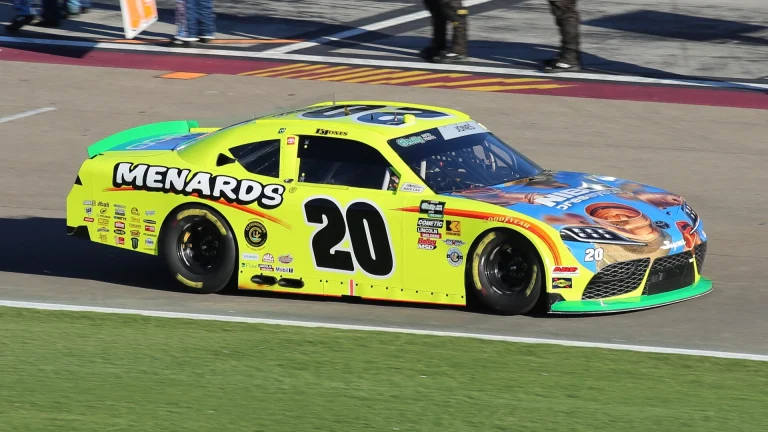
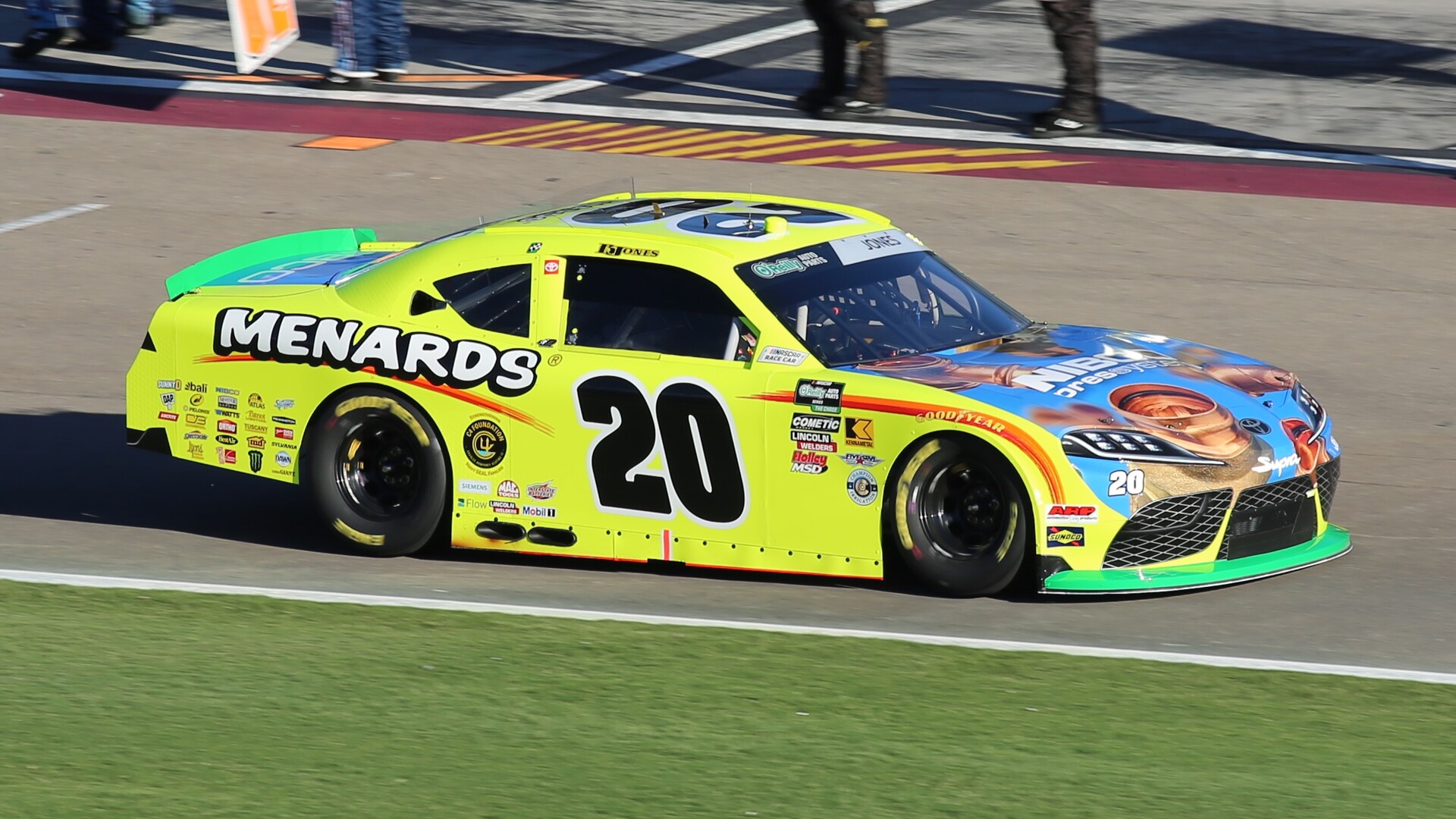
Brandon Jones in the No. 20 Joe Gibbs Racing Toyota at Las Vegas Motor Speedway in October 2026. Photo: TaurusEmerald / Wikimedia Commons, CC BY-SA 4.0
Joe Jones and his wife, Maryanne Pace-Jones, asked the U.S. Tax Court on Nov. 6 to overturn an IRS determination that carries nearly $750,000 in taxes and penalties, Bloomberg Tax reported. Jones is the father of NASCAR driver Brandon Jones.
The IRS’s position, per the Nov. 10 Bloomberg Tax report, is that Joe Jones’s management of his son’s career was a hobby, not a business. The couple’s petition says their company, Brandon Jones Racing LLC, contracts with established racing teams, and that the roughly 15 years Joe has put into his son’s career amount to a venture run for profit.
The portion of the report we could read does not give the tax years in dispute, how the $750,000 divides between tax and penalties, the kind of penalty, the Joneses’ lawyers or a docket number. We have not seen the petition itself, so the IRS’s reasoning beyond the word “hobby” is not something we can describe.
The driver
Joe Gibbs Racing lists Brandon Jones as the driver of its No. 20 Toyota GR Supra in the NASCAR O’Reilly Auto Parts Series for 2026, his seventh season with the team. The team’s page credits him with seven series wins, all for Gibbs, and gives his hometown as Atlanta and his birthday as Feb. 18, 1997, which makes him 29.

Neither the Gibbs page nor the Bloomberg Tax report says whether Gibbs is one of the “established teams” Brandon Jones Racing LLC contracts with, or which teams are. Gibbs has a separate court date of its own: its dispute with Spire Motorsports over Gabehart is set for trial Feb. 1, as we covered.
How the hobby rule works
Section 183 of the Internal Revenue Code governs activities “not engaged in for profit.” Income from such an activity is still taxable, while the deductions against it are sharply limited. Treasury regulations list nine factors for deciding which side an activity falls on: the manner it is carried on, the expertise of the taxpayer or advisers, time and effort spent, expected appreciation of assets, success in similar activities, history of income or losses, the amount of occasional profits, the taxpayer’s financial status, and elements of personal pleasure.

The code also gives the taxpayer a presumption: an activity that turned a profit in three of five consecutive years is presumed to be for profit. Hobby disputes usually start with a taxpayer deducting an activity’s losses against other income. The report does not say what the Joneses reported or what the LLC took in, so which of the nine factors will carry weight is not public. In Tax Court, the petitioners generally have the burden of showing the IRS determination is wrong.
The IRS has to answer first
The IRS has 60 days from service of the petition to file its answer under Tax Court Rule 36, which puts its first filing around early January. No trial date has been reported.
Sources: Bloomberg Tax (Nov. 10, 2026); Joe Gibbs Racing; 26 U.S.C. § 183; 26 CFR § 1.183-2; U.S. Tax Court Rules of Practice and Procedure.
The Joneses say 15 years of running a racing business around their son is a venture for profit. The IRS says hobby. Where would you draw that line for a parent managing a kid’s career?
About the Author