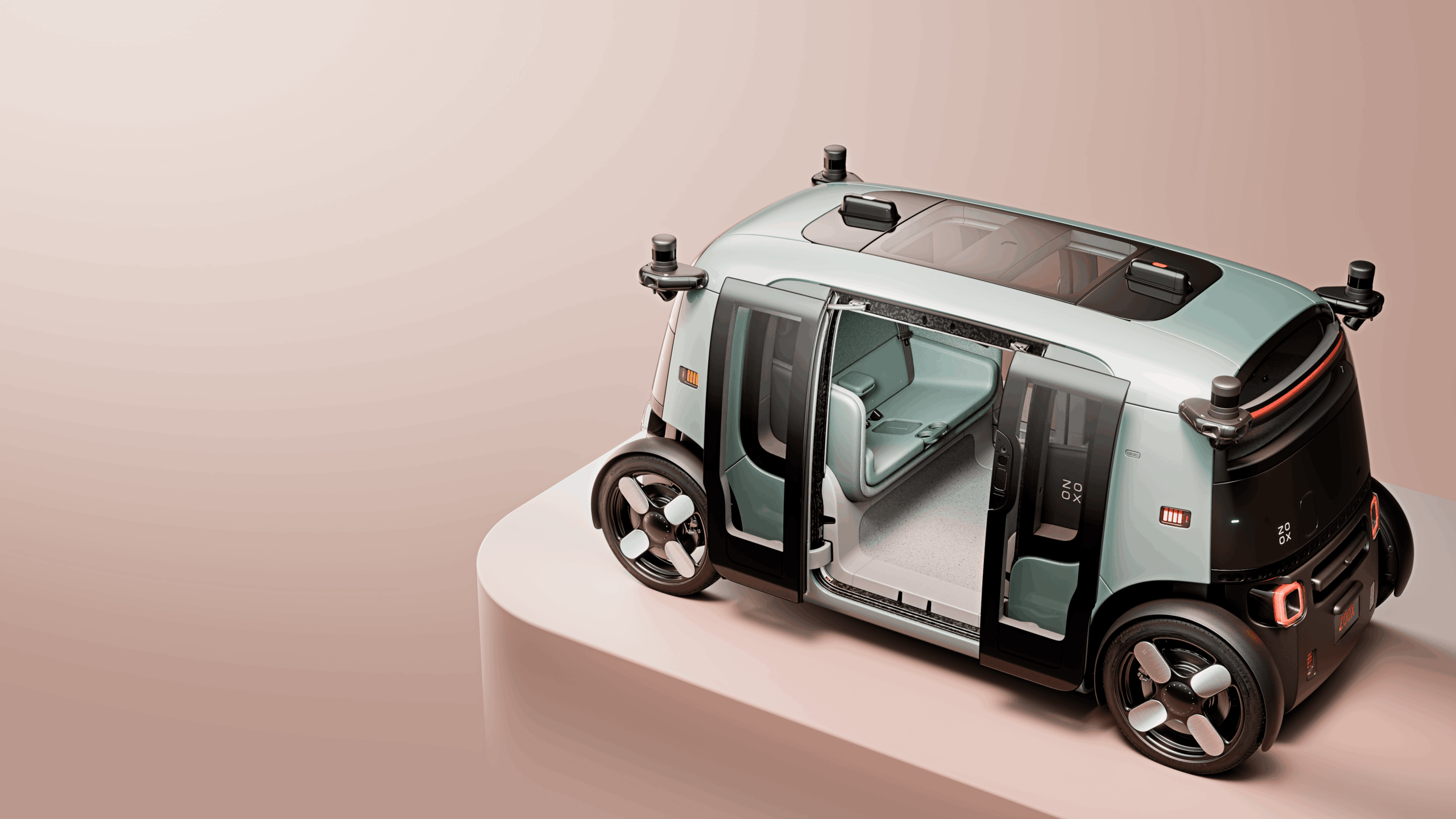
Here’s the part that matters mechanically. NHTSA’s rulebook, the Federal Motor Vehicle Safety Standards, was written on the assumption that a person sits behind a wheel, presses pedals, and checks mirrors. Waymo’s fleet gets around that by starting with a normal, FMVSS-compliant car, a Jaguar I-Pace or a Hyundai Ioniq 5, and layering sensors and software on top. Zoox skipped that step entirely. Its carriage-style pod has two rows of inward-facing seats, a 75-mph top speed, and nowhere to even put a steering column. Because that vehicle can’t comply with rules written for human drivers, it needed its own legal pathway, called a Part 555 exemption, that lets NHTSA waive specific FMVSS requirements once a manufacturer proves its alternative is just as safe.
NHTSA Administrator Jonathan Morrison put it bluntly, saying the agency determined the systems on the Zoox exceed the equivalent performance requirements of a compliant vehicle, while still wanting to watch how the driving software behaves in the real world. That’s why the exemption isn’t a blank check. It caps Zoox at 2,500 vehicles a year for two years, bars the company from ever selling one of these things to a private buyer, and comes loaded with new reporting rules covering crashes and vehicles that stop somewhere they shouldn’t. NHTSA can also pull the exemption entirely if the fleet starts behaving badly, which, as anyone who’s followed Waymo’s own software recalls knows, is not a hypothetical.
Zoox says fare-charging service starts in Las Vegas next month, with other markets to follow once state and local paperwork clears. The company has been running free rides in parts of Las Vegas and San Francisco already, racking up more than half a million riders with another half million sitting on a waitlist, numbers that suggest the demand problem was never really in question. The regulatory problem was.
That regulatory problem now has a template, and every other company building an AV without a wheel is going to study it closely. Tesla has already started producing its own Cybercab without traditional controls as part of a broader pivot toward autonomy and robotics, but it still hasn’t outlined how it plans to get that vehicle cleared to carry paying passengers. Zoox just proved the path exists: file for a Part 555 exemption, demonstrate equivalent safety, and accept a fleet cap and a leash NHTSA can yank at any time.
None of this is happening in a vacuum of goodwill toward driverless cars, either. Earlier this summer, Morrison sent AV developers a pointed letter demanding they fix a pattern of robotaxis interfering with police and firefighters, on top of well-documented complaints about vehicles freezing at busy intersections, wandering into construction zones, and rolling past stopped school buses. Zoox itself recalled its entire 105-vehicle fleet afterward to patch software that might not reliably detect heavy smoke during an active emergency. Waymo has had its own stretch of vehicles stalling out on San Francisco streets long enough that local and federal officials lost patience. So the approval Zoox just received isn’t a verdict that driverless cars have solved safety. It’s a conditional bet, with an off-ramp NHTSA has explicitly reserved the right to use.
There’s a practical angle here that ordinary drivers should care about, separate from the novelty of a wheel-less car. Because Zoox’s vehicles form a commercial fleet rather than something anyone will finance or insure personally, the liability question shifts entirely onto the company: no personal auto policy, no license requirement, no driver to name in a police report. That’s a fundamentally different legal model than the driver-assist features already creeping into consumer cars, where a human is still nominally in control and still the one federal investigators look at first when something goes wrong. It’s also why NHTSA is simultaneously rewriting standards covering mirrors, brake pedals, and displays, rules that only make sense once regulators accept that some vehicles on public roads will never have anyone aboard who could use them.
Zoox’s exemption expires in two years, and everything about its future, expansion beyond Las Vegas, a permanent rule instead of a temporary waiver, whether Amazon ever scales this past a few thousand vehicles, depends on what NHTSA sees in the data during that window. For now, the carriage-shaped car with no wheel gets to collect fares. Whether it keeps doing that is a different story, and NHTSA just told everyone involved it’s watching closely.
About the Author