Photo: Lunaz
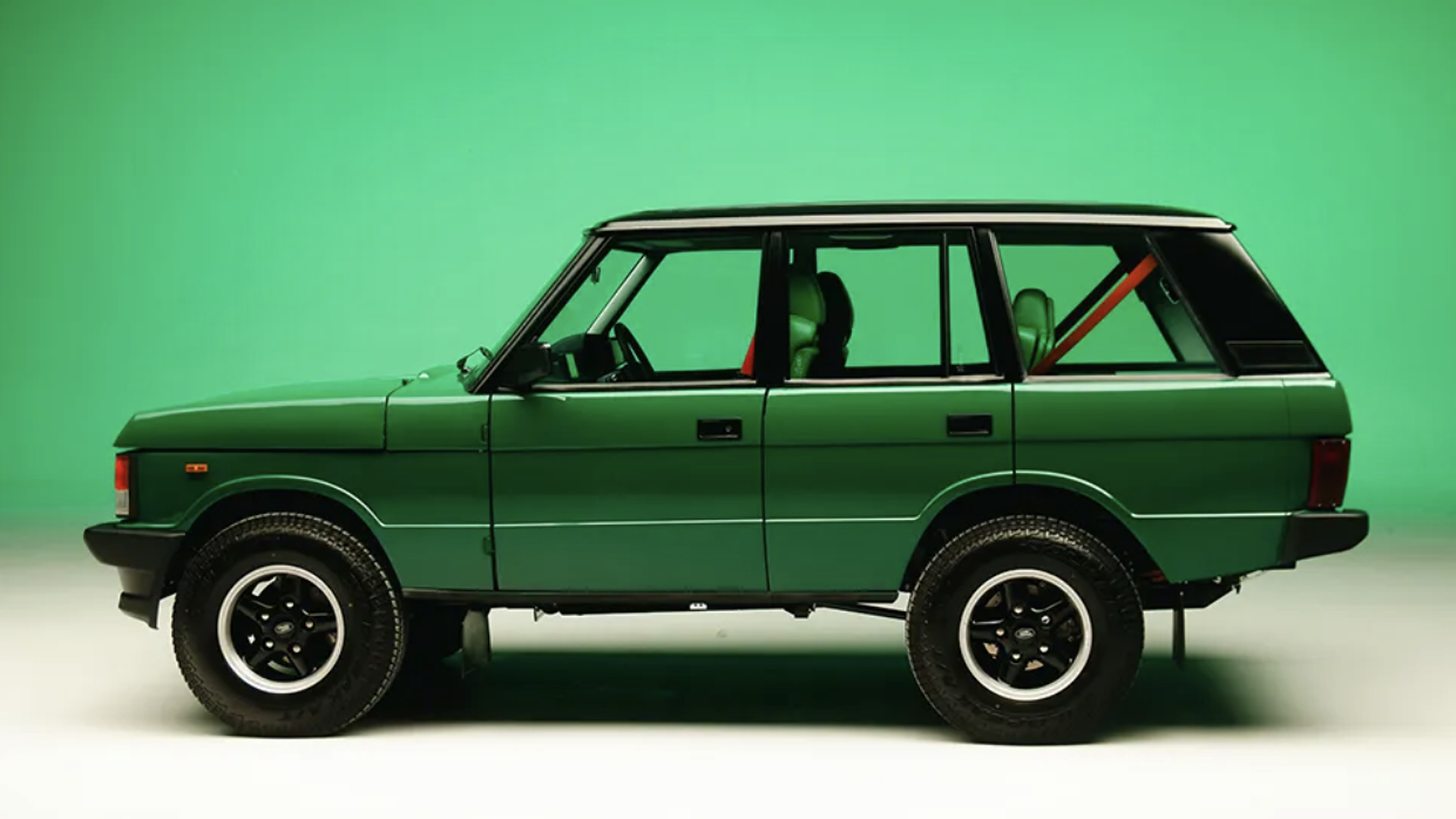
Some restomod shops chase subtlety. Lunaz just delivered a Range Rover Classic that a certain banjo-playing amphibian would approve of. The Silverstone company is showing off a vivid green commission it calls “Kermit,” and it’s using the moment to make a bigger point: it says American buyers have filled its U.S. build allocations for the Range Rover Classic, and it’s adding capacity to keep up.
That’s the press release. The fine print is more interesting.
What Lunaz is actually selling now
On its own site, Lunaz says it launched its latest Range Rover Classic series on September 18, limited to just 25 commissions. The powertrain menu has grown up. Buyers can choose electric power or a naturally aspirated V8, and body styles include four-door, the original two-door and long-wheelbase versions, with a roofless build available by request only. The company lists modern suspension geometry, improved brakes and front and rear anti-roll control, plus climate control, heated seats and upgraded audio.
Related Articles
- Porsche’s Rumored Flat-Eight Flagship Would End a 64-Year Streak at Weissach
- TechArt’s First Air-Cooled Build Is a 380-PS 964 That Raids Porsche’s Own Parts Bin
The V8 option is the tell. Lunaz built its reputation as an electrification company. Offering a combustion engine alongside its EV system reads to us like a quiet admission that plenty of wealthy buyers want the classic shape without committing to batteries. It also widens the market, because the V8 version can be refueled anywhere and repaired by more shops.
There’s also a line on every Lunaz page that buyers should read twice. The company states that it restores and remasters existing vehicles, does not manufacture vehicles, and isn’t affiliated with or endorsed by Land Rover. It also notes that specifications may change. In practice, that means your truck is still legally a Range Rover built by Land Rover decades ago, heavily modified by a third party. That affects registration, insurance and import rules, which we’ll get to.
Why the Classic keeps drawing money
The donor car has serious credentials. According to Land Rover’s own history, the Range Rover was conceived in the mid-1960s by Rover engineer Charles Spencer “Spen” King as a way to combine saloon-car comfort with Land Rover off-road ability. It launched in 1970, initially only as a two-door, and the first generation stayed in production until 1996. In 1971 it became the first vehicle displayed at the Louvre, cited as an exemplary work of industrial design.
That design is the whole business case. Nobody pays restomod money for the original driving experience; they pay for the proportions, then replace nearly everything underneath. Lunaz says every commission goes through restoration, fabrication, body prep, paint, wiring, trim and final assembly under one roof at its Silverstone facility.
The limit of 25 cars also says something about how this segment works. These aren’t production vehicles, they’re hand-built projects, and the bottleneck is skilled labor, not demand. Adding capacity means hiring and training craftspeople, which takes time. If you’re shopping, expect long lead times no matter what the marketing says.
The paperwork problem for American buyers
Now the part the Instagram photos leave out: bringing one of these into the U.S. isn’t just a shipping question.
The safety side is simple. NHTSA says a vehicle at least 25 years old can be imported without meeting current federal safety standards, with the clock running from the date of manufacture. Every first-generation Range Rover clears that bar.
Emissions are trickier. EPA’s import declaration exempts vehicles at least 21 years old only if they’re in original unmodified configuration. Vehicles with replacement engines don’t qualify unless the new engine is the same model as the original, or an engine with any aftertreatment from a certified vehicle no older than the one being imported.
For the V8 version, that means the modern engine needs to arrive with its emissions hardware intact, and the paperwork has to show it. Buyers should get that documentation from Lunaz before the truck ships, not after it’s sitting at a port. The EV version raises different questions, since the rules are written around combustion engines. Either way, work with an experienced import broker and get the answers in writing. Then check your state’s title and registration requirements, which vary widely for heavily modified vintage vehicles.
Insurance and maintenance reality
A standard auto policy won’t cut it. You’ll want agreed-value collector coverage based on a professional appraisal, and you’ll need to fully disclose the modifications. Those modifications create a real repair risk. Custom interior pieces, bespoke trim and one-off paint can’t be ordered from a parts catalog, so even minor damage could mean shipping the truck back to England or waiting for hand-made replacements.
Related Articles
- TechArt’s First Air-Cooled Build Is a 380-PS 964 That Raids Porsche’s Own Parts Bin
- Inside the Twerk Horse: T-Pain’s 910-HP RTR Mustang Gift to Hert
The powertrain choice matters for long-term ownership too. An EV conversion depends on the builder’s own battery, motor and software, which means service support is tied to one small company. That’s worth thinking about over a ten- or twenty-year ownership horizon. A modern V8 is easier to service locally, though the surrounding chassis, wiring and control systems are still Lunaz’s work. Ask for wiring diagrams, service documentation and a list of approved repair shops in your area before you sign.
The bottom line
Lunaz is betting that the Range Rover Classic’s shape will keep attracting buyers who want vintage style without vintage headaches, and so far the order books seem to agree. A frog-green showpiece makes a good headline, but the real story is the fine print: 25 slots, two powertrains, no factory affiliation, and an import process that rewards buyers who do their homework before the truck leaves Silverstone.
Paying restomod money for a Classic, would you take the EV or the V8, and does “not affiliated with Land Rover” change the math? Tell us in the comments.
Images Via: Lunaz
About the Author