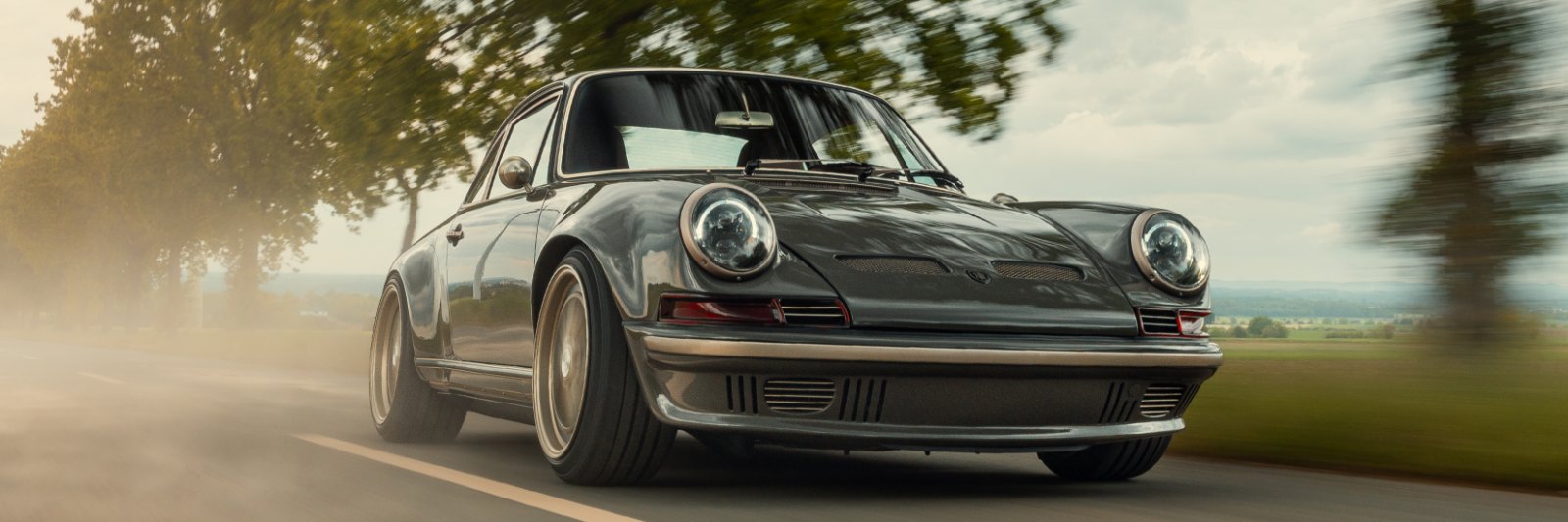
The TECHART GTclassic is the Leonberg tuner’s first build based on a classic, air-cooled Porsche 911. Photo: TECHART
For almost 40 years, TECHART’s business model has been simple: take whatever Porsche just rolled off the line in Zuffenhausen and make it wider, louder and more expensive. Body kits, forged wheels, power upgrades and bespoke leather, all for modern cars.
Its newest project is a departure. The TECHART GTclassic starts life as a 964-generation Porsche 911, the 1989-1994 car that dragged the classic shape into the modern era before the 993 redrew it, and it’s the Leonberg firm’s first build based on a classic car. TECHART’s launch material calls it the beginning of a new chapter. We’d call it a tuner walking into a very crowded room and betting that its parts catalog earns it a seat.
Much of the hardware comes straight out of Porsche’s own parts history.
The Spec Sheet
Here’s what TECHART has confirmed:
- Engine: An air-cooled, naturally aspirated 3.8-liter flat-six making up to 380 PS (279 kW), or roughly 375 hp, in its most powerful configuration. “Up to” is the key phrase: expect more than one state of tune.
- Chassis: A high-performance suspension with external-reservoir dampers, motorsport engine mounts and a turbo brake system that TECHART’s brochure identifies as coming from the 993 Turbo.
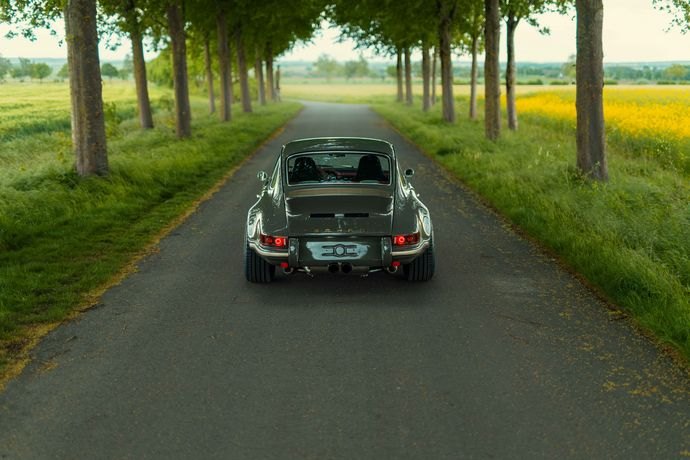
- Exhaust: A bespoke system with centrally positioned tailpipes wrapped in carbon-fiber surrounds.
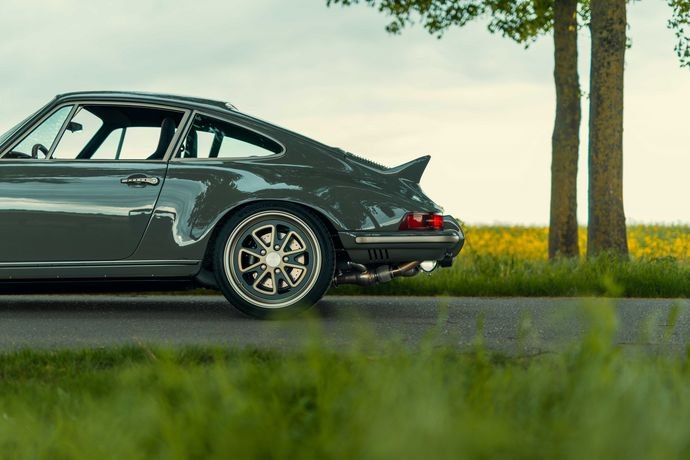
- Wheels: TECHART’s new 18-inch Retrosport forged wheel, a two-piece, two-tone take on the Fuchs design, sized 8.5×18 front and 10×18 rear.
- Lighting and body: One-piece LED headlights with a daytime-running-light signature, newly developed one-piece turn signals that integrate the air intake, three-dimensional one-piece LED taillights, a ducktail spoiler with two integrated vents and handcrafted champagne-colored trim that runs nose to tail.
- Cabin: Leather from TECHART’s in-house leather workshop with fabric inserts, optional Clubsport seats, a personalized instrument cluster, an aluminum shifter, a Chrono Package with Hanhart stopwatches, and a Porsche Classic Radio with Apple CarPlay, navigation and Bluetooth, plus a hi-fi system and ambient lighting.
TECHART hasn’t published a price, a build count, a torque figure, a curb weight or any performance times, so anyone quoting those numbers right now is guessing.
Why 380 PS From 3.8 Liters Is a Real Number
A stock 964 Carrera left the factory with a 3.6-liter flat-six rated at 250 PS. Porsche’s own homologation-flavored 1993 Carrera RS 3.8, a car that now trades at serious collector money, made 300 PS. TECHART is claiming 80 PS more than that from the same displacement, with no turbos, in an engine that still has to cool itself with a fan and a lot of fins.
That’s right around 100 PS per liter, which is territory air-cooled engines only reach with serious work: bigger bore, high-compression pistons, aggressive cams, individual throttle bodies and a lot of attention to heat management. TECHART hasn’t released an internals breakdown, so we won’t pretend to know exactly how it got there. The general trade-off is well known, though: air-cooled motors built to that level typically want more frequent valve adjustments, more careful oil temperature management and a rebuild schedule measured in tens of thousands of miles rather than hundreds of thousands.
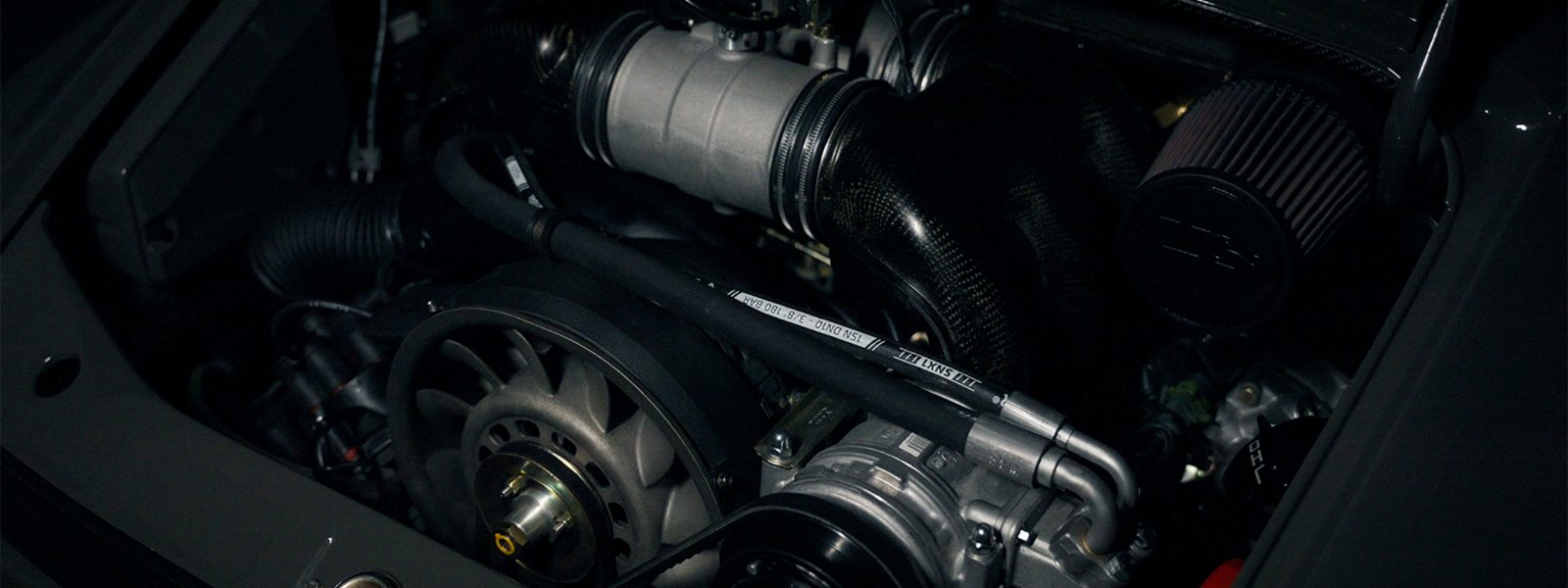
The motorsport engine mounts matter too. Stiffer mounts sharpen the way a rear-engined 911 reacts to throttle and steering because the heavy engine stops wallowing behind the rear axle. The cost is vibration through the shell, and in a car pitched with CarPlay and ambient lighting, how TECHART balances that will matter more than any dyno sheet.
Borrowed 993 Turbo Brakes
The 993 Turbo brake package is a smart pick. The 993 is the 964’s direct successor, so its big cross-drilled rotors and four-piston calipers are a well-documented bolt-on upgrade for 964 owners chasing more stopping power. Porsche engineered them for a twin-turbo car with more power than the GTclassic makes, which leaves thermal headroom for hard mountain-road use.
They’re also easy to service. Factory Porsche brake components are supported by Porsche’s parts network and a deep aftermarket, so they aren’t one-off pieces only the builder can supply. On a car that will eventually need pads, rotors and caliper rebuilds from someone other than TECHART, that’s worth real money over a decade of ownership.
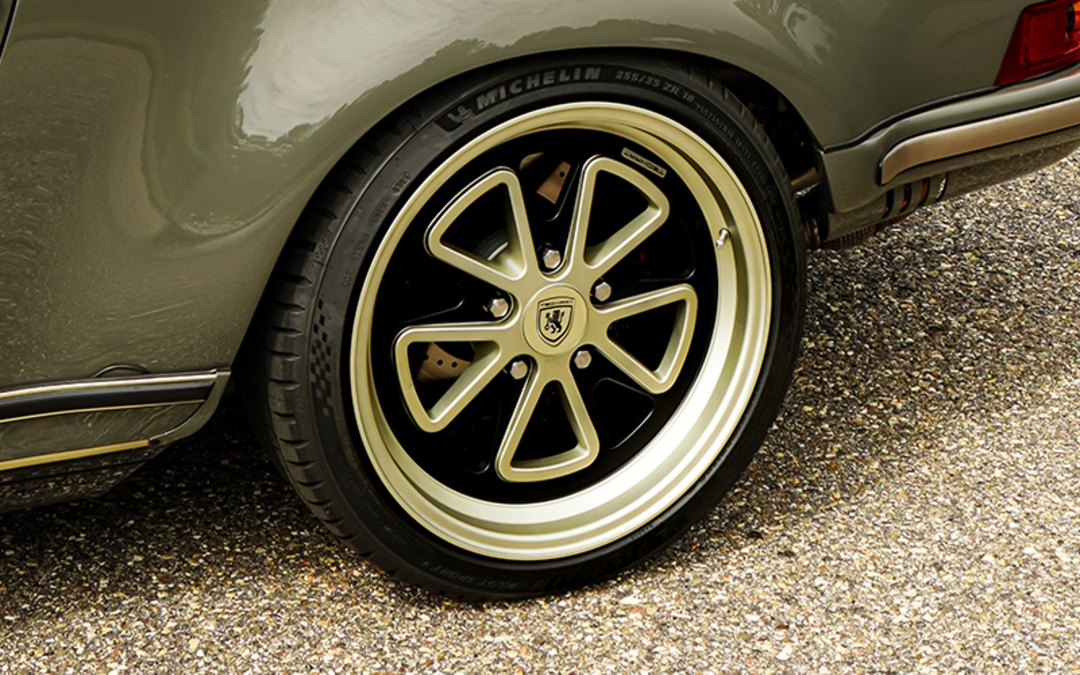
Those wheels are also doing more than cosplay. The Fuchs forged wheel debuted on the 1967 911 S and became one of the most copied designs in the hobby. TECHART’s version adds openings the company says specifically improve brake cooling, and the 10-inch-wide rear gives the tire far more footprint than any original 964 Fuchs setup.
Cues From Three Eras
The body borrows from specific eras rather than a generic “old 911.” The ducktail spoiler traces back to the 1973 Carrera RS 2.7, the car that made a rear spoiler on a 911 both useful and cool. The centered exhaust is a race-car cue. The LED lamps are pure 2020s.
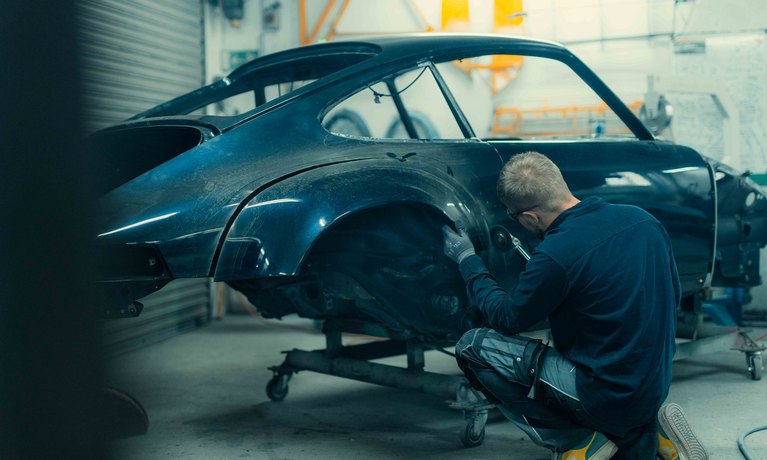
That’s where TECHART’s background shows. Modern-car tuners are good at lighting integration, trim finishing and making aftermarket pieces fit like they came from the factory. Those skills translate directly to a restomod. What doesn’t automatically translate is metalwork, rust repair and restoring a shell that’s more than 30 years old, which is why the company’s own workshop imagery of stripped 964 shells on build stands is the more reassuring part of the launch.
Where TECHART Fits
The 964 has become the default canvas for high-end 911 builders because it’s the sweet spot: classic shape, but with power steering, ABS and a structure better suited to modern power than the earlier cars. That’s why the market is crowded. Some builders chase ultra-light carbon bodies, while others lean into bespoke luxury, as seen in Singer’s collaborations with Louis Vuitton. Others skip the 964 entirely, as Gunther Werks did with its 993-based GWX.
TECHART does have one real advantage: it’s a production-scale tuner with a global dealer network, not a small atelier. That matters for the least glamorous part of ownership, which is service. A buyer in the U.S., Middle East or Asia is more likely to find a TECHART-affiliated shop than a boutique builder’s authorized technician. The move into classics also fits how seriously the Porsche world now treats its own past, from the factory’s one-off 911 Flachbau RS to the licensed 80-percent 550 Spyder.
What a Buyer Should Check
If you’re the sort of person with a 964 restomod budget, a few questions matter more than paint samples.
- Ask what gets replaced on the donor. Stock 964s are known for dual-mass flywheel failures, oil leaks and, on the twin-plug engines, a distributor drive belt that can take out the ignition if it lets go. A 3.8 build should make most of that moot, but get it in writing.
- Get the paperwork airtight. A restomod keeps its original 964 chassis number, which is what keeps it legal and registrable. In the U.S., every 964 is now past NHTSA’s 25-year import exemption, but that eligibility is tied to the original car’s date of manufacture. States with strict emissions rules, especially California, can scrutinize engine changes, so confirm registration requirements before the car ships.
- Insure it on agreed value. A standard policy will value the car as a used 964, not a bespoke build. Collector insurers typically want the builder’s invoice, a detailed spec sheet and photos to set an agreed value that reflects what was actually spent.
- Understand parts support. Porsche components like the 993 Turbo brakes are easy to source. Bespoke pieces like one-piece LED lamps, the ducktail and Retrosport wheels are TECHART-only. Ask about spares availability before a parking-lot scrape turns into a months-long wait.
Whether the GTclassic stands out from the established restomod names comes down to two numbers TECHART hasn’t shared yet: the price and the wait.
Photos courtesy of TECHART. Specifications sourced from TECHART’s official GTclassic model page and brochure.
About the Author