Graham Dunn didn’t hear a thing. He only found out his Volkswagen Tiguan had been hit after he pulled his own CCTV and watched two men roll up on Lime bikes, crouch at the nose of his car, and pedal off again in under five seconds. “It took sub-five seconds, and they’ve done nearly 2,000 pounds of damage in that time,” he said. “They harvested this area.”
Harvested is the right word. Between July 15 and July 19, thieves worked their way through 29 streets across Catford, Forest Hill, Ladywell, Honor Oak, East Dulwich, and Lewisham, prying the front badges off roughly 70 Volkswagens. The Metropolitan Police confirmed the figure and opened an investigation, with PC Olly Rutherford, who is leading it, telling residents his team is aware of “a number of incidents in south-east London over recent weeks in which car badges including the vehicle’s radar sensors have been stolen,” and asking anyone affected to file a report.
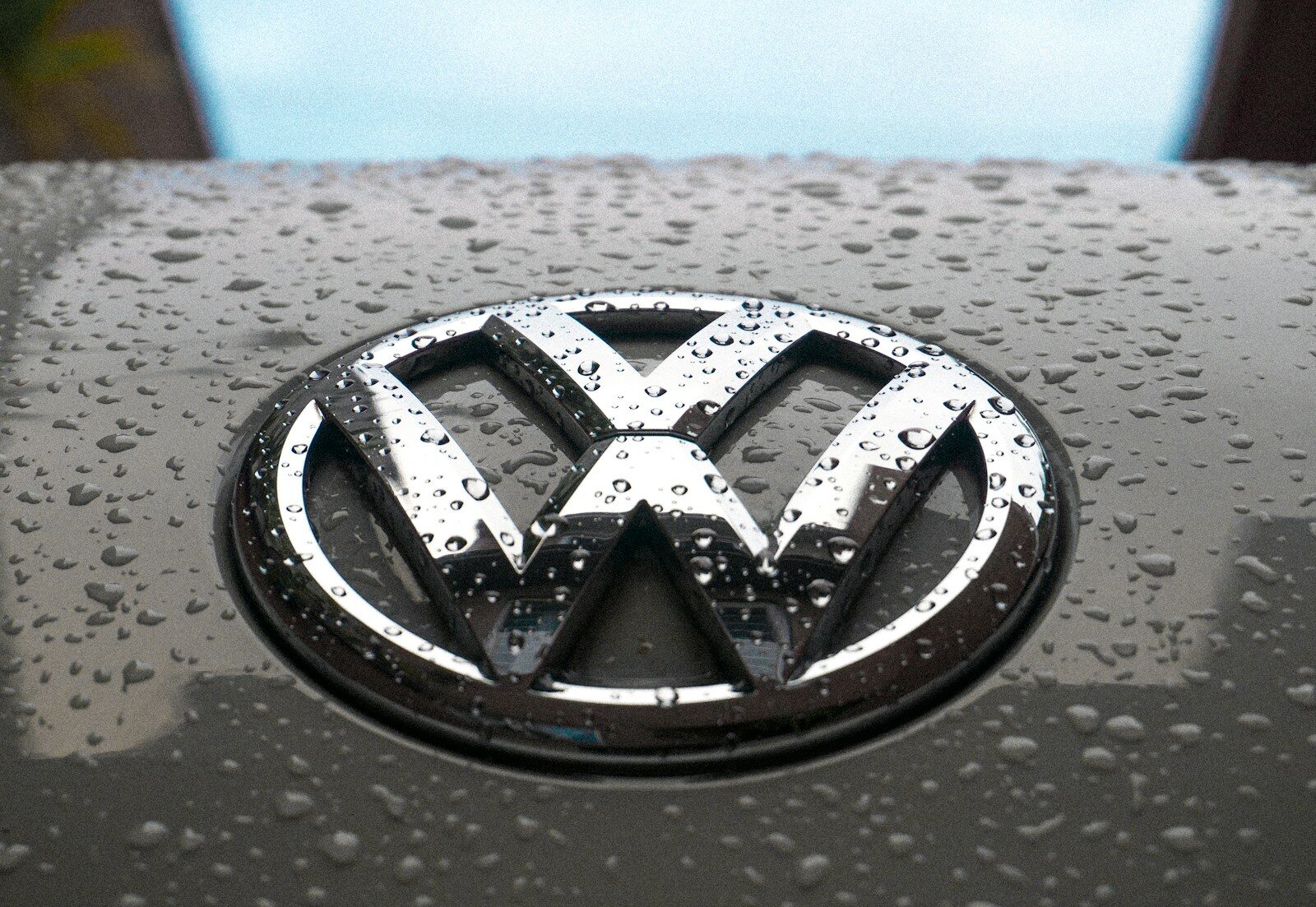
Notice what’s tucked into that sentence: radar sensors. Nobody is popping VW badges off for the badge itself. On the vast majority of current Volkswagens, the front emblem isn’t just stuck-on trim, it’s the housing for the Front Assist system’s radar unit, the sensor that watches the road ahead and triggers automatic emergency braking. Volkswagen’s own help documentation places the sensor “behind or below the VW emblem in the center of the front bumper” on most models, with the Touareg as the outlier, running two sensors mounted lower on each side of the bumper instead. Pull the badge, and you don’t just leave an ugly gap in the grille. You disable a safety system the car was engineered around.
That’s also why Dunn’s number isn’t an exaggeration. A missing emblem on a modern VW isn’t a cheap fix at a parts counter. It’s a coded module that has to be replaced with a dealer part, wired back into the car’s harness, and then calibrated so the radar actually talks to the rest of the safety software again. Rip it off with a screwdriver or a bit of leverage, and there’s a real chance the wiring behind it or the bumper fascia itself gets damaged too, which is how a stolen badge turns into a four-figure repair bill instead of a cosmetic annoyance.
One of the victims, Giorgina Tomlin, whose T-Roc was targeted on July 18, said the job looked pre-planned: “It was highly organised, they knew exactly where every car was, so they’d obviously scoped it out previously.” She added that a neighbor had noticed a drone over their garden the night before, which is the detail that’s been doing most of the heavy lifting in headlines about this case. It’s worth being precise about what’s actually confirmed: police have confirmed the theft count and the removal method, not that drones are being used for reconnaissance. A neighbor spotting a drone the night before a theft is a lead worth chasing, not proof of a flying scout casing driveways. Treat it as an open question until detectives say otherwise.
What isn’t in question is that this is bigger than one four-day spree. The Met’s own neighborhood alert network has flagged VW badge thefts in other parts of London well outside this cluster, including a Wandsworth Common bulletin describing the identical technique: badge and radar sensor removed overnight, owner left with a damaged bumper and a dead Front Assist system. The advice in that alert could have been written for this exact case, too: park somewhere well-lit, keep dashcams and doorbell cameras running, and report a stolen badge to both police and your insurer right away, since replacement and calibration costs aren’t something most owners have budgeted for.
There’s a practical owner takeaway buried in all of this: check what your policy actually covers before you need it. Comprehensive UK motor policies generally treat a stolen badge and sensor assembly as a theft claim rather than a simple glass claim, which affects your excess and no-claims position, and it’s worth a call to your insurer now rather than after two men on bikes have already been through your street.
It’s also a reminder of how much of a modern car’s safety net now lives in places a screwdriver can reach. Automakers have spent the last decade bolting driver-assistance hardware onto cars faster than anyone has worked out how to secure it once that car is parked on an ordinary residential street, a tension regulators are only adding to as they push to make more of that hardware standard equipment in new vehicles. In the meantime, the gap between a badge theft becoming a solved case and just another unsolved police report usually comes down to boring, unglamorous footage, the same kind of evidence that eventually closed a two-year gap in a stolen Chevelle case after two minutes vanished from a Ring camera, and the paperwork trail that finally caught up with a Toyota Highlander five years and two borders after it disappeared.
None of that gets Graham Dunn his money back any faster. But it’s a decent reminder that on a modern Volkswagen, the badge on the nose isn’t decoration anymore. It’s a sensor with resale value, and right now, in south-east London, that’s making it the easiest target on the car.
About the Author