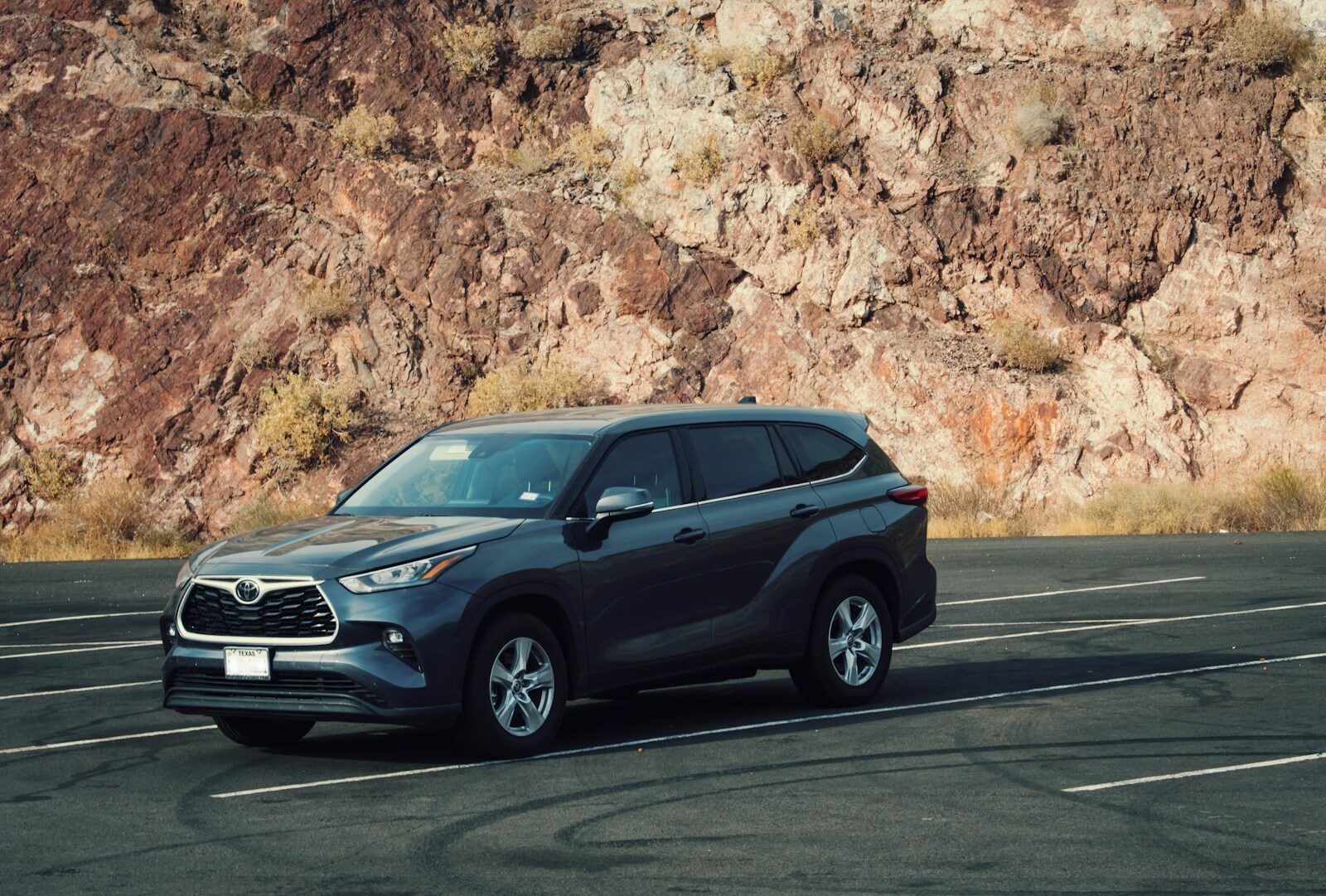
Toyota Highlanders are not exotic cars. Nobody steals one for bragging rights or chops it up for parts money the way they might a G-Wagon or a Hellcat. That mundane reliability is exactly what makes them valuable to a very different kind of criminal – the kind who steals a family SUV in one country, drives it across a border, and quietly tries to re-register it in another region five years later like nothing ever happened. That’s almost precisely what happened to a Toyota Highlander stolen in Port Harcourt, Nigeria, back in September 2021, until a routine vehicle licensing check more than 800 miles away finally unraveled the scheme this summer.
According to the Gombe State Police Command, the SUV was reported stolen out of Rivers State in September 2021 and stayed off the radar for roughly two years before investigators traced its next move: smuggling across the border into the Republic of Niger sometime in 2023. From there it sat outside Nigerian jurisdiction entirely, parked in the kind of legal gray zone that cross-border theft rings depend on, until it reappeared inside Nigeria through the Illela border crossing in Sokoto State in October 2025.
Once it was back on Nigerian soil, the Highlander didn’t head for a chop shop. It headed for a title. Police say the vehicle moved to Kaduna State, where it was illegally resold to a new buyer who apparently had no idea the truck came with a five-year-old criminal history attached. That buyer then did the one thing that eventually sank the whole operation: they tried to legitimately re-register the SUV in Gombe State, walking it straight into a government vehicle licensing office.
That’s the detail worth sitting with. This wasn’t a high-speed pursuit or an undercover sting. It was a paperwork mismatch. On June 8, 2026, operatives from the State Intelligence Department working alongside the Federal Road Safety Corps flagged the Highlander during what officials described as a routine data verification exercise at the Gombe State Internal Revenue Service Vehicle Licensing Office. In plain terms, someone cross-checked the vehicle’s identifying numbers against records of reported stolen vehicles during the registration process, and the numbers didn’t line up with a clean history. Forensic and intelligence work afterward confirmed the original owner, and on July 24, 2026, the Gombe Police Command handed the SUV back to her at their headquarters, nearly five full years after it disappeared.
It’s a pattern that shows up everywhere vehicle theft rings operate, not just West Africa. Stolen cars are relatively easy to hide for a while and shockingly hard to hide forever, because eventually somebody wants to drive them legally, insure them, register them, or sell them with a clean paper trail, and that’s the moment a stolen vehicle has to survive contact with a government database. It’s the same reason a Porsche thief in North Hollywood got caught trying to tow off a car he couldn’t start rather than just driving away with it, and why manufacturers like Ford are now building remote engine kill switches directly into pickups. Modern anti-theft tech and paperwork trails are both designed to make the easy part of stealing a car, taking it, much less useful than the hard part: keeping it, selling it, or legally existing with it long-term.
American buyers have a rough equivalent to that Gombe licensing-office check built into the system already, even if most people never think about it. The National Motor Vehicle Title Information System, run by the U.S. Department of Justice, exists to catch exactly this kind of scheme domestically: a stolen vehicle that gets a new title in a different state, sometimes with a cleaned-up VIN or a salvage title washed through a jurisdiction with looser paperwork rules. It works well enough that a legitimate title transfer typically gets flagged fast if a vehicle shows up as reported stolen, but it depends entirely on every state actually reporting into the system promptly, and on buyers actually bothering to run the check before handing over cash. A lot of them don’t.
For the original owner in this case, five years is a brutal stretch to go without a vehicle you’re still legally entitled to, and it raises an obvious question: what did insurance actually pay out back in 2021? Comprehensive coverage typically settles a stolen-vehicle claim as a total loss after a state-mandated waiting period, at which point the insurer, not the original owner, technically owns whatever’s left of the vehicle if it’s ever recovered. Whether that applies here depends on Nigerian insurance law and whether the owner was covered at all, but it’s a real wrinkle that trips up American owners too. If an insurer already cut a check for a stolen car, a police department calling years later to say they found it isn’t automatically good news for the bank account. It’s a conversation with the claims adjuster first.
Domestically, the more common version of this story isn’t a smuggled SUV crossing international borders. It’s the slower bleed of thieves stripping wheels, tires, and tailgates off pickup trucks overnight in parking lots across the country, parts that vanish into the resale market without the paper trail a whole vehicle eventually has to cross. Whole-vehicle theft rings and parts-theft rings solve the same problem in different ways, but they both bet on the same thing: that nobody’s checking closely enough, fast enough, to catch them before the money’s already moved. In Gombe, this time, somebody was.
About the Author