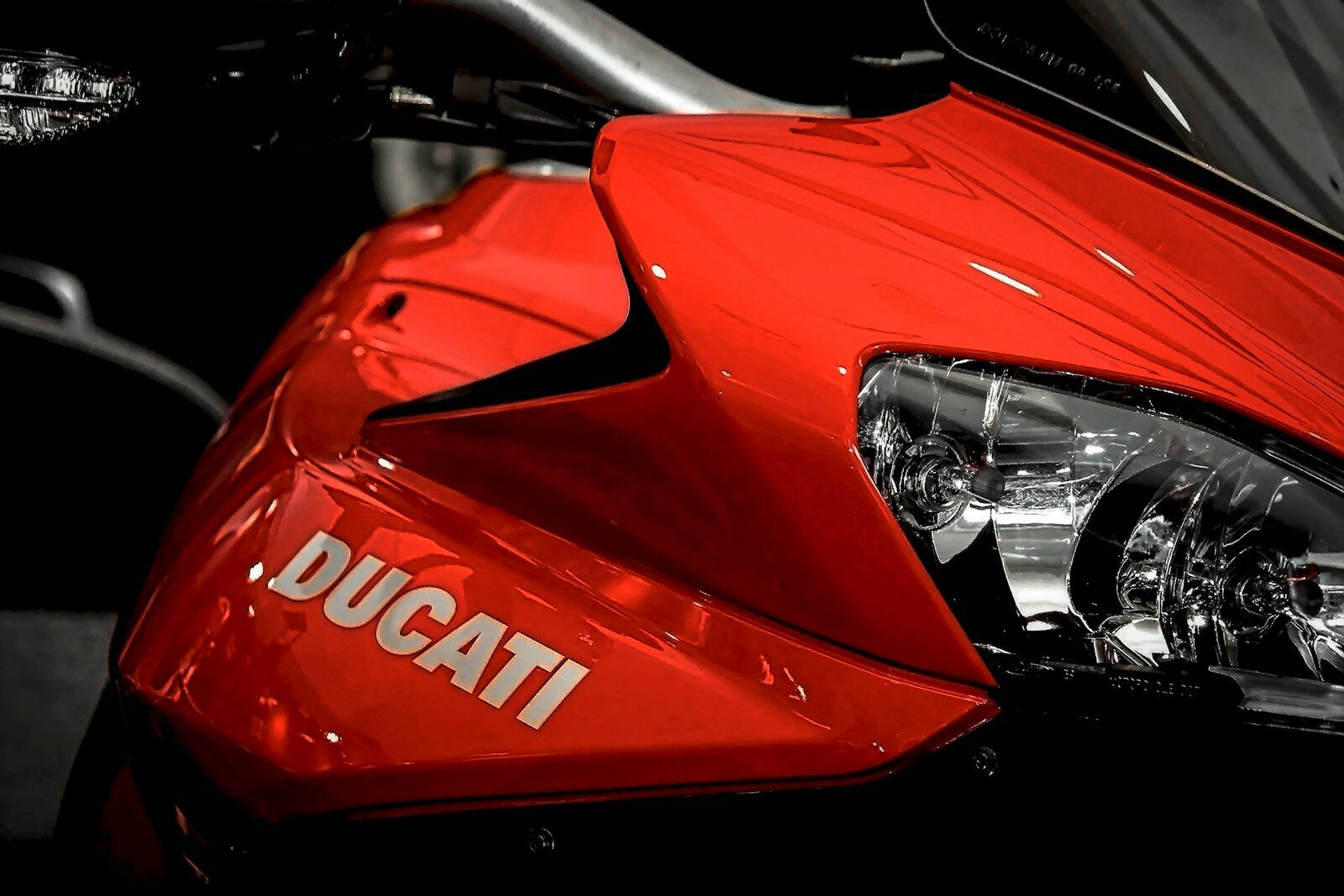
Borgo Panigale is getting help with its homework. Italy’s Ministry of Enterprises and Made in Italy has greenlit a Development Agreement covering a €121 million industrial programme from Ducati, with the state chipping in €33.5 million that never has to be paid back.
Note that number. Both the ministry’s headline and Ducati’s own bullet points advertise “€33 million.” The body text of both says €33.5 million. Half a million euros went missing somewhere between the press release and the sub-head, which is roughly the price of four Superleggera V4 Centenarios.
The mechanism nobody explains
The phrase “Development Agreement” gets thrown around like it means a handshake. It doesn’t. It’s a specific instrument — the Accordo di Sviluppo — sitting on top of Italy’s Contratto di Sviluppo scheme, administered by Invitalia, the national investment agency. It exists specifically to fast-track large programmes deemed strategically significant, and Invitalia’s own criteria require a project to clear at least one qualifying test before the accelerated route opens. Minister Adolfo Urso didn’t hand Ducati a cheque; he authorised Invitalia to sign the contract that eventually releases one.
That distinction matters for anyone reading this as a windfall. Non-repayable grants under these schemes are disbursed against audited spending, not wired on announcement day. Neither release specifies a timeline for either the work or the money.
Do the arithmetic and the shape of the project appears
More than €99 million of the €121 million is classified as industrial research and experimental development. The €33.5 million grant is ring-fenced for that R&D portion, which means the state is covering roughly 34 percent of the research spend and about 28 percent of the total programme.
Related Articles
- Inside Volkswagen’s Abandoned V.MO eVTOL: Why the Flying Car Program Died in China
- Also TM-B E-Bike Deliveries Begin: What Rivian Spinoff Buyers Should Know
Those percentages aren’t arbitrary. EU state aid rules under the General Block Exemption Regulation cap aid intensity at 50 percent of eligible costs for industrial research and 25 percent for experimental development, with uplifts available for smaller firms — which Ducati emphatically is not. A blended rate around a third tells you the programme leans meaningfully toward genuine industrial research rather than late-stage productionising. In plain terms: this isn’t money for tooling up a new paint line. It’s money for engineers, test rigs, and things that don’t work yet.
Why the timing isn’t a coincidence
Ducati closed 2025 with 50,895 bikes delivered, down seven percent from 54,495 the year before. Turnover fell to €925 million from €1.003 billion, and operating profit dropped to €52 million from €91 million — a return on sales of 5.6 percent against 9.1 percent.
Hold that against the programme: €121 million is about 13 percent of last year’s entire turnover. The grant alone is worth roughly two-thirds of last year’s operating profit. For a company whose margins just got halved by US tariffs and an unhelpful dollar, a third of your R&D bill arriving from outside the P&L is not a rounding error. It’s the difference between a five-year plan and a three-year plan.
The Euro 5+ hangover is the tell
Ducati’s own year-end statement blamed part of 2025’s volume drop on limited availability of the Monster, Hypermotard and DesertX during the Euro 5+ transition — three of its highest-volume, lowest-price-point machines, absent from showrooms during the compliance changeover before returning in early 2026 with the new V2 engine.
Here’s the part rarely explained. Euro 5+ isn’t primarily about tailpipe limits; it’s about proving those limits hold over time. EU legislation phased out the mathematical durability shortcut — testing a bike after 100 km and multiplying by a deterioration factor — and brought in the OBD stage II catalyst monitoring that was deferred from the original Euro 5 round. Manufacturers now have to demonstrate real accumulated-mileage durability and fit diagnostics capable of flagging a degrading catalyst.
That reshapes engineering priorities. Catalyst formulation, lambda sensor strategy, thermal management and fuelling calibration all have to survive tens of thousands of kilometres and self-report when they don’t. It is expensive, unglamorous work that produces no horsepower — precisely the sort of thing that qualifies as industrial research on a grant application, and precisely the sort of thing a manufacturer would rather not fund alone.
What owners and buyers should take from it
Three practical things.
First, this is R&D money, not capacity money. Nobody should expect a bigger Borgo Panigale or shorter waiting lists. Expect derivatives — more variants spun off existing platforms, which is what “expanding the product range” means when the budget line says research rather than plant.
Related Articles
- A BSA Bantam Once Owned by Ewan McGregor Is Up for Grabs
- Record-Setting AEM Honda Civic Drag Car Resurfaces at Auction After Years in Police Custody
Second, the diagnostics burden cuts both ways. Bikes engineered to monitor their own emissions hardware will tell you when the catalyst is dying, which is useful. They’ll also illuminate a warning light for faults that a Euro 4 machine would have ignored entirely, and exhaust aftermarket choices on post-2025 machinery are narrower than riders accustomed to a quick slip-on swap may expect. Roadworthiness inspection regimes across Europe increasingly read those systems too.
Third, on insurance and repair: every increment of electronic content raises the cost of a low-speed drop. Sensors, control modules and wiring looms don’t scuff — they’re replaced. If you’re specifying a new bike from the post-2025 range, look hard at whether your policy covers electronics at replacement cost, because the write-off threshold on a premium bike arrives faster than it used to.
The ownership subtext
Ducati remains a sole-shareholder company under the management and coordination of AUDI AG, itself part of the Volkswagen Group — which is why Audi publishes Ducati’s annual figures on its own newsroom. Signing a multi-year state-backed development agreement with Rome, in the company’s centenary year, in the middle of Emilia-Romagna’s Motor Valley, is not a neutral act. Whatever anyone thinks about Ducati’s long-term place inside a German industrial group, a hundred-year-old Bolognese marque just formally tied a chunk of its research programme to the Italian state’s balance sheet.
Governments rarely fund things they intend to watch leave.
About the Author