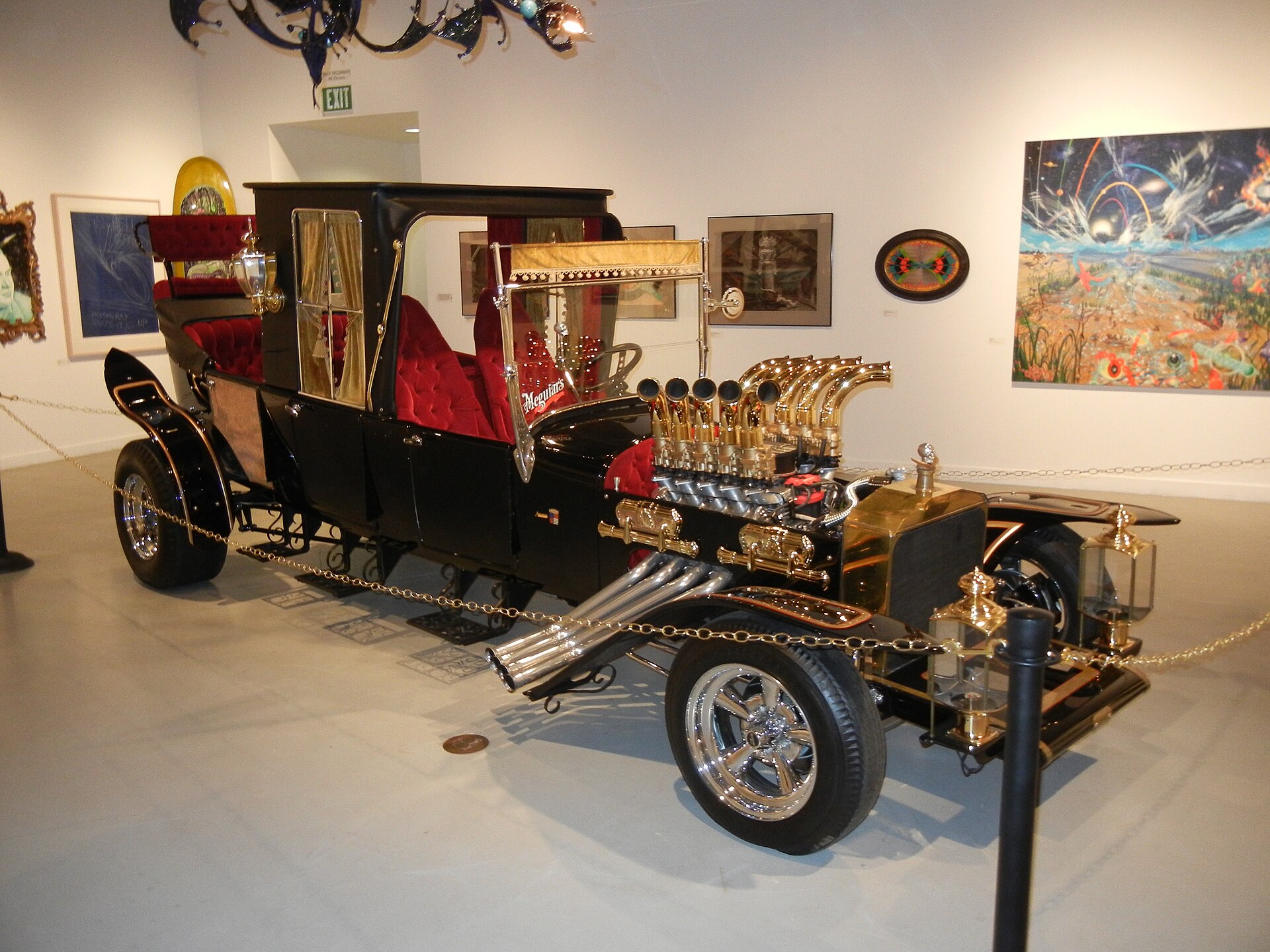
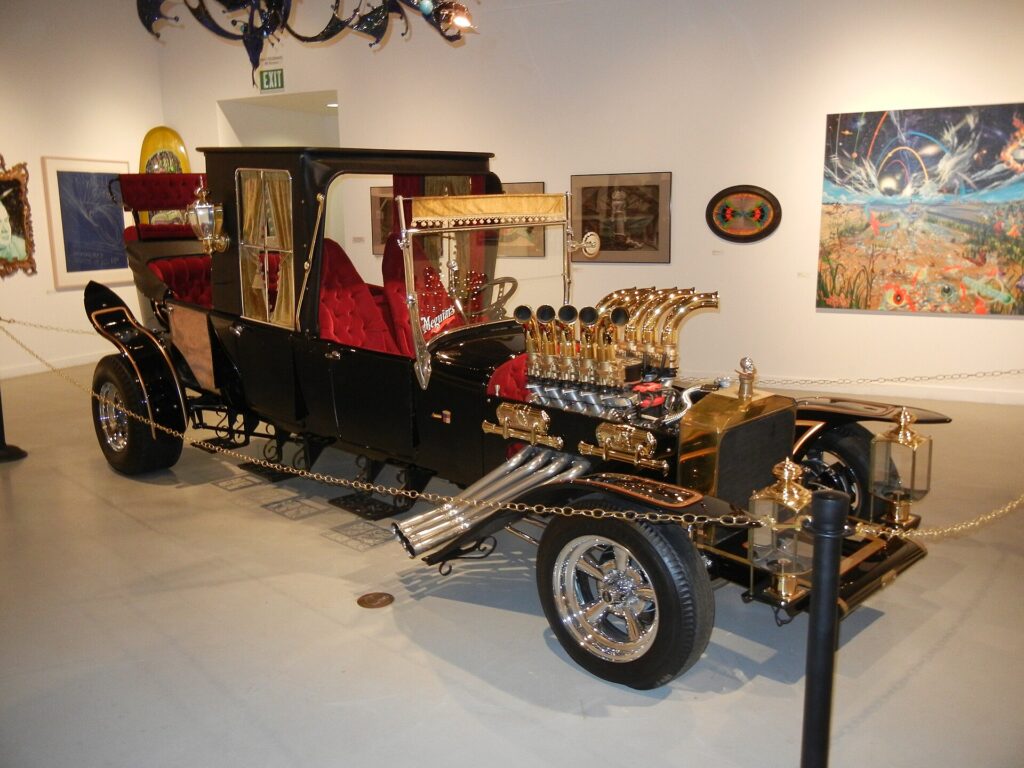
A Munster Koach on display at the Huntington Beach Art Center. Photo: Bahooka via Wikimedia Commons (CC BY-SA 3.0)
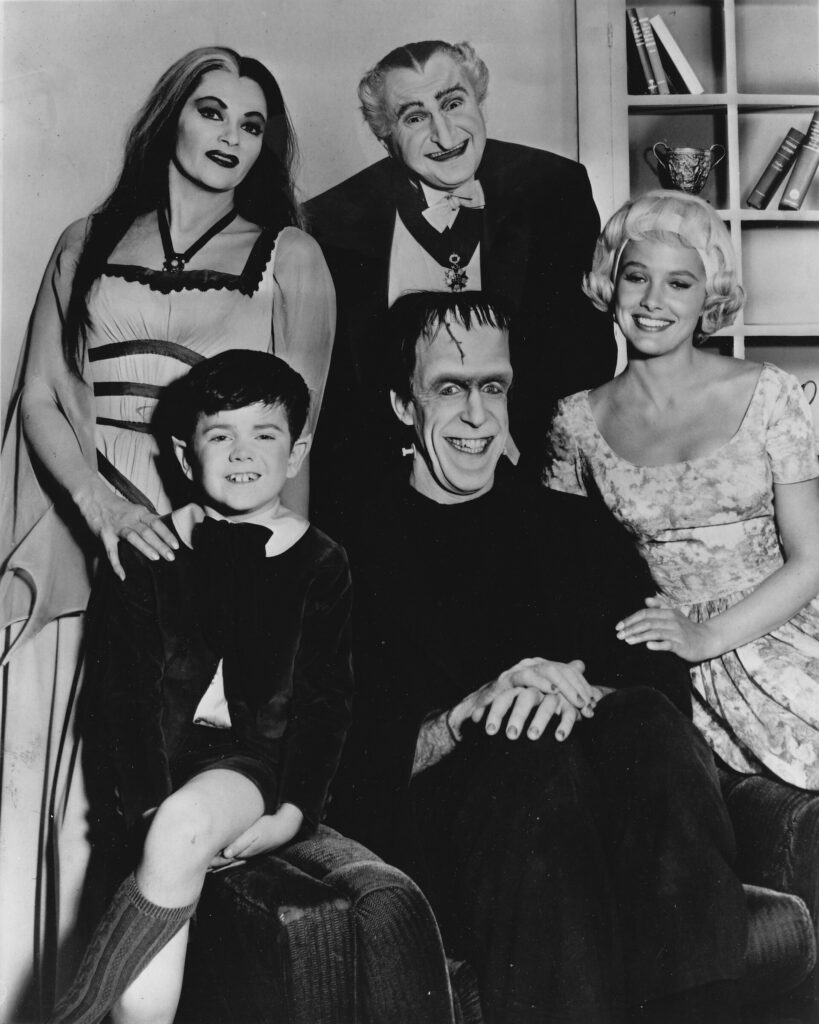
Sixty-two years ago tonight, America sat down after dinner and met a family that lived at 1313 Mockingbird Lane. On September 24, 1964, The Munsters premiered on CBS in the Thursday 7:30 p.m. slot, and TV audiences got Fred Gwynne’s lovable Frankenstein of a dad, Yvonne De Carlo’s vampire mom, and Al Lewis as a centuries-old Grandpa with a lab in the basement. Car people got something better: a show whose family car, the Munster Koach, was an 18-foot hot rod hearse, and whose Grandpa would eventually build a dragster out of a coffin.
The sitcom lasted two seasons. The cars never went away. More than six decades later, re-creations still roll across auction blocks, coffin cars still win trophies at rockabilly shows, and the builders behind them are hot-rod royalty. Here’s how a monster sitcom became one of the most important moments in custom car culture.
The Munster Koach: A Monster of a Family Car
Produced by Kayro-Vue and Universal, with Leave It to Beaver producers Joe Connelly and Bob Mosher running the show, The Munsters was a suburban family sitcom where the joke was that the family looked terrifying and acted completely normal. That premise needed a family car to match, and the job went to the one shop in Hollywood already famous for turning cars into characters: George Barris’s Barris Kustoms in North Hollywood.
The design came from Tom Daniel, a young illustrator who would go on to design a long list of wild plastic model kits. The build fell to the Barris crew, with longtime Barris fabricator Dick Dean doing much of the heavy lifting. What they rolled out, according to NHRA’s history of the two cars, was pure excess:
- Three Ford Model T bodies stitched together into one hearse-style body
- A hand-built 133-inch frame and an overall length of 18 feet
- About 500 hours of hand-formed scrollwork alone
- Black pearl paint with gold-leaf trim and a blood-red velvet interior that looked like a coffin liner
- A dressed-up small-block Ford V8 wearing a forest of chrome carburetor stacks, backed by a manual gearbox and fat Mickey Thompson slicks
NHRA puts the bill for the first Koach at around $18,000, at a time when a new Mustang cost a fraction of that. And here’s a detail every hot rodder will appreciate: several of those gleaming carburetors were for show. The Koach was a TV star first and a driver second, and Barris knew exactly which parts the camera would see.
Then Grandpa Built a Dragster Out of a Coffin
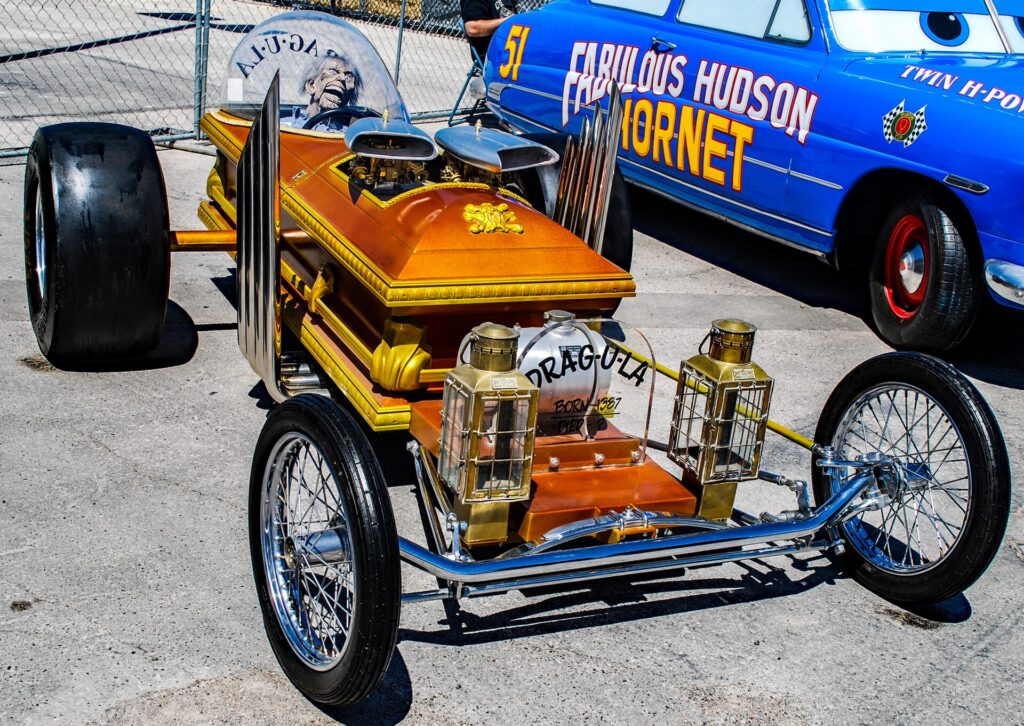
The Koach was outrageous. Its little brother was unhinged. In the episode “Hot Rod Herman,” which aired May 27, 1965, Herman loses the family car in a drag race to a hustler named Leadfoot Baylor. Grandpa’s fix is to build a dragster, and the Midwest Dream Car Collection, which displays one of the promotional Drag-U-La cars, sums up its signature bits: a tombstone radiator, a coffin body, lantern headlamps, organ-pipe exhausts and drag slicks.
Drag-U-La was another Barris Kustoms and Tom Daniel collaboration, built on a tube frame with a fiberglass coffin body and a Ford V8. Hollywood stunt drivers Jerry Summers and Carey Loftin handled the driving scenes, and the car returned for the 1966 feature film Munster, Go Home! The original screen car later hung from the ceiling at Planet Hollywood before landing at the Volo Auto Museum in Illinois.
It’s also a snapshot of mid-’60s drag culture seeping into the mainstream. In 1965 the quarter mile was the hottest thing in American car culture, and a prime-time sitcom was willing to hang an entire episode on a grudge race at the local strip. Today’s Top Fuel cars are a different species, as Shawn Langdon’s recent 346.95-mph run in 1,000 feet proves, but the underdog-at-the-strip story Grandpa played out is the same one racers still live every weekend.
The Plot Twist: Barris Built the Car That Killed the Show
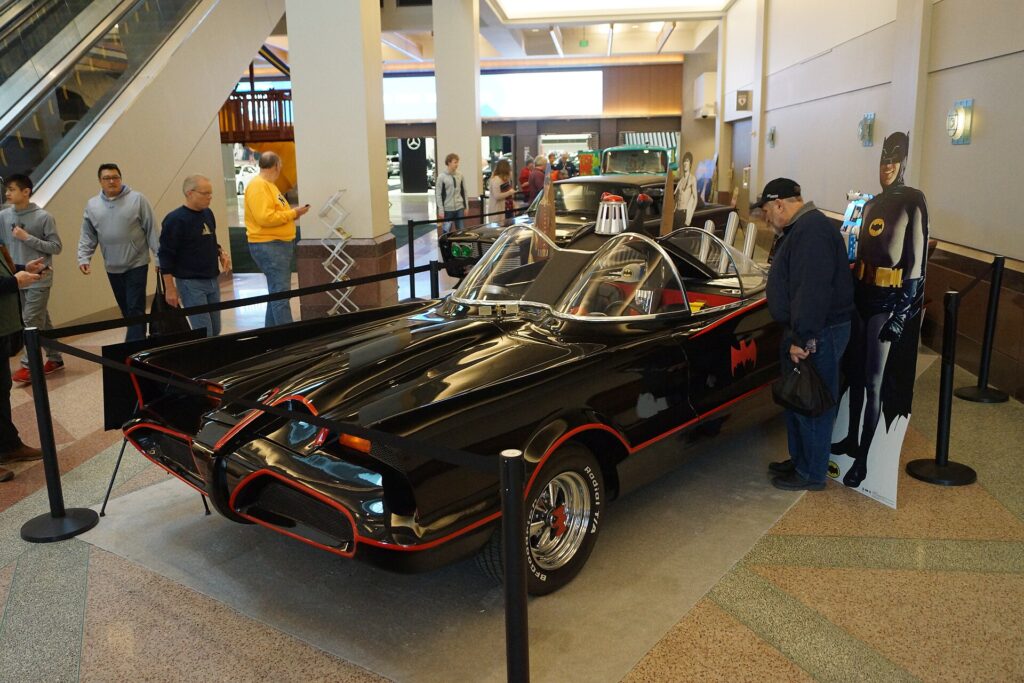
Here’s the part that sounds like a sitcom writer made it up. In January 1966, ABC launched Batman, and its star car was the Batmobile, which Barris Kustoms built from the Lincoln Futura concept car. Batman crushed the competition, The Munsters saw its ratings slide in its second season, and CBS aired the final episode on May 12, 1966, after 70 episodes. Butch Patrick, who played Eddie, has pinned the cancellation squarely on the Caped Crusader.
So one custom shop built the signature car for both the show that died and the show that killed it. Barris’s Batmobile remains the benchmark for TV cars, and the genre is still printing money at auction, as the Batman Returns hero Batmobile heading across the block shows.
Why Enthusiasts Still Care
The Munster Koach and Drag-U-La were two of the first custom cars to become household names for people who had never opened a hot-rod magazine. A kid in Ohio who couldn’t tell a Model T from a Model A still knew the Munsters’ car. That exposure helped carry kustom culture, with its gold leaf, velvet and do-it-because-you-can attitude, out of Southern California garages and into living rooms, toy aisles and model-kit boxes.
The cars also prove a lesson that still applies: a great custom is a character, not just a spec sheet. Nobody remembers the Koach’s horsepower. Everyone remembers the scrollwork, the coffin and the organ pipes.
Buying One? Know What You Are Looking At
If a Munster car ever tempts you at an auction, read the fine print. There were two Barris-built Koaches (Dick Dean built an authorized second version in the mid-1980s), multiple Drag-U-La cars built for the show and for promotion, and a long line of fan-built re-creations since. Barrett-Jackson has sold several clearly labeled examples, including a 1930 Pontiac-based Munster Koach re-creation. The word “re-creation” matters. A tribute car is priced as a fun, drivable show car; a screen-used car is priced as a piece of television history. Paper trails from Barris, production records and museum ownership history are what separate the two.
Practically, these are hand-built one-offs with custom frames, oversized proportions and questionable ergonomics. Parts are fabricated, not ordered, and many re-creations were built for shows rather than highway miles. Budget for a specialist, not a quick lube.
More From Today in Automotive History
This series keeps digging up the moments that shaped car culture. Catch up on how a tiny Pennsylvania carmaker delivered the first jeep, how BMW’s 507 debuted in Frankfurt, and how the banned Dodge Daytona went to Bonneville and came home with 28 records.
Sources: NHRA, “A Munstrously Good Time” (2008); Midwest Dream Car Collection vehicle directory; Barrett-Jackson auction docket; CBS broadcast history of The Munsters (September 24, 1964 to May 12, 1966).
About the Author