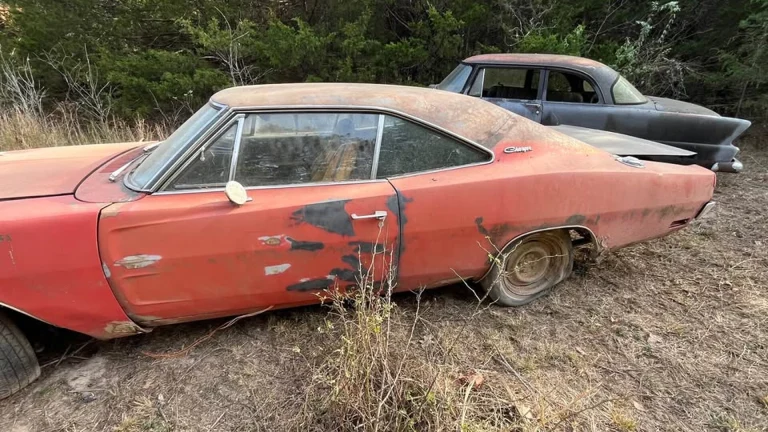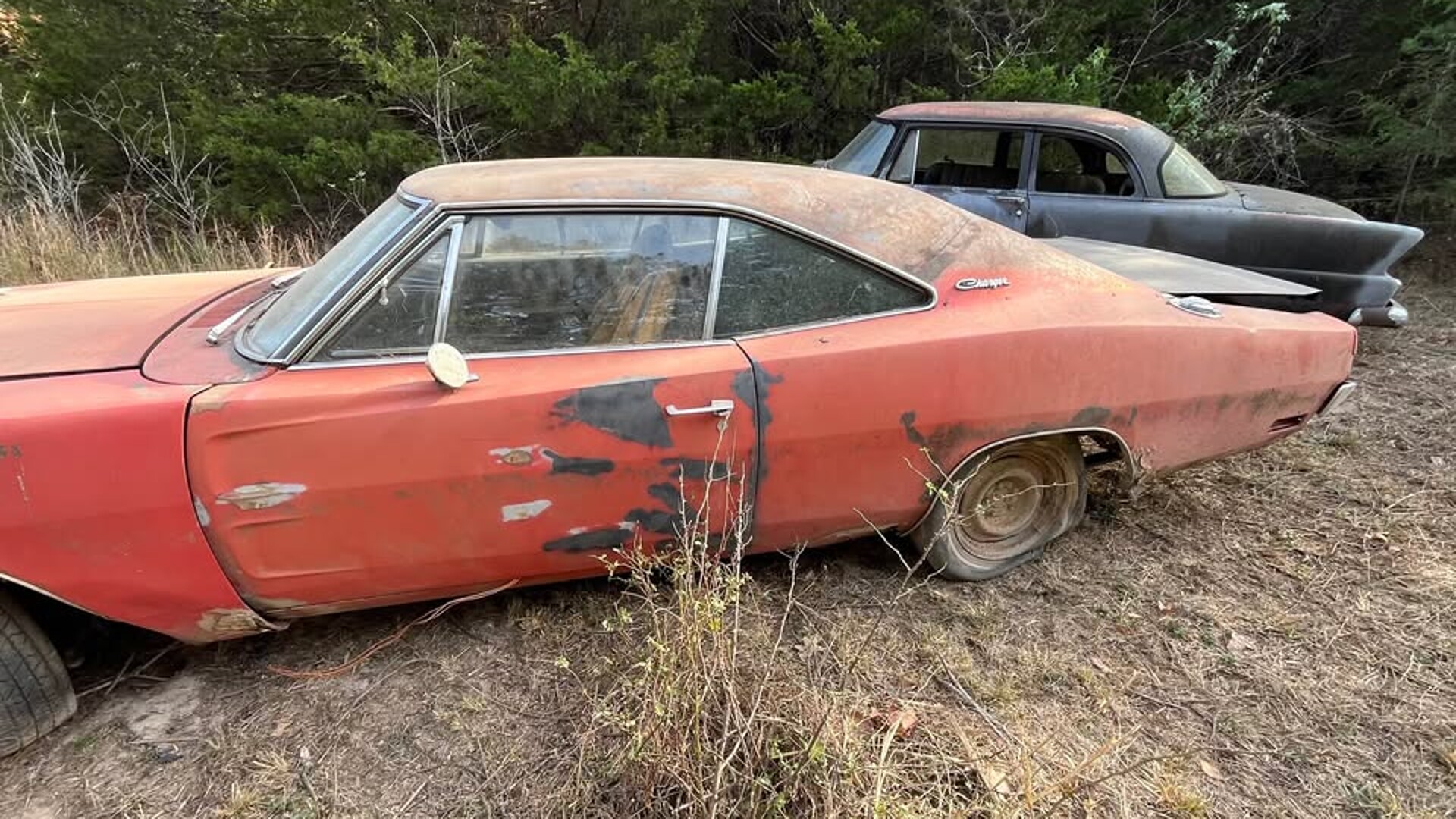
The red Charger, listed as a 1970, with the unmentioned finned sedan parked behind it. Photo: Orin Miller via <a href="https://www.facebook.com/marketplace/item/2152217322331096/">Facebook Marketplace</a>
Two second-generation Dodge Chargers listed Wednesday near Fort Leonard Wood, Missouri, have grass where the engines used to be. The seller wants $20,000 for both.
The Facebook Marketplace listing, posted by Orin Miller to the Mopar Buy, Sell, Trade Discussion group, covers a 1968 and a 1970. Miller writes that he got both cars on trade and that they’re “a little too nice for me to be thrashing on them.” He’ll take $15,000 or best offer for the ’68, $10,000 or best offer for the ’70, or $20,000 for the pair.
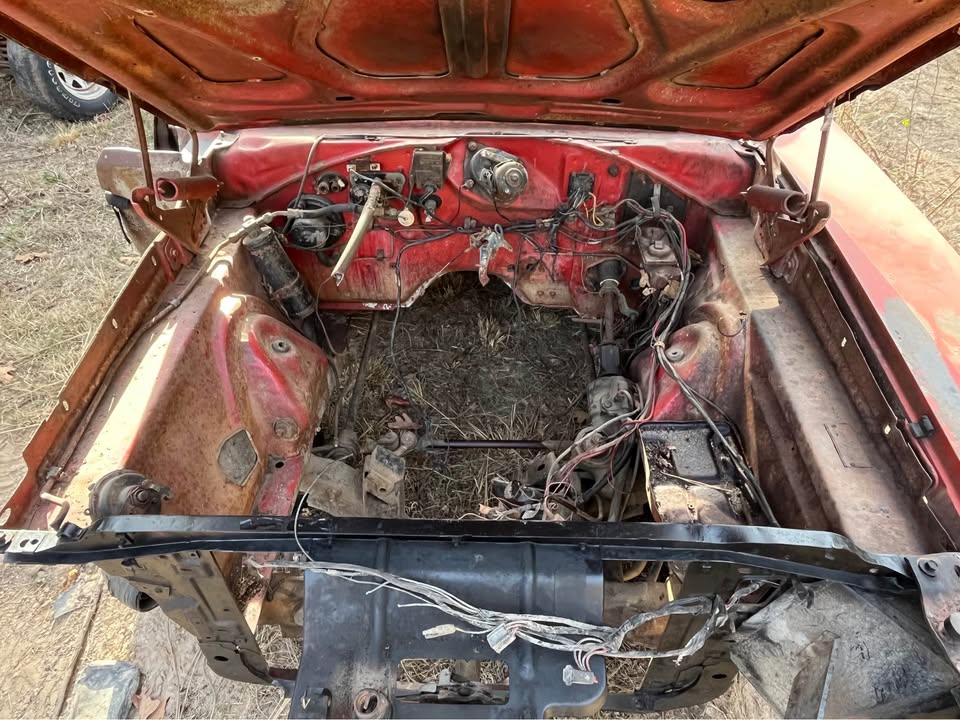
The listing’s vehicle fields describe one car, titled as a 1970 at $20,000: driven 1,234 miles, automatic transmission, black paint, black interior, gasoline. The photos show a faded red car with a flat-black hood and a weathered silver car with a maroon rear quarter. Neither has an engine to burn the gasoline, and we couldn’t find a transmission in either bay.
What the photos show
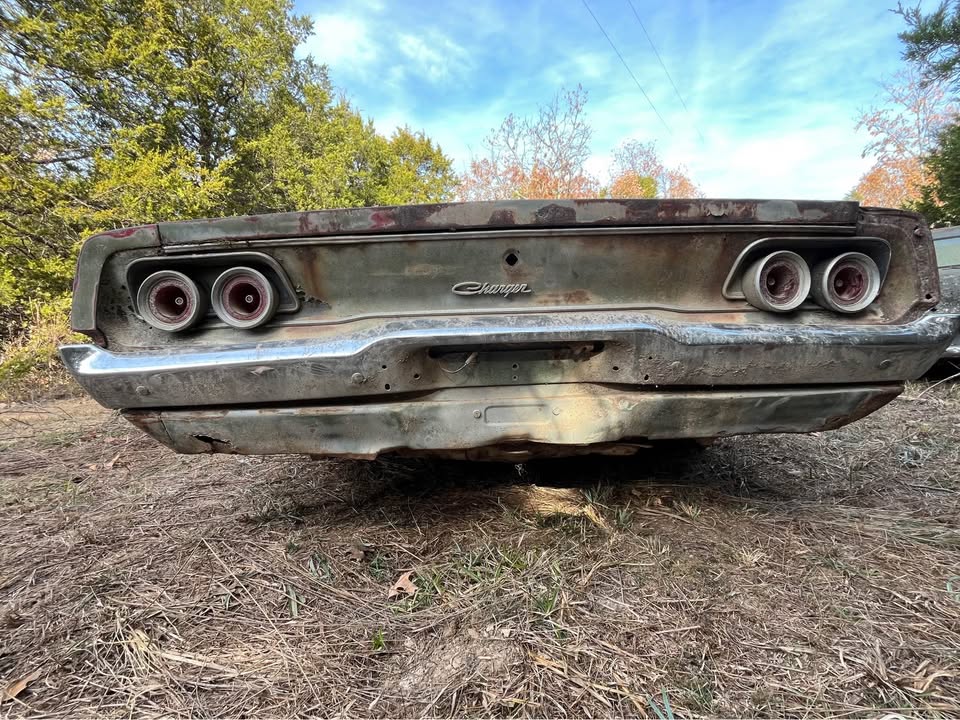
Miller posted ten photos. The silver car has the hidden-headlight grille and the four round taillights that Dodge used only on the 1968 Charger, and it sits on at least one flat tire.
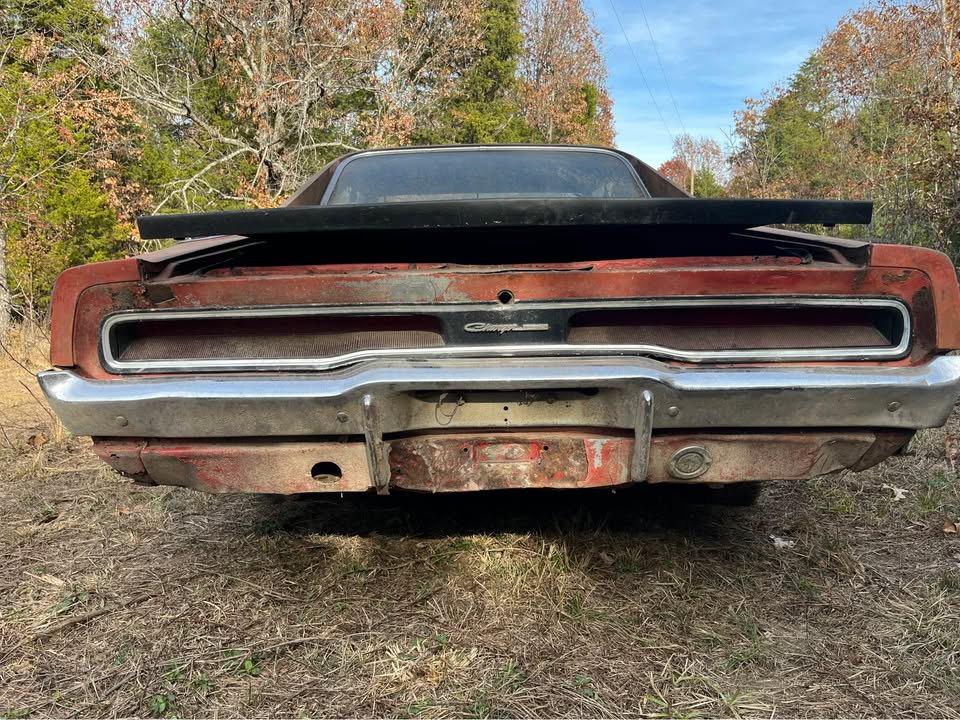
The red car’s rear wears the long horizontal taillight panel Dodge introduced for 1969 and kept for 1970, with a flat spoiler bolted across the decklid. None of the photos show its nose clearly enough to confirm which of those two years it is.
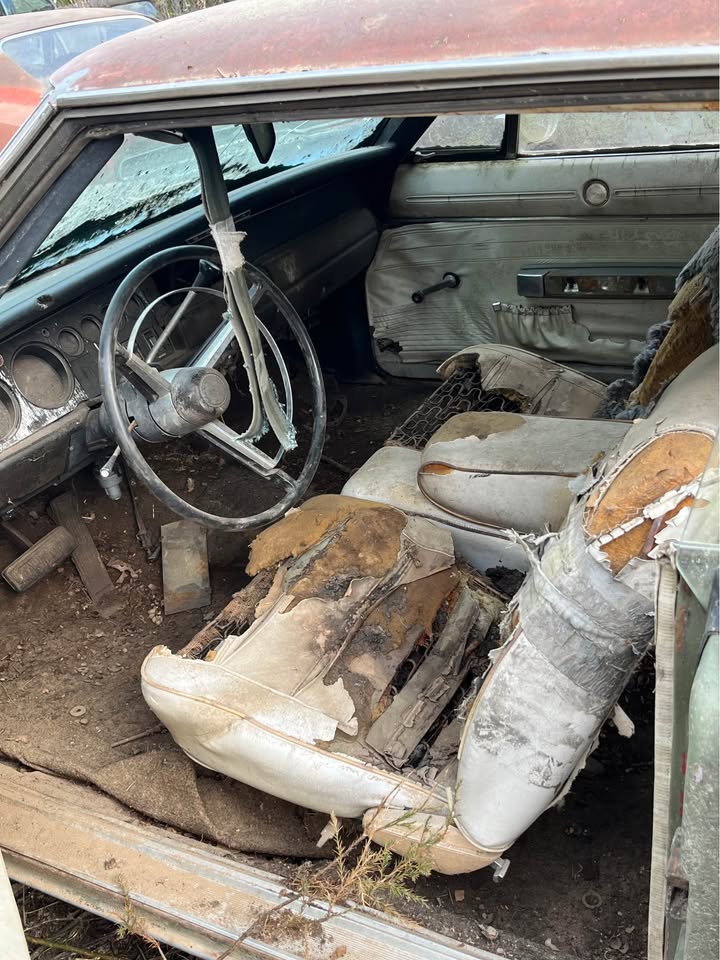
Both engine bays are stripped to the frame rails, with harness wiring hanging loose over weeds. One interior shot shows white bucket seats split open to the foam and springs. A finned late-1950s sedan is parked behind the red Charger in two of the photos; the listing doesn’t mention it.
What the listing leaves out
There is no VIN, no title status, no word on where the engines went and no claim about what the cars were when new. On 1968-70 Chargers, that last part survives an engine pull. The VIN plate on top of the dash, readable through the windshield, encodes the car line, the price class (the R/T was its own) and the engine code from the factory. The fender tag riveted in the engine bay lists paint, trim and options. A shell that left the factory as an R/T with a 440 or a Hemi is a different purchase than a base car that left with a 318, even with nothing under the hood today.
If you’re making the drive to Pulaski County, get the VIN and a photo of the fender tag first, then match the dash plate to the title. Mismatched numbers aren’t only a classic-car problem; a Georgia surgeon was indicted on 40 felony counts over VIN-swapped rental cars.
The asking prices
Priced separately, the two cars total $25,000, so the pair price takes $5,000 off. The listing doesn’t explain why the ’68 is priced $5,000 above the ’70. Cars in this condition more often turn up at events like the Colorado field sale of nearly 300 cars we covered, where buyers set the price instead of the seller.
The listing was 18 hours old and still active when we read it Thursday morning, with “best offer” written next to both individual prices. Somebody’s calling Orin Miller with a lowball. What’s your opening number for the pair, with no VIN and nothing under either hood?
Sources: Facebook Marketplace listing and photos posted by Orin Miller, Nov. 18, 2026. Photos by Orin Miller via Facebook Marketplace.
About the Author