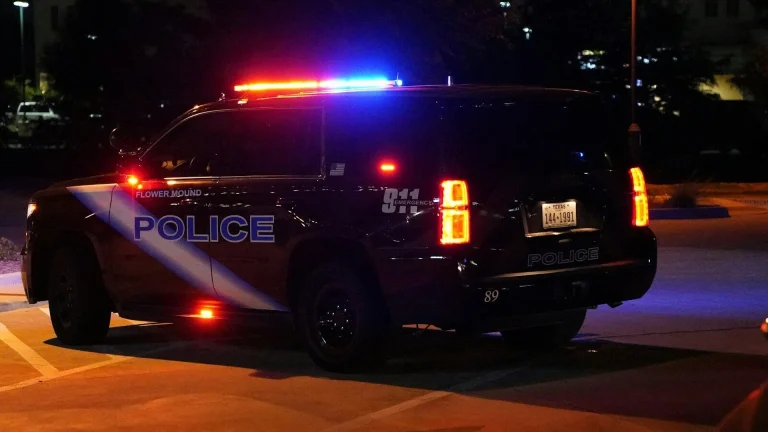
On Aug. 26, 2024, a Houston police officer drove into the back of Kimberly Ezike’s car on Harwin Drive near Gessner Road in southwest Houston, Texas. A TxDOT crash report shows the officer hit her from behind. Her car was pushed over the curb and into an electrical pole, and she broke her leg and had other injuries. HPD later disciplined the officer over the crash. The city still refused to pay her anything. Then HPD sold the car at auction for $10, less than two months after the crash. abc13
“That’s all they thought my car was worth, is $10,” Ezike told ABC13’s 13 Investigates, which got the disciplinary records. Her mother’s ashes, clothing and housewares were in the car. Since the crash she has gotten around on Metro Lift or by taxi. The report doesn’t say whether she got those belongings back. abc13
In Texas, being at fault and having to pay are two separate things. Ezike learned that once with her claim and again with her car. HPD’s own discipline says the officer wasn’t careful enough. Under the state’s emergency-response exception, though, carelessness isn’t enough to make the city pay. And a separate state law on abandoned vehicles let the car be sold while the two sides were still fighting over the claim.
The suspension and the denial
The crash report says Ezike slowed when she saw what she thought was a traffic stop. When she realized the officer was trying to pass her, she tried to pull into a parking lot and was hit before she got there. Disciplinary documents obtained by 13 Investigates show HPD suspended the officer for one day for failing to use caution related to the crash. The officer isn’t named in the reporting. abc13
Related Articles
- A Charger Driver Led Georgia Deputies and Troopers on a Nearly 65-Mile I-95 Chase at Up to 140 MPH, DPS Says, Then Hit a Ditch
- Grounded in Charlotte by an FAA Ground Stop, 3 Women Bought a $48,000 Bronco and Drove 27 Hours to North Dakota
Ezike asked the city’s legal department to pay for the car and her medical bills. The city denied the claim on immunity grounds. It said the officer was responding to a burglary call and that Ezike saw the flashing lights, which the TxDOT report also mentions. abc13
The city’s explanation, as reported, doesn’t say what priority the burglary call had or whether the officer’s siren was on. Those details matter under Texas law, because the Tort Claims Act doesn’t define “emergency call” or “emergency situation.” Houston’s 14th Court of Appeals noted that gap in a 2025 opinion.
Why a careless officer doesn’t mean the city pays
The Texas Tort Claims Act lets people sue cities over crashes caused by city employees driving city vehicles. Section 101.055(2) takes that right away for crashes during emergency calls. Under that section, the waiver of immunity does not apply when an employee is responding to an emergency call, as long as the action follows the laws for emergency action. Where no such law applies, the city stays immune unless the action was taken with conscious indifference or reckless disregard for the safety of others. The law for emergency drivers is Transportation Code Section 546.005. It keeps the officer’s duty to drive with appropriate regard for the safety of all persons and makes the officer answer for the consequences of reckless disregard. lawjustia
The Texas Supreme Court settled what that means in a Houston case. In City of Houston v. Green, decided June 30, 2023, officer Samuel Omesa was responding to a call about an armed suspect around 3 a.m. on March 18, 2017. He entered a red light at Richmond Avenue after stopping and collided with Crystal Green’s car. Omesa admitted in his deposition that he failed to exercise due care at that point. The court still threw out the suit against the city. It held that “a failure to exercise due care does not establish a reckless disregard” for others’ safety. To be reckless, a driver must commit an act he knew or should have known posed a high degree of risk of serious injury to others. The person suing has the burden of proving the emergency exception doesn’t apply. www.txcourts.gov +2
A one-day suspension for “failing to use caution” is HPD’s own finding that the officer didn’t take enough care. Under Green, a finding like that is negligence, and negligence isn’t enough once the city shows it was an emergency call. The discipline record can show the officer was at fault and still fail to get Ezike paid.
Houston’s claims office works the same way. In 2025, the city described its practice to ABC13: when a claim shows an officer was responding to an emergency with a siren or flashing lights, the city denies it, and the claimant’s attorney can file suit if they think they can prove recklessness. In that report’s words, “we deny the claim.” Under that practice, nobody weighs the officer’s driving at the claims stage. The flashing lights end the review. abc13
How a repairable car ended up sold for $10
The car went to a lot under contract with HPD. An officer told Ezike it was being towed for investigative purposes. What came next is where Ezike’s account and the city’s split. Ezike says the city declared her car abandoned. She denies it was abandoned and says she was waiting to pick it up and ready to pay the storage fee. HPD says it told her the car was being considered abandoned and gave her a deadline to get it. Ezike says a city adjuster told her it was still being used for the investigation. City documents say she never wanted the car towed and list it as repairable. abc13
The deadline comes from Chapter 683 of the Transportation Code, and it moves fast. A police agency must send notice “by certified mail not later than the 10th day after” it takes custody. The notice must tell the owner of the right to claim the vehicle within 20 days of the date of the notice, and the 20 days run from the notice date, not from when the car was taken. To get it back, the owner must pay the towing, preservation and storage charges. If the owner doesn’t claim it in time, they give up all rights to the vehicle and agree to its sale at public auction. The buyer gets title free of liens and ownership claims. Nothing in the statute pauses that clock because an insurance adjuster or another city office said something different. publicpublic
The $10 price matters too. Under Section 683.015, sale money goes first to repay the agency for the auction, towing, storage and notice costs, and only what’s left is held 90 days for the owner. Ten dollars wasn’t going to clear the towing and storage charges, so Ezike got nothing from the sale. She lost the car, the money it brought, and her legal right to it. texas.public.law
One claim in four
13 Investigates found the city has paid about one in four property-damage or injury claims against HPD since 2024, and the city legal department’s paperwork doesn’t explain why claims are denied. An earlier ABC13 count found that from 2022 to May 2024, 886 claims were filed against City of Houston agencies over damage to vehicles. abc13abc13
The one Houston claim that got reversed this year was reversed outside the claims system. A University of Houston student’s car was hit by police gunfire in Highland Village during a shooting she had nothing to do with. Her claim was denied, and after media attention the city reconsidered and gave her a new car. The mayor’s office release dated Oct. 9, 2026, says the Houston Police Officers’ Union and the mayor paid off the damaged car, anonymous donors and Mayor John Whitmire helped get a new one, and no taxpayer funds were used. The student was made whole by donors, and the city’s legal position on immunity didn’t change. abc13houstontx
Whitmire then announced a review of all claims. In a Sept. 24, 2026, interview he put the number at about 300 and said the city appeared to have a general rule of declaring immunity. The review has grown since then. The city says it is reviewing about 2,000 claims going back to July 2023. It hasn’t reversed any denials so far, and it’s unclear how many have been reviewed. The mayor was unavailable for an interview. abc13
The state’s highest court has also been leaning toward cities on police crashes. Besides Green, it took up City of Houston v. Sauls, which asked whether the Tort Claims Act waives Houston’s immunity for damages caused by an HPD officer, and in May 2024 it held the city was not liable for an officer’s fatal crash with a bicyclist. txcourtstexaslawbook
What’s left for Ezike, and what the law gives other drivers
The ABC13 report doesn’t say whether Ezike has sued, and I couldn’t confirm a court filing. Texas generally gives people two years to sue over injuries and property damage under Civil Practice and Remedies Code Section 16.003. For her crash, that period ran from Aug. 26, 2024. If she does sue, Section 101.023 limits a city’s liability to $250,000 per person for bodily injury and $100,000 per occurrence for property damage. Before any of that, she would have to get past the emergency exception, and Green makes that hard. justia
Related Articles
- A Ryton-on-Dunsmore Workshop Spent 18 Months Building Skepta a 405-HP Defender Pickup Whose Bed Is Also a DJ Stage
- A Tampa Builder Stretched a 2008 Corvette 12 Inches, Plopped a 1979 El Camino on Top and Won Hot Wheels’ 2026 Legends Tour
For now, the mayor’s review is the one path that doesn’t involve a judge. Whether her claim is among the 2,000, and whether the city reverses even one denial, is the next thing to watch.
For other Houston drivers hit by a city vehicle, the law sets up two separate clocks. The Tort Claims Act requires written notice of a claim within six months of the crash under Section 101.101, and city charters can set shorter deadlines. If the car is impounded, it runs on its own clock under Chapter 683: 20 days from the date printed on the abandonment notice, with storage fees adding up the whole time. In Ezike’s case, the claim was still in dispute when the car-recovery deadline passed.
HPD’s own disciplinary process found the officer at fault for the crash. Should that finding be enough to make the city pay for the car and the broken leg, or should cities keep their immunity for emergency calls whenever the officer wasn’t reckless?
About the Author