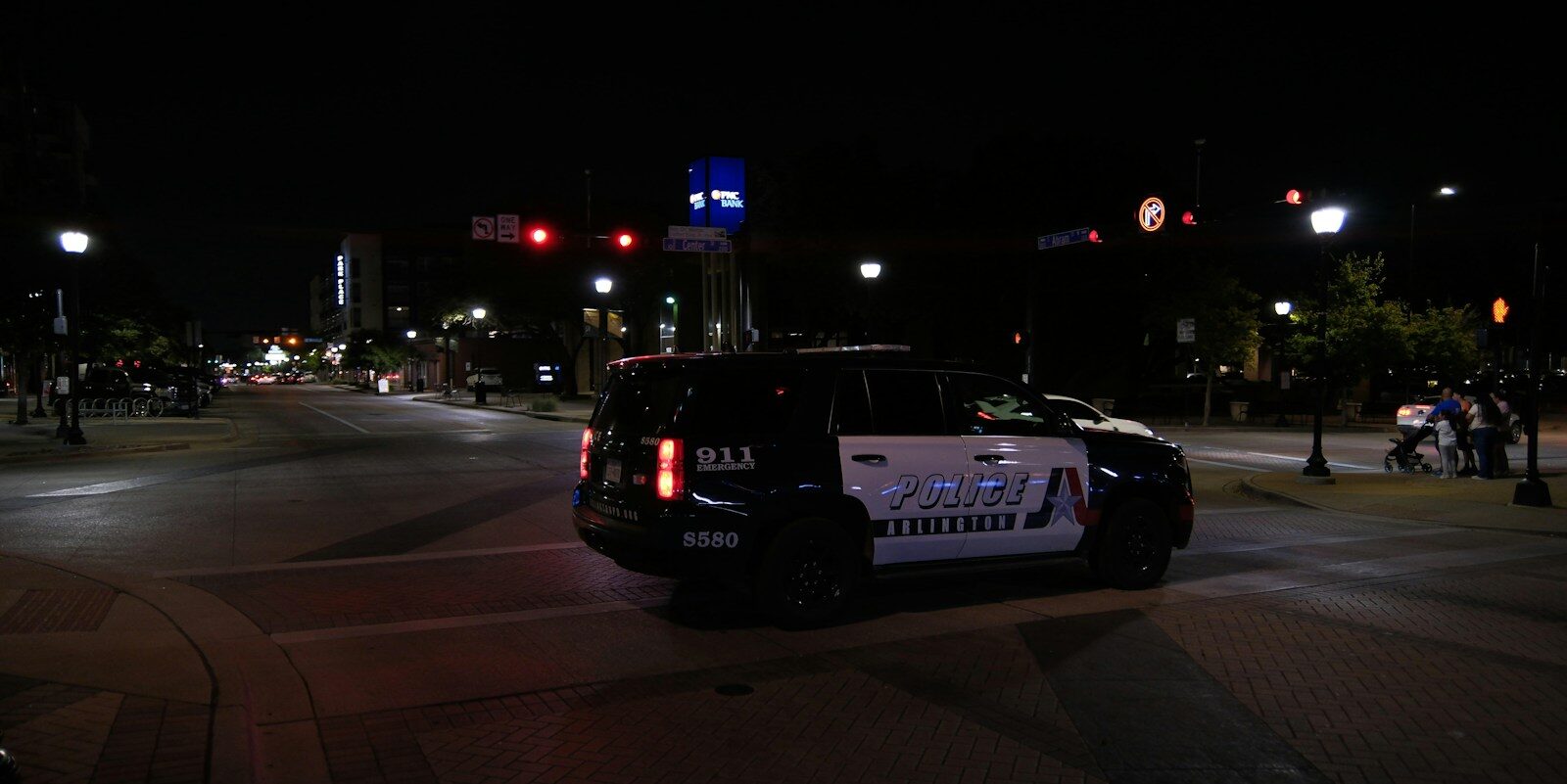
Photo by Balian Roberts on Unsplash (file photo; not the Mobile police vehicle)
The 2026 Chevrolet Tahoe that Lt. Tim Perrin was driving on duty in Mobile, Ala., on the night of Nov. 5 reported its own crash. An OnStar emergency operator told Mobile County 911 that the city fleet SUV had been in a collision near the entrance to Faith Academy off Zeigler Boulevard and that its airbags had deployed, according to a transcript of the call obtained by FOX10 News in Mobile. Asked whether anyone needed medical help, the operator answered, “I’ll confirm with her right now…No injuries.”
Eight days later, a municipal magistrate issued a DUI warrant for Perrin. The Mobile Police Department’s Nov. 16 news release says the investigator on the case subpoenaed medical records and concluded that Perrin “was under the influence of alcohol while operating his city-issued vehicle on duty.” Perrin, who was assigned to the 4th Precinct, entered a treatment facility before the investigation was finished. The department says he will be arrested and charged with DUI once he is released. As of that release he had not been arrested, and the charge remains an accusation that has not been tested in court.
The case against him, as the department describes it, was built from paperwork created at the hospital after the crash, not from anything the car or the 911 callers reported.
What OnStar told 911 and what the department said
The department’s account is short. Officers responded at about 8:50 p.m. to a single-vehicle crash on Zeigler Boulevard near Tanner Williams Road, found that the patrol vehicle had left the roadway and hit a tree, and sent the officer to a local hospital for evaluation of what the release calls minor, non-life-threatening injuries.
The OnStar call, as FOX10 reported the transcript, went in stages. The operator first said a colleague was trying to reach the vehicle and that injuries had not been confirmed. Later in the call the operator identified the driver as an officer, and only when the dispatcher asked again about medical help did the “no injuries” answer come back. That answer passed through at least two OnStar employees before it reached the dispatcher, and the transcript doesn’t say who in the SUV gave it.
GM’s own description of Automatic Crash Response explains what the system can and can’t know. Sensors in the vehicle detect a crash and gauge its severity without any input from the driver, and an advisor can see details such as location, airbag deployment, speed and direction of impact. Every one of those is a measurement from the car. Whether the person behind the wheel is hurt, or impaired, is something only a human can report, and in this case the human report and the hospital visit didn’t match. The 911 transcripts contain no allegation that the driver was impaired, FOX10 noted.
A second 911 caller described the patrol vehicle crossing the road and said they believed it had gone through the fence at Life Church, then told the dispatcher the officer had gotten out of the vehicle. The police release mentions a tree and no fence. Nothing released so far settles whether both happened.
How subpoenaed hospital records can make a DUI case
Alabama’s DUI statute, Section 32-5A-191, gives prosecutors more than one way to prove the offense. One is a blood-alcohol concentration of 0.08 percent or more by weight, the legal limit most drivers know. Another is simply being “under the influence of alcohol,” which requires no specific number. The department’s release uses that second phrase and gives no BAC figure. It also doesn’t say whether anyone gave Perrin a breath test or field sobriety test at the scene.
The route investigators described, a subpoena for medical records, runs through federal privacy law. The HIPAA Privacy Rule generally bars hospitals from handing a patient’s chart to police, but HHS guidance says a provider may disclose records to comply with a court order, a court-ordered warrant, or a subpoena or summons issued by a judicial officer. Lab work drawn in an emergency room to treat a crash patient is part of that chart, so if the ER ran an alcohol test, a driver who never blew into a breathalyzer at the scene can still end up with a result investigators can reach.
What a first DUI conviction costs in Alabama
Under the statute, a first conviction carries up to a year in a county or municipal jail, a fine of $600 to $2,100, or both, along with a 90-day license suspension. A driver can stay that suspension by installing an approved ignition interlock device. A reading of 0.15 percent or higher makes the interlock mandatory. The department hasn’t said whether Perrin has any prior DUI record, and the penalties for a second or third conviction climb steeply.
His job is a separate question the department won’t answer yet. The release says Perrin is entitled to due process under the Civil Service Act and the Mobile Civil Service Rules and that MPD won’t discuss his employment. Chief William Jackson’s statement said none of his officers are above the law. The city hasn’t said what it will cost to repair or replace the patrol Tahoe.
Other Mobile-area officers who faced DUI charges
Perrin isn’t the first Mobile-area officer to face a DUI charge. In March 2022, FOX10 reported that an MPD officer was arrested on a DUI charge after investigators said he was found asleep behind the wheel of his personal car on an Interstate 10 exit ramp around 2 a.m. In July 2026, a Semmes officer who had been named his department’s officer of the year months earlier was arrested on a DUI charge in Satsuma, according to FOX10. Neither of those cases involved an on-duty crash in a city vehicle, and neither turned on subpoenaed medical records. Backfire News has covered other officers charged over conduct on the job, including a Michigan detective jailed for faking salvage-title inspections.
What happens next for Lt. Perrin
The next date in the case is the one nobody has announced: Perrin’s release from treatment, which the department says will be followed by his arrest and a formal DUI charge. After that comes a first court appearance, while his employment stays under the civil service rules the department cited. The department has not released a crash report, a BAC figure, or bodycam or dashcam video from the scene, and FOX10 has the 911 transcripts but not the audio.
Worth knowing if you drive in Alabama: an OnStar call after an airbag deployment goes to 911 dispatchers, and what’s said on it can end up in a public transcript. The ER chart from that night can be subpoenaed long after the tow truck leaves. And a DUI charge doesn’t even need a BAC number.
Should police be allowed to build a DUI case from a driver’s subpoenaed hospital bloodwork days after a crash, or should impairment evidence have to come from a test given at the scene?
About the Author