Cape Coral, Florida spent five months as the most-cited example of a city planning robot garbage trucks that read your lawn for code violations. Then, on July 13, the city quietly killed the idea, citing cost, not backlash. A few hundred miles up I-75, General Motors is living out year two of an enforceable federal order that actually did something to a carmaker’s data pipeline. That’s the split worth paying attention to: everyone lost their minds over a truck that never left the yard, while the real privacy reckoning already played out in the vehicles sitting in driveways right now.
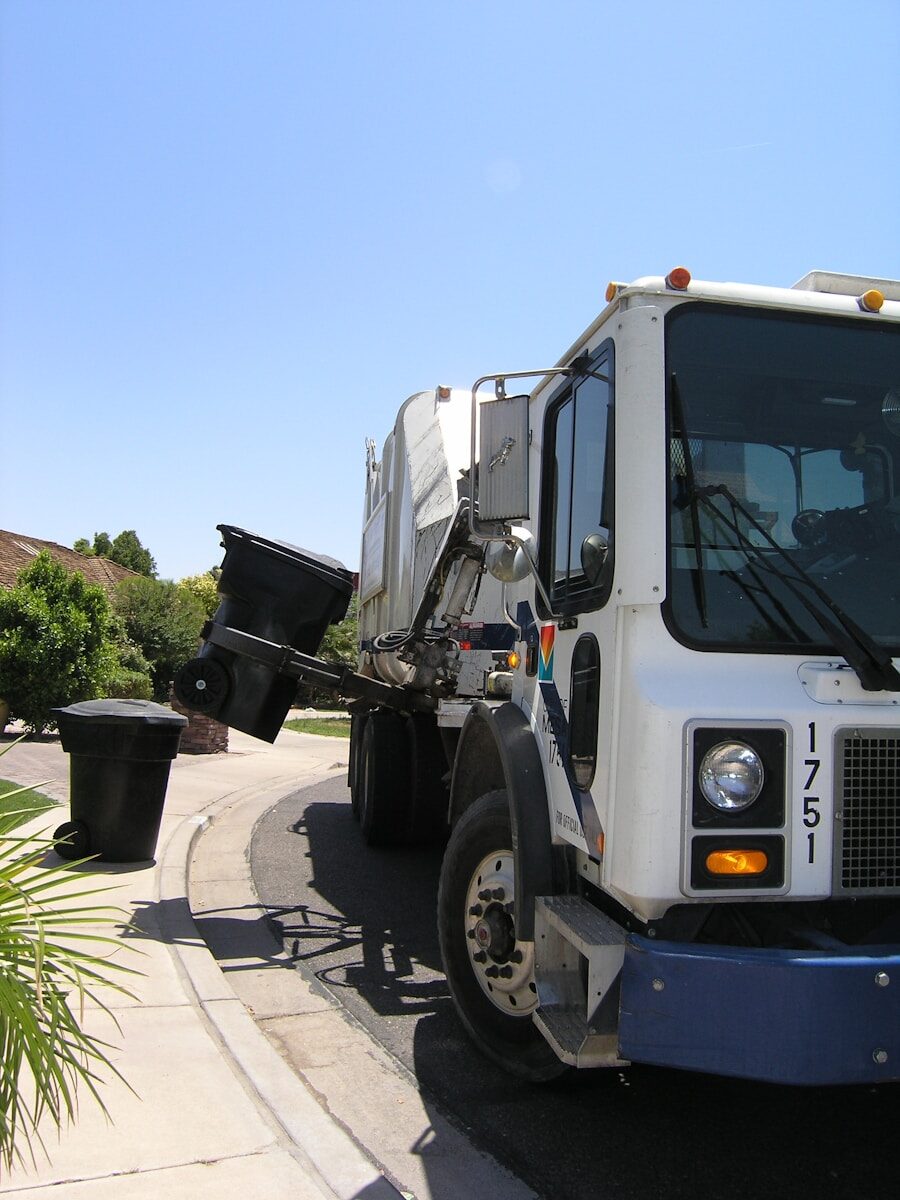
The Cape Coral idea started as a budget conversation. City Manager Michael Ilczyszyn told council in February that staff could keep asking for money to hire more code enforcement officers, or the city could find a cheaper way to cover the same ground. His pitch: mount scanning cameras on solid waste trucks that already drive every residential street on a fixed schedule, and let the hardware flag overgrown lots, illegal dumping, and unpermitted construction work as the trucks made their normal rounds. The conversation grew out of complaints about unlicensed contractors working around town, and Ilczyszyn pointed to an earlier aerial AI pass the city ran after Hurricane Ian to spot homes with unrepaired roofs as proof the approach wasn’t new, just a different vehicle carrying the camera.
The math made sense on paper. A code officer driving a dedicated loop just to eyeball front yards burns fuel, salary, and time duplicating a route a garbage truck already runs for free. Council member Jennifer Nelson-Lastra was receptive, pointing out that residents already report each other’s violations constantly and framing the cameras as a more consistent version of something the city already tolerates.
Then came the review. The city announced on July 13 that the technology was cost-prohibitive relative to the benefit it would deliver, and confirmed it is not moving forward with cameras on garbage trucks. Officials also used the statement to correct a detail that had gotten lost in the online outrage: even in the version that was floated, the system was never going to write citations or fines automatically. Every flag would still have required a human code compliance officer to review and verify a violation in person before any enforcement action, the same process the city already uses when a violation gets reported by phone, by a neighbor, or by a patrol car driving past.
That verification requirement also matters legally. A camera mounted on a public vehicle, photographing what’s visible from the street, sits on the same legal footing as a code officer driving past and snapping a picture, which is to say it isn’t a search of anything constitutionally protected. Camera-based enforcement still draws real anger once residents feel photographed without a say in it, and recent fights over license plate readers show how fast that resentment escalates once the hardware goes up. Cape Coral avoided that fight entirely by killing the budget line before it ever became a legal one.
None of that is where the real car-and-camera privacy story lives, though. That one belongs to General Motors, and it never involved a single garbage truck.
In January 2025, the FTC filed a complaint alleging that GM and OnStar ran a misleading enrollment process that signed drivers up for the OnStar Smart Driver feature without clearly disclosing what it collected. Some owners, according to the agency, had no idea they had been enrolled at all. The feature harvested precise geolocation data, in some cases every three seconds, along with driving behavior metrics like hard braking, late-night trips, and speeding events. GM then sold that data to consumer reporting agencies, which packaged it into reports insurance companies used to raise rates or deny coverage outright. One driver put it plainly to a GM service representative: “You guys are affecting our bottom line.”
The FTC finalized its order against GM this past January, nearly a year after the initial complaint. The final terms ban GM and OnStar from disclosing geolocation and driver behavior data to consumer reporting agencies for five years. A broader set of obligations runs for the full 20-year life of the order: GM must get affirmative, opt-in consent before collecting connected vehicle data in the first place, build a process for any U.S. customer to request a copy of their data or have it deleted, and let owners disable precise geolocation tracking or opt out of behavior data collection where the hardware supports it. Violating a final FTC order isn’t a slap on the wrist, either. The agency can seek civil penalties running into the tens of thousands of dollars per violation, and with millions of enrolled vehicles on the road, that exposure adds up fast.
If you drive a GM vehicle with OnStar, or honestly almost anything with a modern infotainment system, this is worth an actual settings check rather than a shrug. Open the myGM or OnStar app, dig into the privacy or data settings, and look specifically for Smart Driver or any driving-score feature. Turning it off doesn’t just stop a scorecard from judging your merge onto the highway; it can stop that data from ever reaching a company that sells risk profiles to insurers. This isn’t unique to GM, either. Usage-based insurance programs that share driving data are fine when a driver knowingly opts in for a discount. The problem the FTC identified was consent, or the lack of it: drivers were being scored and sold without a rate cut to show for it.
This was the FTC’s first enforcement action built specifically around connected vehicle data, and regulators clearly aren’t finished looking at what modern cars quietly transmit. Congress has its own connected-car data fight brewing, aimed at hardware and software tied to foreign adversaries rather than domestic data brokers, but it reflects the same underlying shift: the car is now a data-collection device first and a mode of transportation second, and lawmakers on both fronts are scrambling to catch up.
The irony is that Cape Coral’s garbage trucks generated far more outrage than GM’s actual, enforceable data-selling operation ever did, probably because a truck staring at your lawn is visceral in a way that a paragraph buried in an infotainment enrollment screen is not. But visible cameras aren’t the threat that costs you money. A police officer misusing license plate data shows what happens when a surveillance system already exists and someone with access decides to abuse it; GM’s case shows what happens when the system is the abuse, built into the business model from the start. Worry less about the garbage truck idea that got killed in a budget meeting, and more about the settings screen you scrolled past the day you drove your new car off the lot.
About the Author