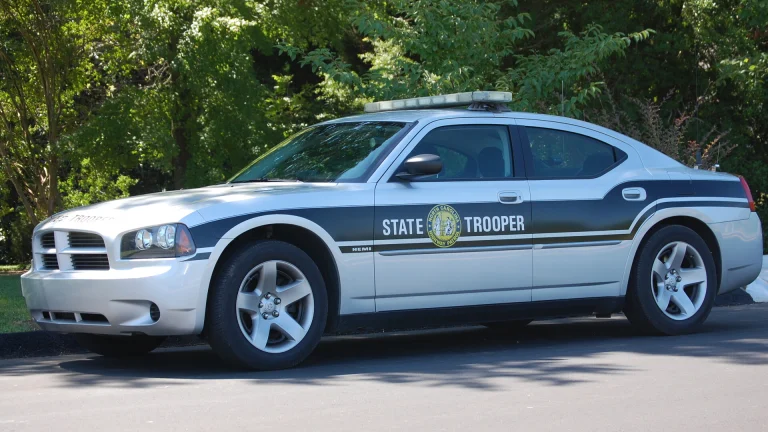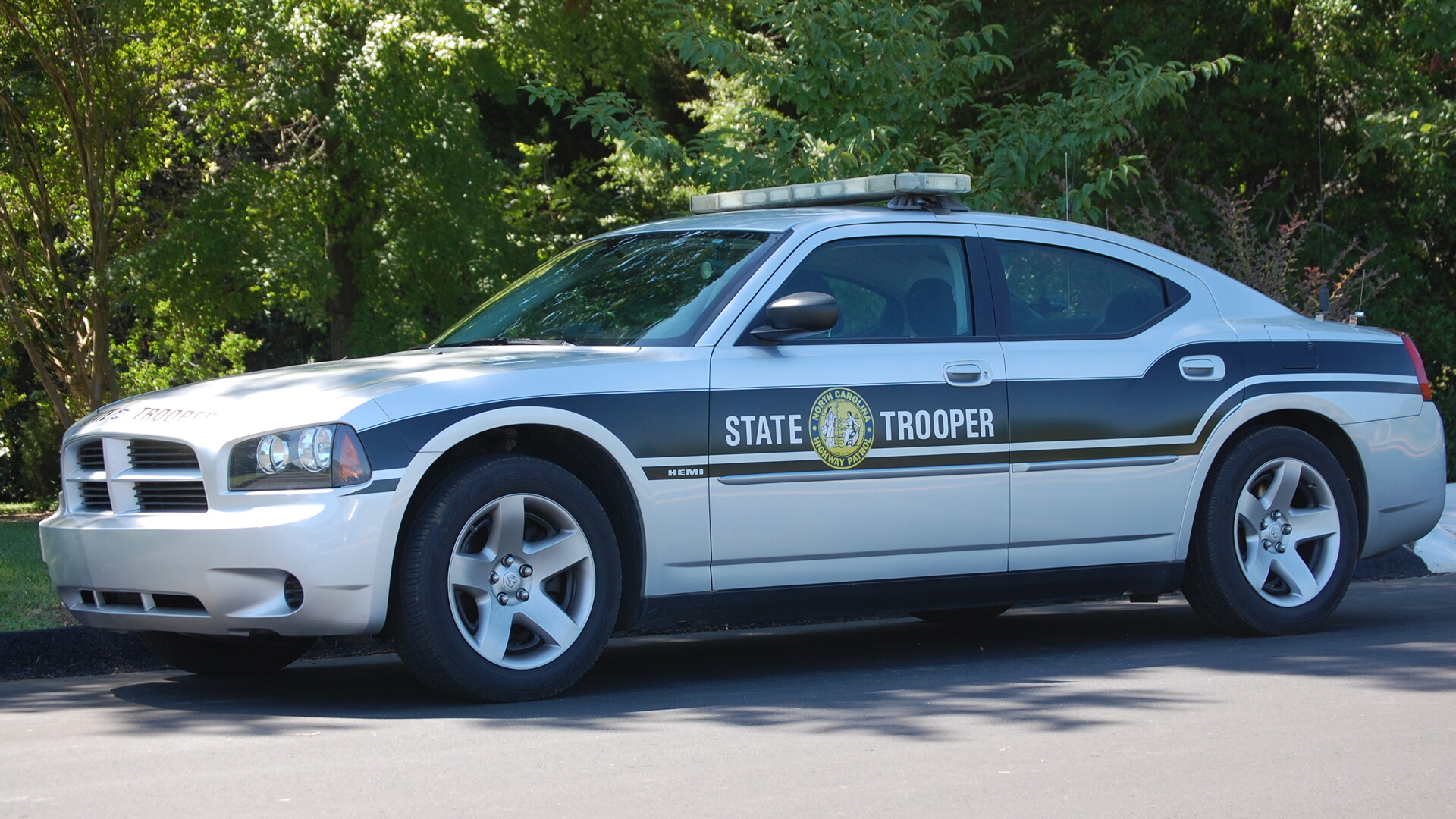
A North Carolina State Highway Patrol Dodge Charger. The Highway Patrol is investigating the Nov. 3 crash on NC 18. Photo: Donald Lee Pardue, CC BY 2.0, via Wikimedia Commons
The pickup was turning left into the Burke County Waste Disposal Site. Rodney Dale Reese, 36, of Granite Falls, was coming north on NC 18 near Morganton, N.C., on a Kawasaki with Burke County sheriff’s deputies in pursuit when he hit the back of the 2011 Dodge Ram, according to the North Carolina State Highway Patrol. Troopers were called to the crash, near Zero Mull Road, at about 3:49 p.m. on Tuesday, Nov. 3.
Reese was thrown from the bike and died at the scene, the Highway Patrol said. The Ram’s driver, a Morganton man, was not hurt. Master Trooper K. Jake Macchia is investigating, and the patrol describes its findings so far as preliminary. The highway stayed closed for nearly two hours, WSOC-TV reported.
Nobody has said publicly why the deputies were chasing him. The only account of how it started came from the Highway Patrol through WSOC: deputies spotted two motorcycles traveling at a high rate of speed and went after them. The patrol’s later description of the crash mentions only Reese’s Kawasaki, and nothing released so far says what became of the second rider. WBTV reported the day after the crash that it was not clear what prompted the chase. As of Nov. 18, I could not find a statement from the Burke County Sheriff’s Office on either question.
If the reason was speed, this gets uncomfortable. It means deputies ran a high-speed chase on a two-lane state highway over an offense that the leading national pursuit guidance says should not trigger one, and North Carolina law makes that decision very hard to challenge after the fact. The person the law puts at risk in that bargain is the driver making a routine left turn into the county dump.
How North Carolina’s elude law treats a rider who runs
Running from an officer is its own crime in North Carolina, separate from whatever started the stop. Under G.S. 20-141.5, driving while fleeing or attempting to elude an officer in the lawful performance of his duties is a Class 1 misdemeanor. It becomes a Class H felony when two of eight aggravating factors are present. The list includes speeding more than 15 mph over the limit, reckless driving, driving on a revoked license, driving with a child under 12 aboard, and negligent driving that causes a crash with injury or more than $1,000 in damage.
Speed and reckless driving are both on that list, so a single fast run can supply both factors. The state Court of Appeals upheld a felony elude conviction built on that pairing in State v. Gannon in 2023, rejecting the argument that the same driving could not count twice. If the flight is the proximate cause of anyone’s death, the statute raises the charge again, to a Class H felony for misdemeanor-level flight and a Class E felony for felony-level flight. After a felony conviction, the vehicle becomes subject to forfeiture.
Those death provisions are written for the case that almost happened on NC 18, where a fleeing rider kills someone else. With Reese dead, there is no one to charge in his crash.
The legal bar for second-guessing a deputy’s chase
The deputies’ side of the ledger runs through a different statute, G.S. 20-145, which lets officers ignore speed limits while chasing a suspected law violator but does not protect them from the consequences of a reckless disregard for the safety of others. In Parish v. Hill, decided in April 1999, the North Carolina Supreme Court held that an officer’s civil liability for a pursuit is measured by gross negligence, not ordinary negligence. In that case, officers chased a BMW for roughly 10 miles until it crashed into a house, killing a passenger in the fleeing car, and the court ruled for the officers.
The court narrowed the path again in March 2024. In Estate of Graham v. Lambert, a Fayetteville case, the justices held that G.S. 20-145 sets the gross negligence standard for suits against an officer personally but does not waive a city’s governmental immunity. The city in that case could be sued only to the extent it had bought liability insurance covering the incident, and it said it had none. A family hurt by a chase in North Carolina has to prove conduct close to wanton, and then has to find a defendant the law allows them to collect from.
The one check the legislature built into the elude statute is a policy requirement. Subsection (f) of G.S. 20-141.5 orders every law enforcement agency to adopt a pursuit policy listing the factors an officer must weigh in deciding when to start or stop a chase, and directs the state attorney general to draft a model. The statute does not say what those factors must be. Whether chasing a speeding motorcycle is allowed in Burke County is a question for the sheriff’s own policy, and nobody has said yet how that policy applied on Nov. 3.
Burke County let a fleeing motorcycle go in 2025 and still made the arrest
The same sheriff’s office handled a near-identical situation differently 15 months earlier. In August 2025, according to a sheriff’s office release reported by WSOC, a motorcyclist led officers on a chase through Morganton on a Monday, and the pursuit was called off over public safety concerns. Detectives identified the rider with help from the public on social media, arrested him at his home that Wednesday on a charge of felony flee to elude, and confiscated his motorcycle. He was held under a $25,000 bond.
In 2025 the office gave up the chase and still had the rider in custody two days later on a felony charge. On Nov. 3, deputies chased after spotting two speeding motorcycles on a state highway with turning traffic, and the chase ended with one rider dead after hitting the back of a pickup. On a motorcycle, there is nothing between the rider and whatever he hits.
Pursuit deaths are rising nationally
A study in JAMA Network Open that combed NHTSA’s Fatality Analysis Reporting System counted 5,425 fatal police pursuit crashes from 2009 through 2023, killing 6,352 people, an average of 423 a year, and found that pursuit deaths increased over the 15 years. The U.S. Bureau of Justice Statistics, in its national report on police pursuits in 2012 and 2013, found sheriffs’ offices ran 9 pursuits per 100 officers in 2012, with higher rates in smaller jurisdictions.
In 2023 the Police Executive Research Forum, working with NHTSA and the Justice Department’s COPS Office, published national pursuit guidance whose central recommendation is that agencies chase only when a violent crime has been committed and the suspect poses an imminent threat to commit another. Speeding meets neither condition. The guidance is advisory, and North Carolina’s statute leaves the standard to each agency. Florida’s state troopers, for one, work under a rulebook far from that standard, as Backfire News found when it read FHP’s policy, and riders who run from troopers keep turning up in court, from Georgia’s I-20 to Florida’s I-95.
What is still open on NC 18
The Highway Patrol’s investigation is still labeled preliminary. Three things would tell the public whether this chase should have happened: the reason deputies started it, the speeds involved, and whether anyone has identified or charged the second rider. The sheriff’s office has the first answer and the patrol’s crash investigation should produce the second.
In North Carolina, the decision to flee is a crime from the first block, and a felony once speed and reckless driving stack up. The decision to chase is judged later, under a gross negligence standard the state Supreme Court has kept in place for more than 25 years. The man in the Ram had no say in either decision and was the one directly in the bike’s path.
Should deputies chase a motorcycle whose only known offense is speed, or should they back off and find the rider later, the way Burke County did in 2025?
About the Author