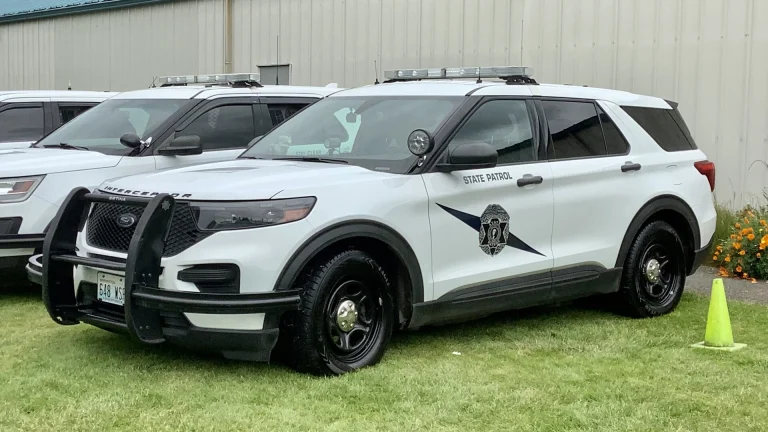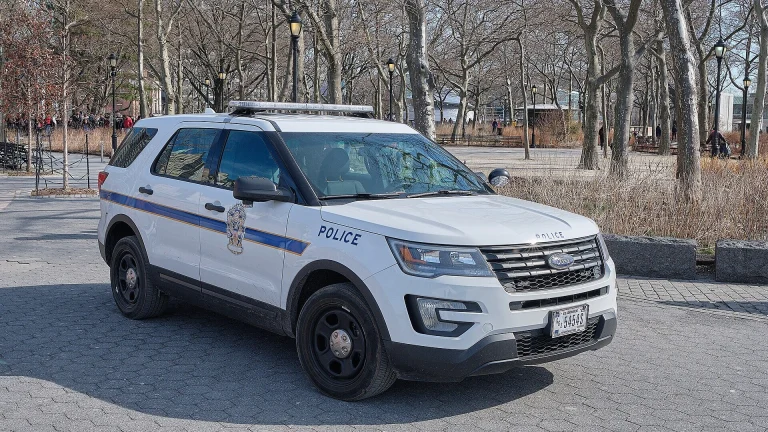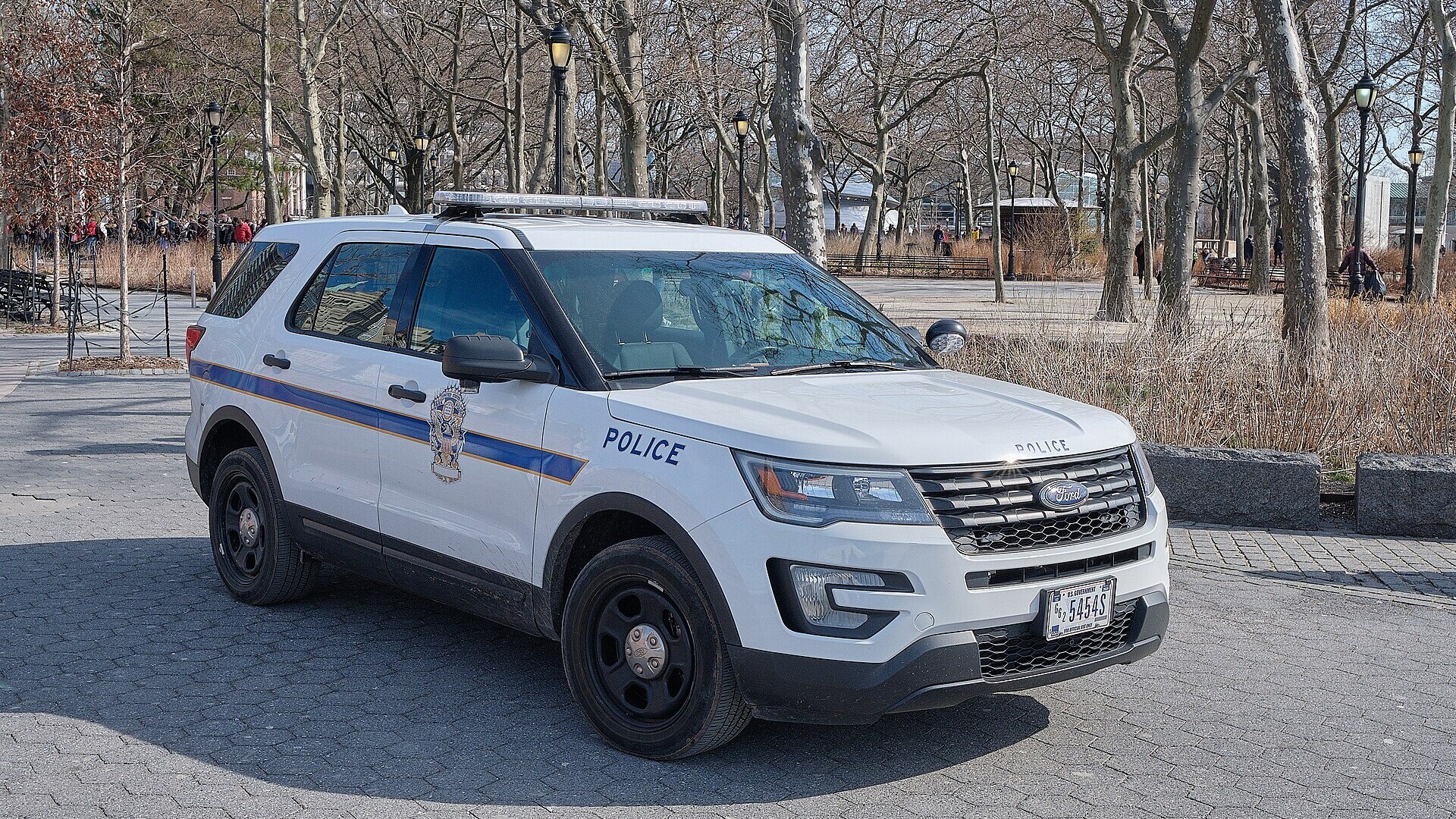
Photo: Michael Paluch/Wikimedia Commons, CC BY-SA 4.0. File photo, not the vehicle involved.
A U.S. Park Police officer shot a woman in Suitland, Maryland, late on Nov. 15 after a chase from Northeast Washington ended with a PIT maneuver, and she died early the next morning, according to WJLA‘s reporting on Park Police and FBI statements. Park Police said the pursuit began at about 11:49 p.m. near Minnesota Avenue and Benning Road NE, where officers tried to stop a vehicle they had confirmed as stolen. The driver kept going into Prince George’s County, and officers ended the chase at MD-4 and Spaulding Avenue.
Park Police said both people in the car ran after the PIT and that an officer shot the woman. The male driver was taken to a hospital with injuries not considered life-threatening. The woman was hospitalized with a life-threatening injury. NBC4 Washington reported that the car came to rest on a grassy area beside the road. Park Police have not named the woman or the officer, and the reports I found do not say whether she was driving or riding, whether anyone in the car was armed, or whether anyone has been charged. MD-4 was closed in both directions for several hours.
The FBI is running the use-of-force investigation
The FBI Washington Field Office is investigating the shooting at Park Police’s request, and an FBI spokesperson said the bureau had no additional information to provide while the investigation is ongoing. I did not find a Park Police news release on the agency’s website as of Nov. 17, and no body-camera or dash-camera video from the stop has been released in anything I could locate. No timeline for the FBI’s review has been announced.
What Park Police orders say about starting a chase
Park Police have posted two relevant versions of General Order 2205, the vehicular pursuit policy. The version dated June 8, 2018 says fleeing and eluding police is not by itself a pursuable offense. It authorizes pursuit for a violent felony, or for a felony where the suspect is known to have a firearm, and it requires a supervisor’s approval in any other circumstance. A stolen vehicle is not on that list, so under that version a chase over a car alone needed a supervisor’s sign-off. The same order bars an officer from striking or ramming a suspect’s vehicle solely to disable it unless the officer is trained in techniques that minimize danger, and it requires supervisory approval before the maneuver.
A memo dated Aug. 14, 2025 rewrote the order’s opening policy section for the National Capital Region for as long as the crime emergency declared in Executive Order 14333 lasts. Under the memo, officers may start a pursuit when a suspect is wanted for or suspected of any felony, or when the suspect’s actions threaten the public, and supervisor approval is not needed to start one. Officers only have to notify a supervisor as soon as practicable. The memo does not mention stolen vehicles. The documents I found do not say whether the memo is still in force or which version governed the Nov. 15 stop, and they do not say whether the stolen car counted as a felony for pursuit purposes. Those are questions the agency or the FBI’s file will have to answer, because pursuit and PIT rules are set agency by agency and the same chase can be allowed by one department and barred by another.
The deadly-force rule for someone running away
General Order 3600, which took effect May 1, 2026, allows deadly force only when an officer has an objectively reasonable belief that a person poses an imminent danger of death or serious bodily injury to the officer or someone else. On running suspects it says: “Deadly force may not be used solely to prevent the escape of a fleeing suspect.” It allows force against a fleeing suspect only where the officer reasonably believes that person poses that kind of imminent danger. The Supreme Court set the constitutional floor in Tennessee v. Garner in 1985, striking down a Tennessee statute to the extent it authorized deadly force against fleeing suspects who posed no such threat.
On the public record, a stolen car, a PIT stop and a foot chase don’t settle whether the shooting met either standard. That depends on what the officer saw in the seconds after the car stopped and what the other occupant did. Whether a camera recorded it is the open question. Until Park Police or the FBI release more, the only public facts are the ones officials have confirmed: a woman is dead, a driver is hurt, and the officer who fired has not been identified.
Photo: Michael Paluch/Wikimedia Commons, CC BY-SA 4.0, resized. File photo of a Park Police Ford Police Interceptor Utility, not the vehicle involved.
A 2025 memo dropped the supervisor sign-off for chases over any felony, for as long as the crime emergency lasts. Whether a stolen car counts, the documents don’t say. Should it?
About the Author