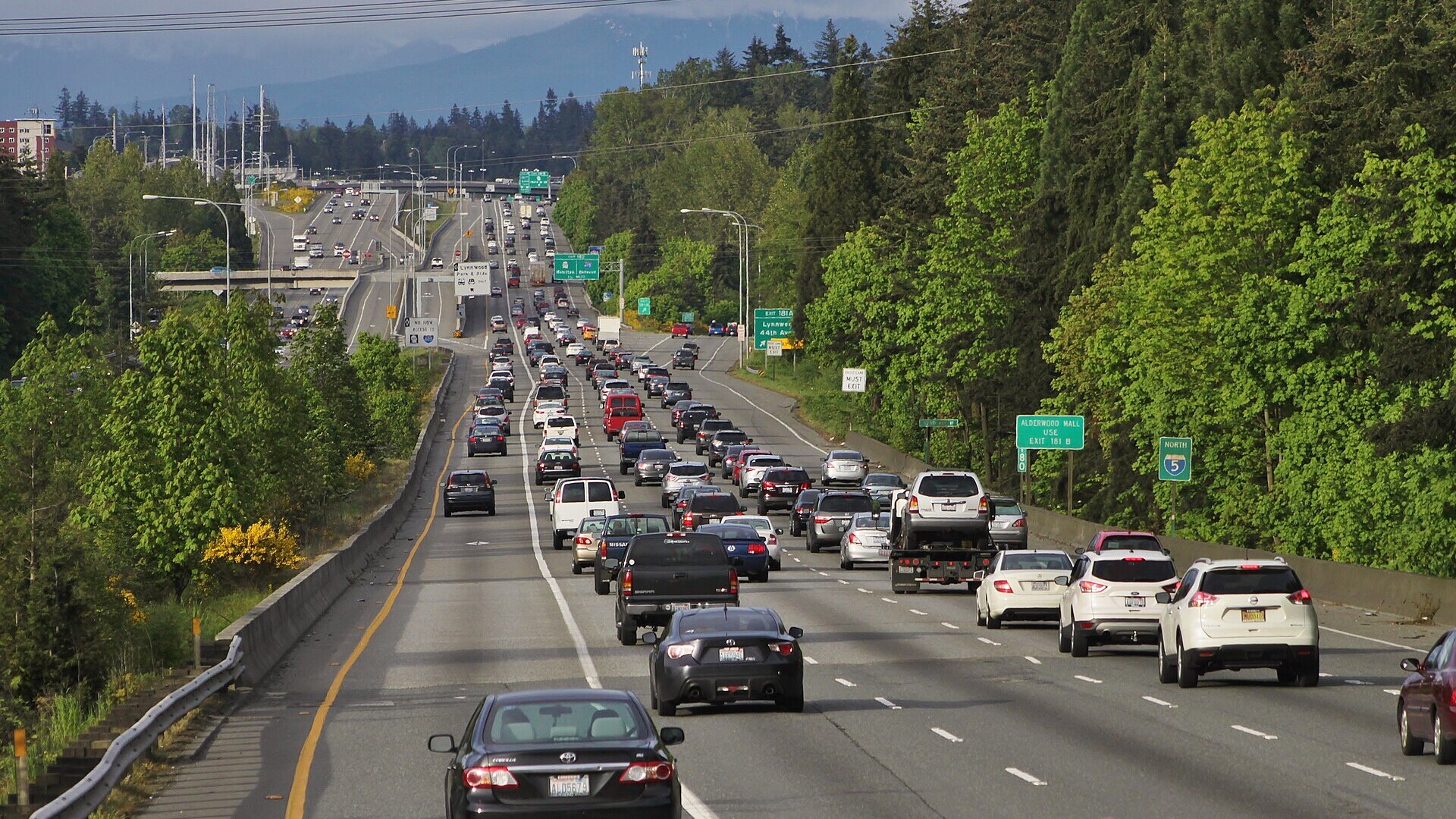
Interstate 5 northbound in Lynnwood, Washington, in a 2017 file photo. It is not the crash scene. Photo: SounderBruce / Wikimedia Commons, CC BY-SA 4.0
A passenger in a Toyota Sienna died in a seven-vehicle crash on I-5 in SeaTac the night of Nov. 12. Washington State Patrol troopers say it started as a race. The Lexus driver is in King County Jail on $250,000 bail, and the white Infiniti he was allegedly racing hasn’t been found.
The crash involved seven vehicles near South 200th Street at about 9:30 p.m. Court filings, as reported by KOMO News, say the Lexus struck the rear of a Toyota Sienna. A Sienna passenger died, several other people were hospitalized, and some were trapped in the Sienna. Troopers arrested the Lexus driver, a 23-year-old Burien man, at the scene, and a judge found probable cause for vehicular homicide and assault. A King County prosecutors’ spokesperson, Casey McNerthney, told KOMO a charging decision was expected Tuesday, Nov. 17. Backfire News had not found a filed charging document when this was written.
What the filings say about speed and lights
A trooper estimated one car’s speed at no less than 100 mph, according to the court filings KOMO reviewed. The estimate rests on a witness’s dash camera. A woman gave police the SD card, and KOMO’s Nov. 14 report says it shows the Lexus and a white car racing about a mile south of the crash, in a zone KOMO put at 60 mph. The filings say the Lexus was running without headlights, and 911 callers told KIRO 7 that both cars were.
The Lexus driver gave troopers a different account. KOMO reported he said, through a translator, that another vehicle hit him from the front and made him swerve into two other cars. He told detectives he was going about 70 mph, that the Infiniti passed him just before the crash, and that he had not been drinking. KOMO reported he showed no impairment on a field sobriety test and blew 0.000 on a voluntary breath test. The reports I found carried no statement from a defense attorney.
Seventy mph, by the driver’s account. At least 100, by a trooper reading a witness’s dash cam. The case lives in that gap.
A 0.000 breath test does not end a vehicular homicide case
Under RCW 46.61.520, a driver is guilty of vehicular homicide when someone dies within three years as a proximate result of injury the driver’s operation of a vehicle caused, and the driving was under the influence, in a reckless manner, or with disregard for the safety of others. Any one of the three is enough, and the offense is a class A felony. A clean breath test takes the first alternative off the table and leaves the other two. Prosecutors have not said which they will use.
How the racing law reaches a second driver
Washington’s racing statute, RCW 46.61.530, makes racing on a public highway reckless driving, and subsection (2) says anyone who knowingly aids and abets racing may be charged. That provision is how a prosecutor would reach a second driver in a race. The statute itself goes no further than reckless driving, so the felony exposure comes from what the race is alleged to have caused. Tennessee took a different route and wrote a six-year drag racing felony into its code.
WSP calls the Infiniti driver’s departure a felony hit-and-run, KOMO reported, and witnesses told police the car never stopped. That driver has not been identified, and nothing in the reports says charges exist against that driver. The Lexus driver’s own account puts the Infiniti beside him just before the crash, which would make the other driver the one person who saw the whole sequence.
What troopers want from drivers on that stretch
WSP asked anyone who was near South 200th Street and I-5 between 9:30 and 9:45 p.m. Thursday to check their dash cam for the Infiniti or its license plate, before or after the crash, and to contact Detective Judah Bergeron at Judah.Bergeron@wsp.wa.gov. The one SD card already in evidence is the reason the filings contain a speed estimate at all. Trooper Rick Johnson told KOMO the racing appears to be part of a recent rise in such cases and called the crash preventable.
One driver stayed. One kept going. Should the one who left answer for what the race caused, or only for leaving?
About the Author